Location: Home >> Detail
Adv Geriatr Med Res. 2026;8(3):e260023. https://doi.org/10.20900/agmr20260023
 ,
Omorogieva Ojo 1,2
,
Omorogieva Ojo 1,2
1
2
*
Rationale: Decision-making in individuals who have dementia and dysphagia (swallowing difficulties) is complex and ethically fraught often because quality of life overrides medical intervention and the client, in the advanced stages of the disease, loses the capacity to make decisions about their care. Since the inception of an Eating and Drinking with Acknowledged Risks (EDAR) protocol over a decade ago, various frameworks have been developed to support decision-making in this context. The aim of this review is to explore EDAR approaches to establish the components to support decision-making for clients presenting with dementia and dysphagia whilst understanding the enablers and tensions within this process. Method: A scoping review was conducted with a search strategy applied via EBSCO Host to the MEDLINE, CINAHL, SCOPUS, and Academic Search Premier (ASP) databases. The search data was presented using a PRISMA flowchart with 34 publications selected for inclusion in the scoping review, comprising 25 studies from the bibliometric databases, and nine pieces of grey literature from a Google Scholar search. Results: All included papers were critically reviewed to identify three themes: decision-aids, capacity/choice and communication processes. These broad themes were interrogated using subthemes. Conclusions: What this scoping review lays out is a discussion on the core components, from evolving EDAR approaches, that support decision-making in clients with dementia and dysphagia. Organisational agreement on frameworks, policies and terminology forms the foundation for an effective pathway. Collaboration and MDT problem-solving, focussing on the clients personal, social, cultural preferences are integral whilst documentation and handover are essential to optimising care. Despite the barriers around terminology, gaps in documentation during transfers of care and the contention around EDAR policies, what this review makes explicit is having a multidisciplinary framework in place to improve decision-making for individuals with dementia and dysphagia, has been found to be beneficial.
EDAR, Eating and Drinking with Acknowledged Risks; ANH, Alternate Nutrition and Hydration; MDT, Multidisciplinary Team; SLT, Speech & Language Therapist
Dysphagia (swallowing difficulties) is frequently referred to as eating, drinking and swallowing (EDS) difficulties. Swallowing is a complex, integrated, sophisticated mechanism involving the co-ordination of over 30 muscles [1]. When there is a breakdown during this patterned response, irrespective of the stage this might occur, there is a knock-on effect which may lead to negative health consequences.
It is estimated that 400,000 to 800,000 individuals worldwide develop swallowing difficulties as a result of chronic neurogenic illness per year [2]. The prevalence of EDS difficulties is significant in neurological conditions such as stroke, in progressive pathologies (Parkinson’s Disease, multiple sclerosis), notwithstanding the muscular causes (myasthenia gravis, achalasia, sarcopenia).
Eating and drinking requires cognitive awareness (attention), visual recognition of food/drink, automatic internal bodily responses to stimuli, motor planning involving the brain’s ability to receive, plan and execute a systematic sequence of movements [3]. In addition to this however, are the ramifications of the aging process. As the age of the global population rises, it is predicted that the 55 million people worldwide living with dementia will almost double every 20 years, reaching 78 million in 2030 and 139 million in 2050 [4]. Difficulties with eating, drinking and swallowing commonly occur in older adults with dementia [5]. People living with dementia, who experience deficits in attention, initiation, orientation, recognition, executive function, decision-making and apraxia will subsequently experience difficulties with eating and drinking [6]. The progressive cognitive decline, in addition to behavioural changes and motor disturbances, results in 80% of people with dementia encountering eating and drinking difficulties [7].
The combination of swallowing difficulties and cognitive decline in clients with EDS difficulties and dementia impacts on a lack of focus and sensory awareness to chew down and propel the food bolus [8]. A person living with dementia will further experience changes as a result of the aging process. As the swallow physiology alters with advancing age, there is loss of strength and range of motion affecting oral and pharyngeal structures due to reductions in muscle mass and connective tissue elasticity [9]. Cognitive decline and the altered ageing physiology, compromises the entire process of eating, drinking, and swallowing with an increased number of swallows, leading to a delay in oral preparation of the food bolus [10]. Over time, these subtle but additive changes can contribute to increased frequency of residue penetrating into the upper airway, in addition to post-swallow residue in the pharynx [9].
Although these physiological and cognitive changes pose risks of malnutrition, dehydration and aspiration, the client, in the advanced stages of dementia, may not have the capacity to make decisions about their care. Judicious consideration of balancing these risks against the quality of life of the client with personal preferences being primarily at the forefront, is what ultimately led to the development of supported decision-making in this area of care. Over the last decade, following the foundational considerations within the inception work by Hansjee (2013) [11] and the concept of eating and drinking with acknowledged risks (EDAR), the need to have a process in place for shared decision-making in clients with dementia and dysphagia, has grown across healthcare settings [12,13].
Rationale for the ReviewWhen considering nutritional options in the advanced stages of dementia, a careful balance of the risks and benefits of the options against the client’s preferences, is required. Whilst it may be suggested that an alternative nutrition and hydration (ANH) route may mitigate some of the challenges outlined in the introduction, the current literature indicates that in people with severe dementia, tube feeding does not prolong a person’s life, prevent aspiration pneumonia, improve quality of life nor lead to better nutritional parameters [14]. The findings of a study by Yuen et al. (2022) [15] revealed that nasogastric tube feeding was not associated with improved survival in people with advanced dementia, but was associated with higher pneumonia risk, particularly for those patients with co-existing behavioural problems and swallowing difficulties. The cognitive decline also impacts on the client being an active participant in their care, with increased dependency for making decisions on their nutrition.
There is, however, a direction and strong evidence base for maximising quality of life by eating and drinking whilst acknowledging the associated risks of aspiration, dehydration and malnutrition [16,17]. National guidance for people with advanced dementia who have swallowing difficulties promotes optimisation of quality of life [18], acknowledging nutritional needs, risks, and personal choice.
Although the enablement process is defined as a professional intervention aiming to recognise and support the client’s control over their health [19], these clients, are often unable to communicate their wants and needs, so carers are frequently involved in the decision-making process. It is complicated and emotive for clients and carers to know what the best option is, whilst also acknowledging their/their next of kin/spouse/partner’s quality of life and wishes. Although the clinician has responsibility to investigate, educate and advise, the client’s wishes and priorities fundamentally need to be acknowledged when deciding the next steps. Having a decision aid to support decision-making arguably provides an innovative solution and clarity to the process. Yoshimatsu et al. (2024) [20] in their retrospective cohort study at an acute hospital where a decision-making protocol for EDAR was initially developed on patients aged ≥ 75 years-old admitted with pneumonia and referred to speech and language therapy, found EDAR decisions utilised in 14.4% of the cohort and most were associated with end-of-life care.
The decision-making and management of dysphagia in this client group is complex; involving the assessment of nutritional options and recommendations, weighing up benefits and risks (nutritional and swallowing), prognosis, and capacity to consent [21–23]. Decisions on restrictions and modifications to food and drink are, also, not solely for the purpose of sustaining life but also reducing associated risks with eating and drinking orally. As such, diet/fluid modifications can be viewed as interventions to reduce risks, highlighting further the need for clients to be involved in accepting these interventions [24]. These factors provide a clear justification for a transparent robust process of decision making.
Whilst Anantapong et al. (2023) [25] were in favour of having a shared decision-making model to guide decisions, a systematic review of understanding the decision-making process, specifically on nutrition in people living with dementia, revealed that key concepts of the shared decision-making process were still not consistently applied. The key concepts outlined in the Anantapong et al. (2023) [26] paper referred to collaboration amongst the client, the family and the healthcare practitioners within the decision-making process. Hansjee et al. (2021) [7] concurred with the viewpoint in the Anantapong et al. (2020) [27] paper that the decisions about nutrition and hydration for individuals in this client group are too complex to fit precise linear steps and for effective adoption, personal values, cultural beliefs and organisational routines are also essential to factor in.
In addition, McHutchison et al. (2018) [21] argue the case for protocols and guidelines being the catalyst to high quality, transparent information and education where roles and responsibilities of health care professionals can be delineated. Both the Anantapong et al. (2020) [27] and McHutchison et al. (2018) [21] studies reinforce the benefit of having frameworks to pull together the respective avenues of the decision-making process.
The aim of this scoping review is to critically examine the evolving landscape of EDAR approaches to establish the components to the shared decision-making for clients presenting with dementia and dysphagia whilst understanding the enablers and tensions within this process.
As the topic of EDAR is complex, diverse, and emerging in terms of terminology and content, a scoping review was selected over the more well-defined subject focus in systematic reviews [28]. The goal of a scoping review, according to Munn et al. (2018) [28], is understanding the coverage and gaps in the literature. For the purposes of this review, a systematised scoping review based on the Preferred Reporting Items for Systematic reviews and Meta-Analyses (PRISMA) extension for scoping review [29] was employed to map the existing literature against the use of shared decision-making tools in people with dysphagia and dementia whilst highlighting barriers and enablers to decision aids in EDAR. Included studies were appraised using the Critical Appraisal Skills Programme [30].
The Scoping review was conducted using the Arksey & O’Malley (2005) [31] framework. Outlined below are the six stages of the scoping review process as expanded on by Levac et al. (2010) [32].
Stage 1. The Research Questions
●
●
The scoping review was conducted over the period commencing Oct 2013 until August 2025 to capture the most updated evidence.
Stage 2. Search Strategy
In order to select relevant studies, initial searches were performed using the Medline database to identify appropriate synonyms and Medical Subject Headings (MeSH). The search was initially conducted in October 2023 and repeated in August 2025.
As reflected in Table 1 below, synonyms for “shared decision-making” framework* were outlined. Although “protocol”; “pathway; “risk acknowledged” and “risk informed” were initially included in the first line of the search, this generated a number of unrelated studies so were subsequently removed. For the second search line in Table 1 “cognitive impairment” was removed, as only using the terms “dementia” and “Alzheimer’s disease” focussed and strengthened the search relevance. The search terms in the third line on Table 1 changed “nutrition” to “nutrition and hydration”, which enhanced relevance to the subject matter, with further refinement applied by “feeding” being changed to “risk feeding”.
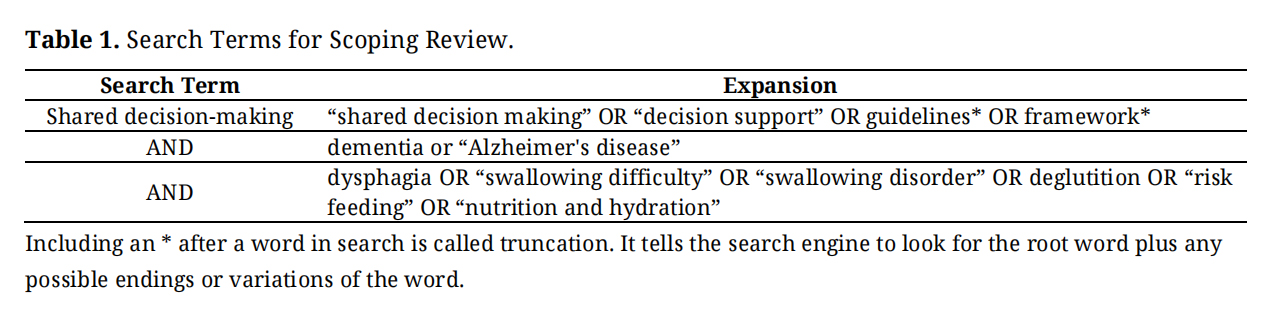 Table 1. Search Terms for Scoping Review.
The finalised search strategy was applied via EBSCO Host to the MEDLINE, CINAHL, SCOPUS, and Academic Search Premier (ASP) databases, drawing a total of 1082 studies. Both AMED and Cochrane reviews were searched, however the results were negligible therefore these databases were removed from the search. Although the researcher did not have access to EMBASE, the searches across the 3 key medical data publication search engines MEDLINE, CINAHL and SCOPUS yielded a duplicate of core related content adding to data triangulation and search credibility. Applying the inclusion/exclusion criteria and removing duplicated publications significantly reduced the number of studies.
To ensure the search was comprehensive, reference lists and citations of papers selected for data extraction were also reviewed. The same search terms were applied to Google Scholar to retrieve key papers which were not included in the databases but also to perform a thorough search of the grey literature including organisational policies, reports, conference material and guidelines.
Stage 3. Inclusion & Exclusion Criteria
Inclusion and exclusion criteria were pre-determined to refine accuracy of the study selection process. The criteria for study inclusion were guided by revisiting the PICO framework (Population, Intervention/Comparison/Outcome) (Table 2). The PICO format was employed over other tools such as SPIDER (Sample, Phenomenon of Interest, Design, Evaluation, Research Type) [33] as shared decision-making in relation to EDAR is a specialised area of care and PICO streamlines the primary issue whilst prompting the researcher to select key terms to be used in the search with a focus on the outcomes [34].
Stage 4. PRISMA Flowchart
The search data was presented using the PRISMA flow chart (Figure 1) to reflect the processes for searching and selection of articles. The PRISMA framework is a guideline designed to address poor reporting of systematic reviews but was used in this instance for transparency in the reporting of published studies within a scoping review [35].
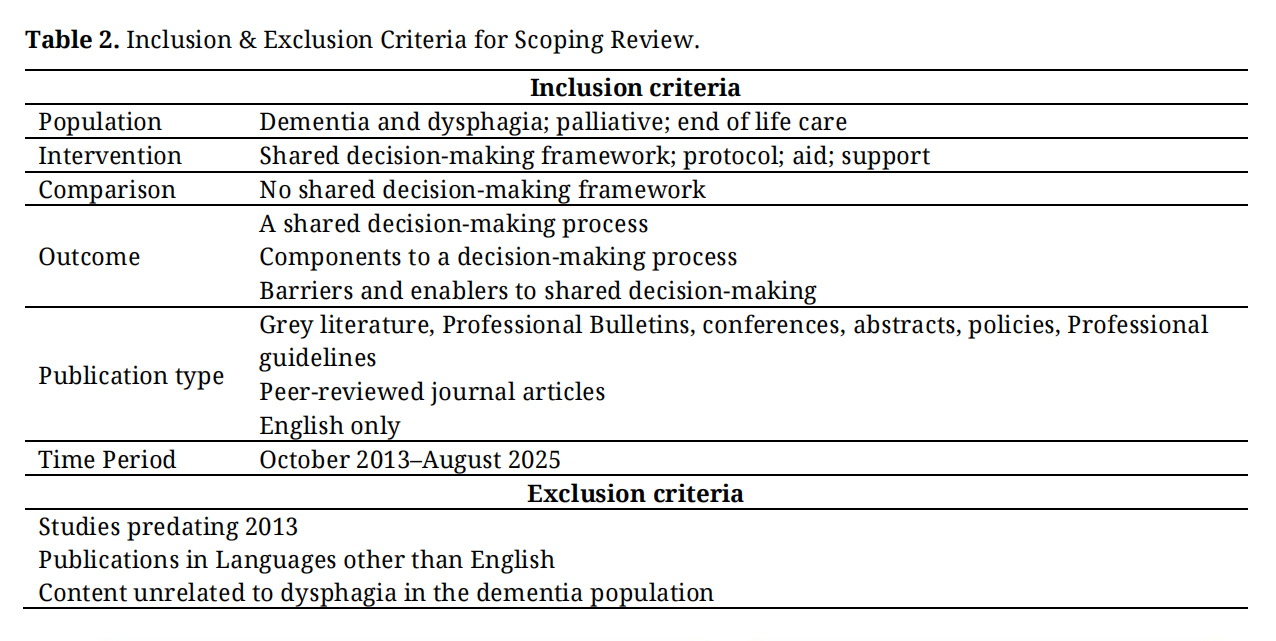 Table 2. Inclusion & Exclusion Criteria for Scoping Review.
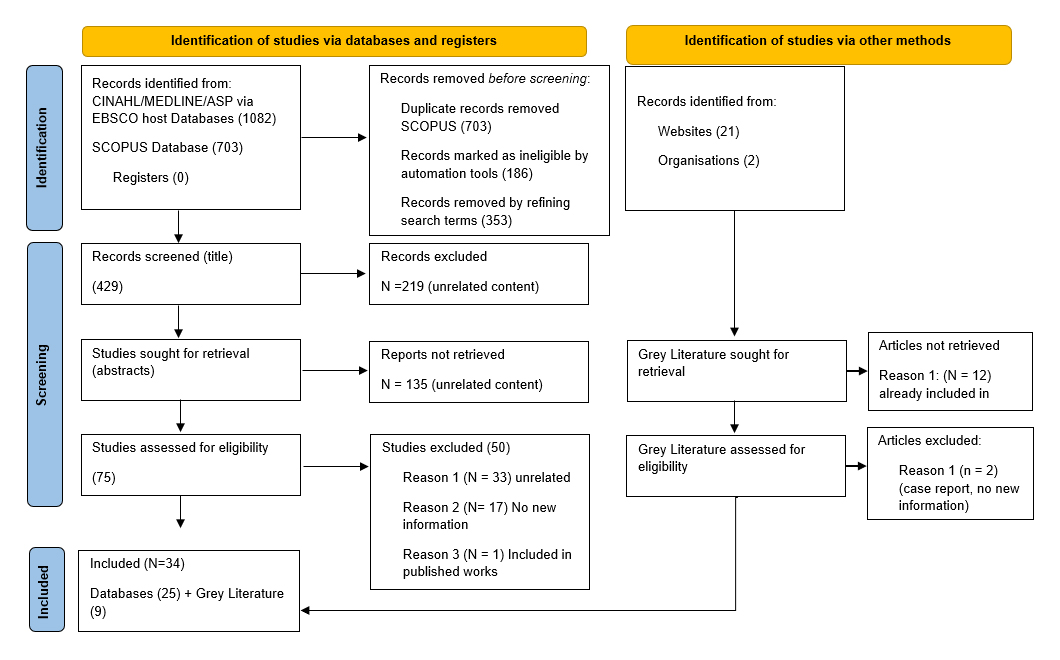 Figure 1. Prisma Flow Chart.
Stage 5. PRISMA Summary
There were 34 publications selected for inclusion in the scoping review (Table 3), comprising 25 studies from the bibliometric databases, and nine pieces of grey literature from the Google Scholar search.
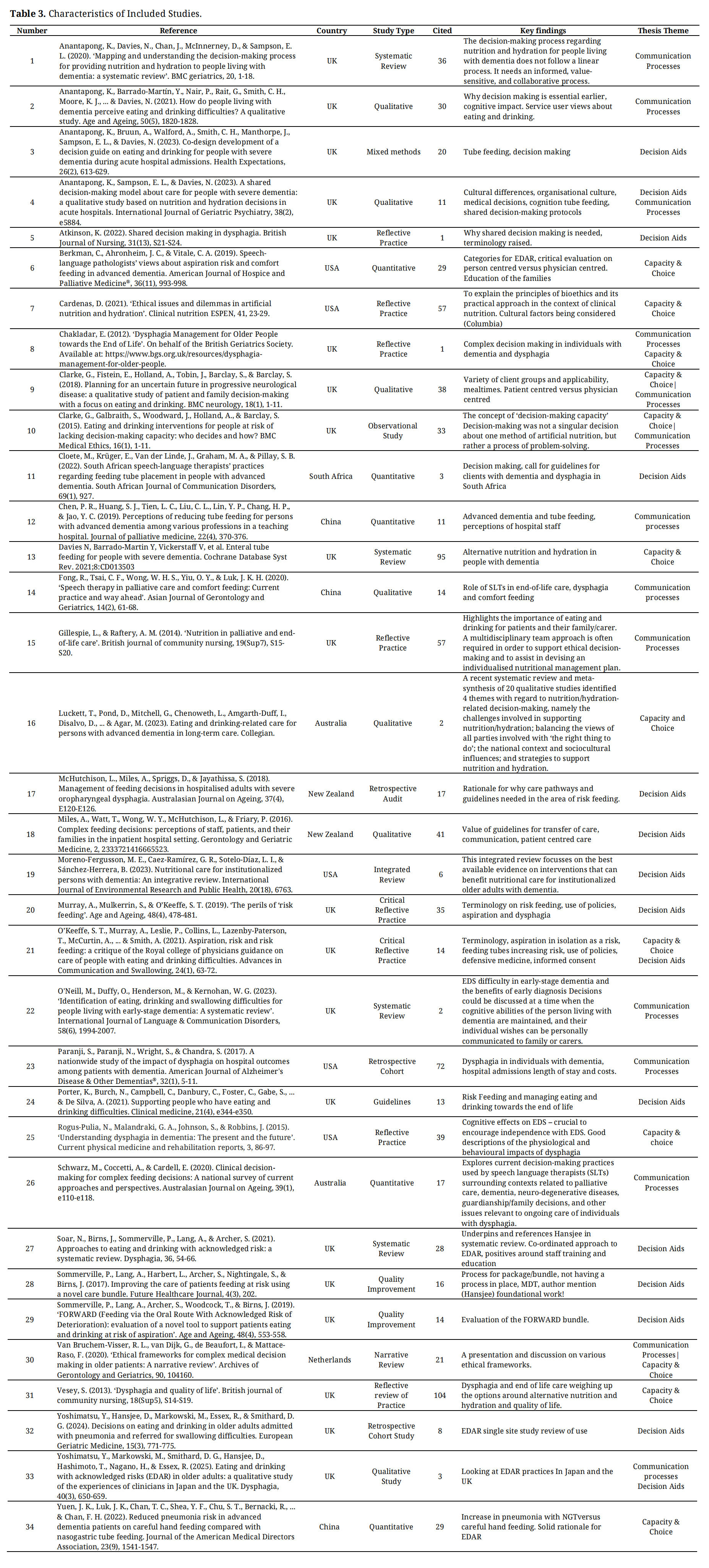 Table 3. Characteristics of Included Studies.
Stage 6. Consultation
The search was conducted by the researcher in 2023 and repeated in 2025, producing the same results, aside from a few new papers on the topic. The bibliometric search outcome was validated in 2025 by a research colleague using the inclusion and exclusion criteria outlined in the stages above.
All 34 papers included in this review were critically appraised to identify themes on the developing landscape and components of EDAR decision-making in people with dementia and dysphagia. In order to address the second research question, the barriers and enablers within the process will also be highlighted.
For theme identification and development, reflexive thematic analysis was conducted following a six-step recursive process [36]:
The following themes, in Figure 2 below, were identified by analysing the characteristics and key findings of the included articles:
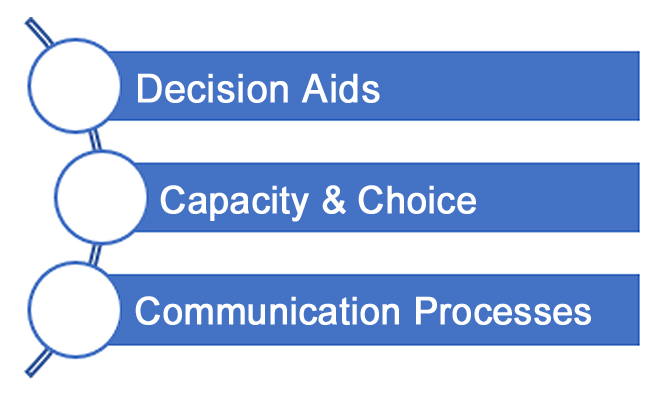 Figure 2. Themes.
Both research questions will be addressed within subthemes which will highlight some of the barriers (tensions) to the decision-making process and the resolutions that ensued.
Theme 1: Decision Aids. Having an over-riding theme of decision aids seemed useful to capture the components to the decision-making process as well as some of the procedural challenges that have arisen over the years as frameworks were developed.
TerminologyWhilst there is growing support globally for a co-ordinated approach to implementing EDAR, with clients with dementia and dysphagia and more broadly, with positive outcomes reported when a framework is part of practice, what to call the framework, was a dominant tension [20,23]. What did emerge since the inception of an EDAR protocol by Hansjee (2013) [11] and when teams were beginning to adapt and adopt protocols or pathways of care for EDAR, was the appropriacy of terminology utilised such as ‘risk’ or ‘feeding’ for clients with dementia and dysphagia, in terms of dignity in care.
In a survey conducted by Hansjee & Sampson (2019) [37] both enablers and barriers to the use of the term ‘risk feeding’ were highlighted, as well as some solutions for consideration. The study concluded that until consensus on terminology from a collaborative, systems-wide approach has been considered, teams continue to use locally agreed terminology. The controversy on the terminology of risk feeding [38] was incessant and gained momentum with the release of the Royal College of Physicians (RCP) guidance on supporting individuals with eating and drinking difficulties [39]. In response to the RCP publication, O’Keeffe et al. (2021) [40] critiqued the terminology utilised. These debates were considered when the Royal College of Speech & Language Therapists (RCSLT) national guidance [41] was being drafted, ensuring a consultation on terminology was included when the document was disseminated for review. Consensus was then established on EDAR which eased tensions bringing the focus back to the purpose of supporting decision-making in this client group and to personalise terminology as well as optimise care according to what might work for the client and setting.
CollaborationIn a study, Anantapong and colleagues (2023) [26] identified decision-making processes and communication about nutrition and hydration as being emotionally demanding and poorly managed in hospital settings. There is acknowledgement, however, that it would not be fair to place the decision-making solely on the family, and that staff would need to mediate between the family requests and the best interests of the person with dementia, considering the progression of the disease.
The burden of decision-making is also reiterated in studies globally. In a study conducted by Yoshimatsu et. al (2025) [42] investigating EDAR practices in Japan, decision-making was shaped by a complex combination of individual, structural and cultural factors, which indicated in the Japanese culture a greater likeliness to defer clinical decision-making and to side with families’ wishes, which can be emotive and provoke tensions if there are conflicts amongst family members.
Whilst palliative care decisions in some countries are considered a death sentence and communication is absent, locally in the UK, shared decision-making models are found to be advantageous in enabling staff as well as patients and family to work together to pursue a best interest decision [7]. Cultural and spiritual preferences are reinforced within the RCSLT national guidance [41] and from an international perspective within the World Alzheimer’s report essay [10], steering the clinician towards a holistic lens. Increased collaboration and discussion between teams and the client/family via supported decision-making frameworks can therefore be advantageous to formalising the decision-making process for clients with dementia and dysphagia.
Problem Solving ApproachRather than a specific set of decision-making factors or criteria which can be applied to each case, it is suggested in the literature that decision-making is better conceptualised as a problem-solving process involving the person with dementia, families and staff, weighing and balancing information on identification of risks, burdens and benefits, treatment goals, multidisciplinary involvement/actions and future planning [6,43]. Frameworks or protocols can function as an analytical tool during moral case deliberations [44], particularly for clinicians who are generally not well trained in medical ethics but are already used to following guidelines and protocols.
The crucial point to consider within this, is that whilst health care workers may suffer moral distress due to their responsibility of contributing to complex decision-making situations and finding the right course of action, the use of a decision aid can provide the team with an opportunity to discuss each unique case scenario in a structured way [45], with the clients wishes at the forefront and to furnish a structure for what may be the best way forward, even if the circumstances are suboptimal.
A protocol can take the burden off family members who have to decide for their next of kin, who may not have the capacity to make these decisions, what should be done. Facilitating a structure for meetings concerning complex clinical ethical decision-making is of significant benefit, as a study by Kristensson et al. (2018) [46] had previously revealed that family members as well as patients are often unclear of the purpose of shared care plan meetings.
With the complexities of decision-making for this client group, and the number of components to consider within the process, there are several NHS Trusts which have over the last decade, built on the original work of Hansjee (2013) [11] and considered various ways to draw these processes together for those eating and drinking with acknowledged risks. There are professional organisations globally, such as in New Zealand [21] where EDAR was implemented for individuals with advanced dementia as an alternative to tube feeding, due to ANH being more burdensome than of benefit [15,47,48].
Given that decision-making is not a linear process and will vary according to the individual, their circumstances and the setting, the RCSLT national guidance [41] lends to a problem-solving approach offering essential recommendations to embed rather than steps. The facets to the decision-making process included in the RCSLT documentation were outlined to be, but not necessarily in this order, establishing the goal of intervention, conducting a capacity assessment, evaluating the swallow, including the multidisciplinary team and advance care planning. The recommendations were purposely broad to cover organisational processes across the hospital and community settings with the view that by addressing all components, this would likely lead to a robust process of supported decision making.
For EDAR frameworks to be successful however there will need to be organisational consensus on terminology, collaborative discussions, multidisciplinary problem solving on the various aspects of care with the client’s choice at the centre of the process.
Theme 2: Capacity & Choice. The original drive towards developing a protocol to support decision-making, was to improve the process by galvanising person-centredness, adding value with an individualised approach to care. The overall goal of the national guidance on EDAR was to support the inclusion of the individual’s wishes within the decision-making process irrespective of whether they have capacity to accept the risks involved [41]. For individuals living with dementia and dysphagia, navigating these ethical decisions, commands a co-ordinated and individualised approach.
Ethical DecisionsEthical frameworks according to Van Bruchem Visser et al. (2020) [44] are designed to stimulate debate and guarantee a transparent, well-presented solution, accepted by all parties. One of the principles discussed in the Ethical Framework for Health and Social Care is that of respect [49]. Most well-known are the four principles as described by Beauchamp (2007) [50], beneficence, nonmaleficence, autonomy, and justice, which are often seen as a cornerstone of medical ethics. It is every individual’s basic human right to be included in decisions about their care. During the advanced stages of dementia, most individuals lack the capacity to make decisions on their health, including nutrition, which fundamentally leads to delays in clinicians conducting a capacity assessment, as established by Hansjee (2019, 2013) [6,11]. Arguably one of the resolutions to having a robust decision-making framework in place however is the facilitation of the client’s choices and preferences, supporting enablement.
Person-Centred CareIn a study by Anantapong et al. (2021) [7], participants in the early stages of dementia expressed a preference for leaving the decision-making on eating and drinking difficulties to whenever it arose through the disease progression, although there was the awareness that this decision could then be burdensome on their family. What was clear was the ability to eat and drink represented quality of life and something they could control, with a general opposition to ANH as this route was perceived to be unnatural.
Anantapong et al. (2023) [26] reported family and carers’ frustrations on assumptions staff made about their relatives’ preferences and ability to eat and drink. Firstly, people with dementia were not included in the workshops, so relatives expressed pressure in representing the views of their significant other. Secondly, family/relatives indicated that there were not only delays speaking to professionals, but additionally repeated discussions were conducted with various members of the team around the client’s preferences. One carer reported that whilst the person with severe dementia could not exercise their authority on their medical treatment, they should be able to express preferences on the food they ate, emphasizing the cultural and personal meaning of eating and drinking. This study raised concerns about the poor communication between the family and professionals over-riding the lack of a shared decision-making process.
In earlier publications by Hansjee (2022) [10], as well as in the national guidance [41], the personalised element of discussions with the client and those closest to them were outlined in terms of what is important in relation to eating and drinking for the client themselves. For example, food preferences, mealtime routines, as well as cultural, religious and spiritual beliefs associated with food were reiterated as essential, not only to the assessment but also to understanding the psychosocial impact of dysphagia and its associated interventions on a person's wellbeing. Further to this, accessible information on risks and benefits of EDAR was outlined in the form of an information leaflet for discussions with the individual/family carers [51]. The clinical significance of having a framework in place but also the tools to empower client choice is what is required to harness co-ordinated, inclusive person-centred care.
Cultural HumilityThe approach to personal choices was reinforced by Miles et al. (2016) [52] when interviewing family as well as patients on their views about EDAR. The ultimate rights of the client were discussed and the need to respect informed choices, but also for the multidisciplinary team to ensure that the families are equipped to make an informed choice by understanding all the different options and risks. By involving the client and families, staff are emphatically informed about cultural and religious views, contributing to person-centred care. In an expert essay for the World Alzheimer's Report [10] the prerequisite of determining personal choices and preferences for health and care systems globally, was proposed, to harness a person-centred approach. Many cultures and religions place an important symbolic value on food, whereby culinary traditions characterise social groups, reinforcing identity [53]. Small amounts of food by mouth can have a significant meaning for an individual and can contribute to a sense of wellbeing, autonomy and dignity.
Client choice in individuals with advanced dementia and dysphagia encompasses the time and documentation required to not only complete a capacity assessment but to establish personal, social and cultural preferences, a fundamental component to the supported decision-making.
Theme 3: Communication Processes. Interprofessional communication within the decision-making process is paramount to ensure the team is working towards a common goal [54] as well as to provide the team and the client with sufficient information to make safe, ethically appropriate management plans [22].
Documentation & HandoverIn a study by Anantapong et al. (2023) [26], family, carers and staff often found communication between each other difficult and fragmented amidst the chaotic context of hospital settings, with the frequency of staff rotations and turnover. The foundational audit conducted by Hansjee (2013) [11] identified that a key element for delays in the nutrition decision-making process was the lack of ownership and documentation on completing capacity assessments for nutrition [51]. High quality, transparent information and education were required, therefore, for robust decision-making.
Although the speech and language therapist, doctors, nursing staff and dietitians play key roles in the shared decision-making process, there are also significant contributions from pharmacy on medicines administration and physiotherapy on chest management [6]. Roles and responsibilities of all health care professionals need to be explicit for the system to run smoothly [21]. Accessibility of information-sharing with individuals and families to help make informed choices, as well as documentation of the decisions, are central to the process to facilitate effective transfers of care from hospital to the place of discharge and for readmissions.
PoliciesChalfont et al. (2018) [55] refers to a whole systems innovation to dementia care. This concept of an intervention being more sustainable, accessible, and cost-effective whilst reducing demands on health services via a multi-component intervention for people with dementia, is aligned to the purpose of a shared decision-making framework. Whilst decision aids did appear useful in capturing some of these processes, gaps arose with some adapted frameworks in fulfilling effective handovers during transfers of care. There was also the concern on the misuse of protocols to expedite discharge back to the community. The systemic approach that is required to meet the cyclical pathway of care from admission to discharge and readmission, became apparent. The necessity for personalising care to each client and assimilating discussions in advance care plans became intrinsic to the process as a whole. Although having a policy accompanying EDAR decision-making frameworks was seen in practice to bring clarity to the process and reduce misuse, some clinicians appeared to condemn EDAR policies. One of the reasons outlined by Murray et al. (2019) [37] was the misconception that there is a linear relationship between dysphagia and developing aspiration pneumonia, implying that policies validate and perpetuate myths about aspiration and what is needed instead is education about the topic. Similarly, O’Keeffe et al. (2019) [38], emphasized that policies draw the focus to dysphagia practice and preventing aspiration rather than optimisation of nutrition and hydration, and pleasure. The misconception around dysphagia and aspiration leading to pneumonia was nevertheless directly addressed in the RCSLT national guidance [40].
Notwithstanding the contention around policies serving as defensive medicine and the protection of the staff member, as opposed to the individual at the centre of their care, was brought to light in the paper by O’Keeffe et al. (2019) [38]. Whilst the authors accepted that there are significant staff anxieties around people who eat and drink with risks, these were felt to be founded on misconceptions regarding aspiration and pneumonia as outlined in the preceding paragraph, and rather than EDAR policies there should be education programmes clarifying these misconceptions. Hansjee (2018) [51], however, presents a novel solution by framing the decision-making process as a model of care orchestrated as a personalised approach with the client at the centre. The benefit of organisational policies lies in the governance around implementation and the establishment as well as regularity of training and education around EDAR. Policies enhance clarity on the respective MDT roles, alongside a rigorous multi-professional educational programme on the processes including the relationship between dysphagia, resulting risks, aspiration and pneumonia. Dissemination via educational programmes can further reach health care assistants who frequently assist these clients with their eating and drinking.
Whilst there remains to be strong views expressed on terminology or whether policies and protocols aid decision-making or whether these processes perpetuate unwarranted fears with ‘risks’ [40], a systematic review on EDAR approaches by Soar et al. (2017) [47] identified improvements in documentation of decision-making, capacity assessments and nutrition planning, with a framework in place. In order, however, for there to be enhanced communication between staff, clients and families in the decision-making process Hansjee (2018) [51] additionally promoted the need for information leaflets to be utilised in supporting informed discussions with individuals and/or their families, emphasizing the need for policies to accompany protocols for robustness.
There is further demonstration on the need for the development and use of evidence-based interprofessional clinical guidelines to complement decision-making in relation to EDAR in the McHutchison et al. (2018) [21] study outlining the detrimental impact on safety and continuity of care without protocols and policies.
When it comes to complex ethical decisions on nutrition for individuals with dementia and dysphagia, there is no one size fits all toolkit to follow. What this scoping review lays out are the core components, from evolving EDAR approaches, that add to a robust decision-making process. Organisational agreement on frameworks, policies and terminology forms the foundation for an effective pathway. Collaboration and MDT problem-solving, focussing on the clients personal, social, cultural preferences are integral whilst documentation and handover are essential to optimising care.
Despite the barriers around terminology, gaps in documentation during transfers of care and the contention around EDAR policies, what this review makes explicit is having a multidisciplinary framework in place to improve decision-making for clients with dementia and dysphagia has been found to be beneficial. The culmination of a decade of experiential learning and incorporation of feedback on EDAR approaches has led to a paradigm shift in the management of risk enablement in individuals with dementia and swallowing difficulties.
Ethical approval is not applicable for studies not involving humans or animals.
Declaration of Helsinki STROBE Reporting GuidelineThis study adhered to the Helsinki Declaration. The Strengthening the Reporting of Observational studies in Epidemiology (STROBE) reporting guideline was followed.
All data generated from the studies are available in the manuscript.
DH contributed to the Original Draft Preparation, Conceptualization, Methodology, Formal Analysis, Writing, Review and Editing. OO contributed to Review and Editing.
The authors declare that they have no conflicts of interest.
This is a scoping review so there is no funding source for the research.
1.
2.
3.
4.
5.
6.
7.
8.
9.
10.
11.
12.
13.
14.
15.
16.
17.
18.
19.
20.
21.
22.
23.
24.
25.
26.
27.
28.
29.
30.
31.
32.
33.
34.
35.
36.
37.
38.
39.
40.
41.
42.
43.
44.
45.
46.
47.
48.
49.
50.
51.
52.
53.
54.
55.
Hansjee D, Ojo O. EDAR Approaches to Supporting Decision-Making in People with Dementia and Dysphagia: A Scoping Review. Adv Geriatr Med Res. 2026;8(3):e260023. https://doi.org/10.20900/agmr20260023.

Copyright © Hapres Co., Ltd. Privacy Policy | Terms and Conditions


