Location: Home >> Detail
Adv Geriatr Med Res. 2026;8(3):e260026. https://doi.org/10.20900/agmr20260026
 ,
Patricia Angel ,
Hanne I. Jensen ,
Helene K. Nedergaard
,
Patricia Angel ,
Hanne I. Jensen ,
Helene K. Nedergaard
Departments of Anesthesiology and Intensive Care, Lillebaelt Hospital, University Hospital of Southern Denmark, Beriderbakken 4, DK-7100 Vejle, Denmark
Correspondence: Kathrine T. Olesen.
Background: As the global population grows and ages, comorbidities increase. To avoid unnecessary acute hospital admissions among patients nearing the end of life, is essential to increase our focus on palliative care and advance care planning for these patients. In 2022, the palliative care team at a Danish university hospital began supporting the identification of in-hospital patients approaching the end of life by enhancing basic palliative measures in collaboration with individual departments. This study aimed to assess whether that in-house palliative initiative could contribute to reducing undesirable emergency hospital admissions among patients nearing the end of life who have mainly palliative needs. Methods: A retrospective cohort study was conducted of all patients admitted as ‘critical call’ cases to a Danish university hospital during three-month periods in 2021, 2022, and 2023. Data were extracted from the hospital’s patient registration system. The study periods included one pre- and two post-implementation phases of the in-house palliative initiative. Results: The proportions of patients for whom critical call admissions could have been avoided were 7% in both 2021 and 2022, and 8% in 2023. The proportion of patients for whom critical call admissions probably should have been avoided was 10% of critical call admissions in 2021, falling to 4% in 2022 and 3% in 2023. Conclusions: Implementing an in-house palliative care initiative that prioritizes patients with palliative needs may contribute to reducing preventable emergency admissions for this patient group.
As the global population grows and ages, patients with life threatening illnesses are living longer [1], increasing the need for palliative care. However, estimates show that only about one in 10 people worldwide who need palliative care actually receive it [2]. Barriers to timely palliative care have been identified at individual, interpersonal, community, health care professional, and policy levels [3].
Although estimating the exact time left in a patient’s life is impossible, several indicators can help identify patients approaching end of life (EOL), including deteriorating physical performance, increasing dependence for basic activities of daily living, unplanned hospital admissions, and persistent weight loss [4,5]. Terminally ill patients with declining physical and cognitive health often have complex palliative needs. It is therefore appropriate to explore options and develop a shared care plan that respects and addresses patients’ wishes while they can still participate in and contribute to their own advanced care planning [6].
When a patient is approaching EOL and their palliative needs are identified, health care professionals should discuss the patient’s preferences for EOL care with them and, where appropriate, with their relatives. Although some professionals support having these conversations, they often lack training in conducting difficult discussions and may be hindered by the stressful hospital environment and time constraints [7,8]. Furthermore, health care professionals are primarily trained to cure patients, with all that it entails, which, for some, can create a barrier to considering the withdrawal of active treatment [9].
Studies have reported that patients with serious illnesses often want to discuss their remaining time and preferred treatments (for example, chemotherapy or surgery) with health care professionals [10,11]. When given the opportunity to take an active role in planning this period, severely ill patients found the experience valuable, both for themselves and their relatives, and appreciated that their wishes were explored and discussed openly [12–14].
Until 2021, the palliative care team at a Danish university hospital worked almost exclusively outside the hospital. In autumn 2021, the team introduced an in-house service to support screening for and identification of palliative needs among hospitalised and outpatient patients, to strengthen basic palliative skills in collaboration with clinical departments and to provide advice on complex palliative patient trajectories. The service operated through participation in daily medical conferences, joint interdisciplinary rounds, joint outpatient clinics, and by offering ad hoc or structured supervision within departments by an internal palliative care specialist (nurse or physician), together with professional discussion and case-based supervision. A pilot test in a few departments was conducted in autumn 2021, and the in-house palliative initiative was implemented in all relevant clinical departments in early 2022.
This study aimed to assess whether the in-house palliative initiative could contribute to reducing the number of avoidable emergency hospital admissions among patients nearing EOL with predominantly palliative needs.
A retrospective cohort study was conducted of all critical call admissions to a Danish university hospital across one pre- and two post-implementation phases of an in-house-palliative initiative. The study sample included all patients admitted as critical call during three-month periods, from September 1 to November 30, in 2021, 2022, and 2023. Critical call admissions included medical or surgical diagnoses and were defined by a latest vital-parameter score of >2 (see Table S1). All critical call patients were received immediately upon arrival at an emergency department room by a large multidisciplinary team of physicians, nurses, and assistants tasked with rapid reception, stabilisation, diagnosis, and initiation of treatment.
Main OutcomesThe primary finding was the proportion of critical call patients who had a documented limitation of life-sustaining treatment prior to admission (e.g., do-not-resuscitate orders or decisions to withhold intensive care). Patients with such documentation before admission were classified as group I. As limitations on life-sustaining treatment were already in place for these patients, these critical call admissions could have been avoided.
The secondary finding was the proportion of critical call admissions that, in the prevailing situation, could not have been avoided but for whom a decision about the appropriate level of treatment should probably have been made and documented before admission (e.g., based on frailty, severe multimorbidity, or multiple acute admissions over the previous year). These patients were classified as group II. Group III consisted of admissions that represented appropriate critical call needs.
The primary analysis compared the proportion of critical call admissions at baseline with the follow-up data for the two groups.
Data CollectionData from all critical call admissions were routinely registered in the hospital’s emergency department database and in patients’ medical records. Data from 2021 served as baseline measurements, while data from 2022 and 2023 were considered as follow-up data. Because the majority of patients with EOL issues have repeated hospital admissions, it was hypothesised that the in-house palliative intervention would exert a greater impact on EOL decision-making over the two-year follow-up period. Registered study data included gender, age, comorbidities, recent hospital admissions, living situation, level of help at home, frailty, as assessed by the Clinical Frailty Scale [15], and ability to walk prior to admission.
A project nurse reviewed the journal material and recorded all the above-mentioned data. If there was uncertainty about a patient’s group assignment, a physician specialising in anaesthesia and intensive care determined whether the patient belonged to group I, II, or III. A professor in EOL care (critical call nurse) participated in making the final assessment.
Data AnalysesData were analysed using the statistical program Stata 18 (StataCorp LLC, College Station, TX, US). Categorical variables were compared using the chi-square test. Continuous and ordinal variables that were not normally distributed were compared using the Mann–Whitney U test. A double-sided p-value of <0.05 was considered statistically significant.
There were 315 critical call admissions in 2021, 320 in 2022, and 234 in 2023. Patients admitted in 2022–2023, compared with those admitted in 2021, had fewer comorbidities. The number of admissions in 2022 was the lowest of the three years, and patients admitted in 2023 had the lowest Clinical Frailty Scale scores (see Table 1).
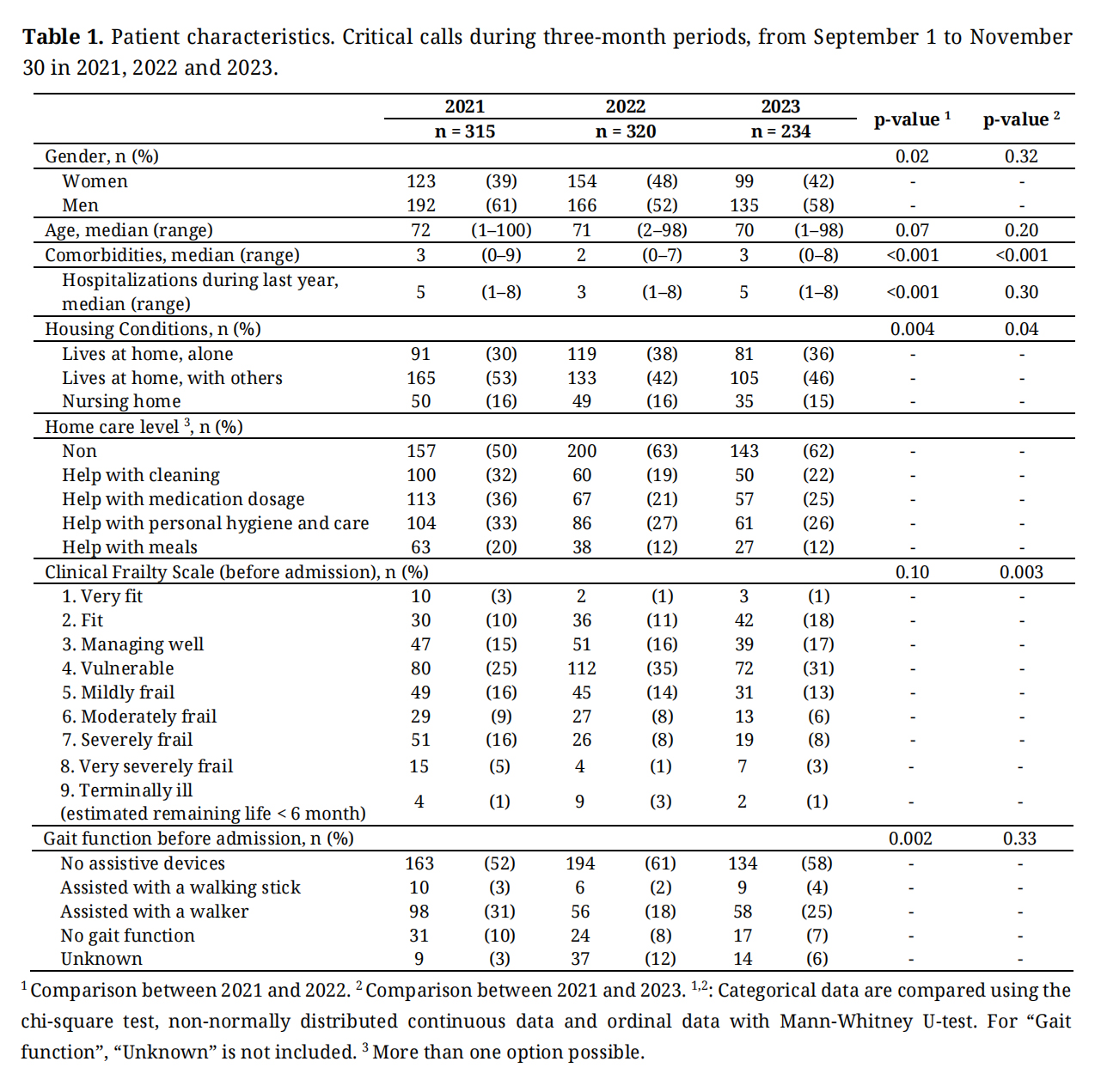 Table 1.
Patient characteristics. Critical calls during three-month periods, from September 1 to November 30 in 2021, 2022 and 2023.
Table 1.
Patient characteristics. Critical calls during three-month periods, from September 1 to November 30 in 2021, 2022 and 2023.
The proportion of group I patients (a critical call that could have been avoided) was 7% of the total number of admissions in 2021 and 2022 and 8% in 2023. Group II patients (a critical call probably should have been avoided) made up 10% of the total number of critical call admissions in 2021, 4% in 2022, and 3% in 2023 (see Table 2).
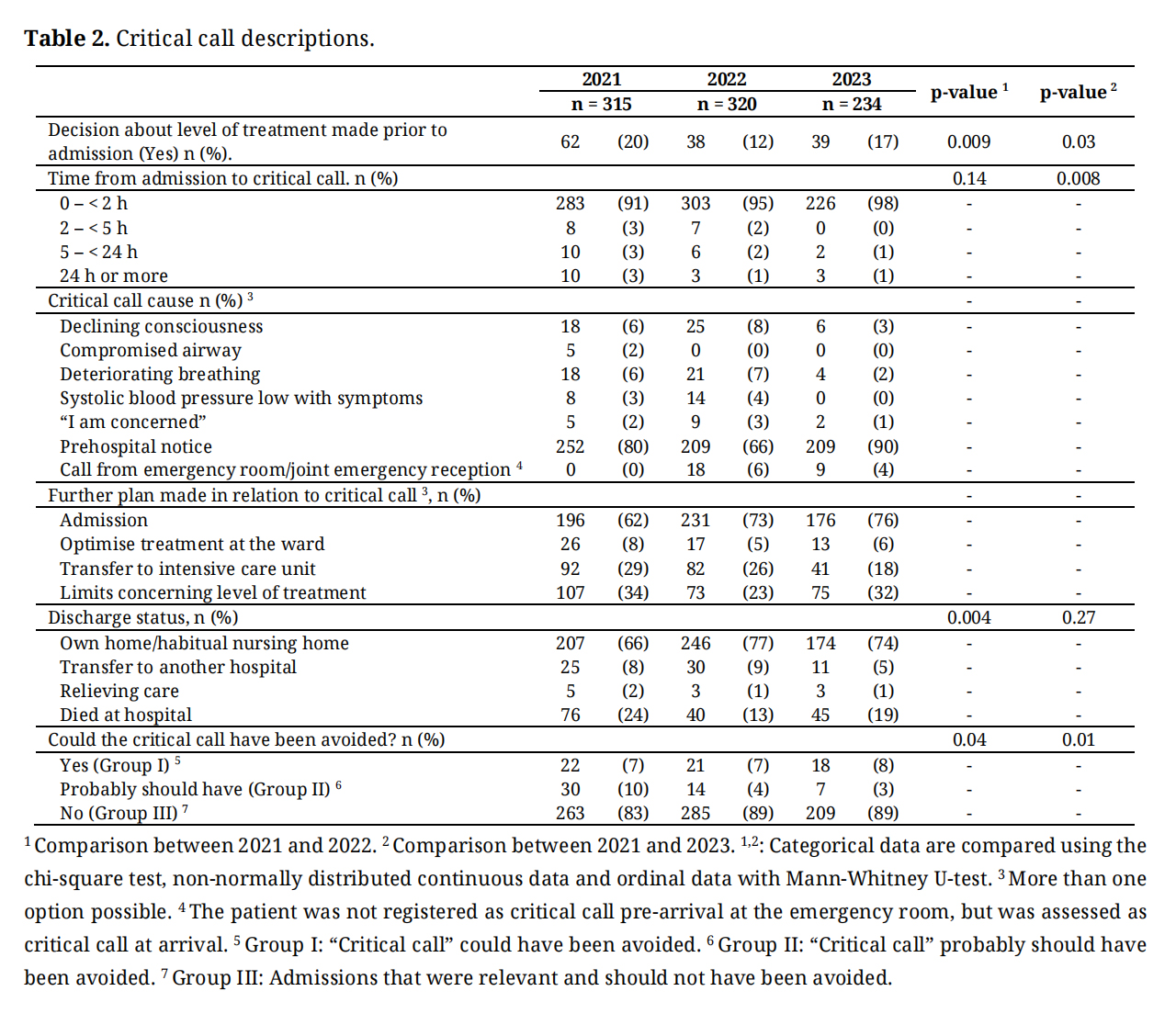 Table 2. Critical call descriptions.
Compared with group III patients, groups I and II patients mainly comprised the elderly, were more dependent on assistance, had higher Clinical Frailty Scale scores, and more often resided in nursing homes (see Table 3).
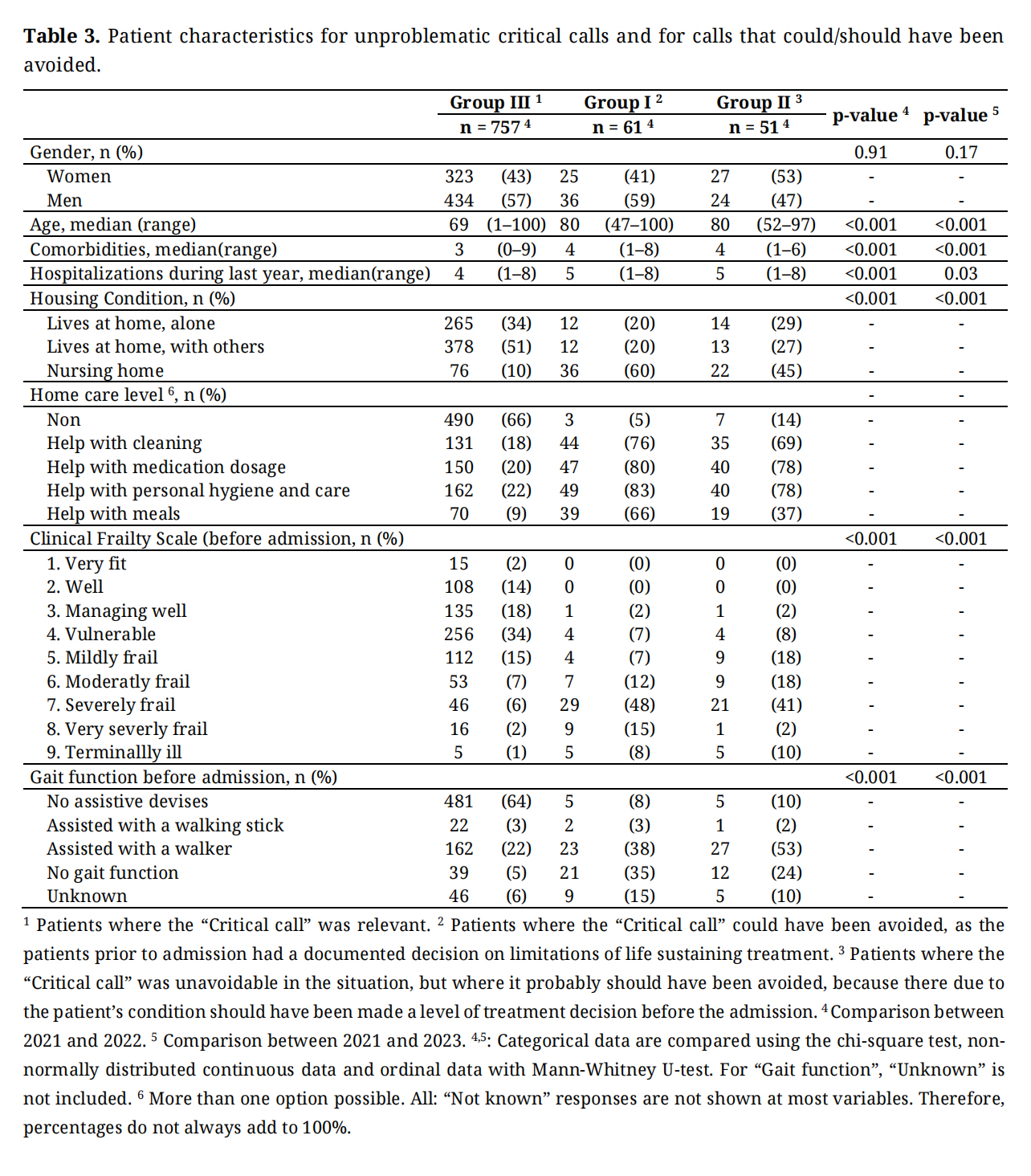 Table 3.
Patient characteristics for unproblematic critical calls and for calls that could/should have been avoided.
Table 3.
Patient characteristics for unproblematic critical calls and for calls that could/should have been avoided.
The causes of critical call admissions were fairly similar across the three groups. Approximately half of the patients from groups I and II died in the hospital, compared to 14% of the patients from group III (see Table 4).
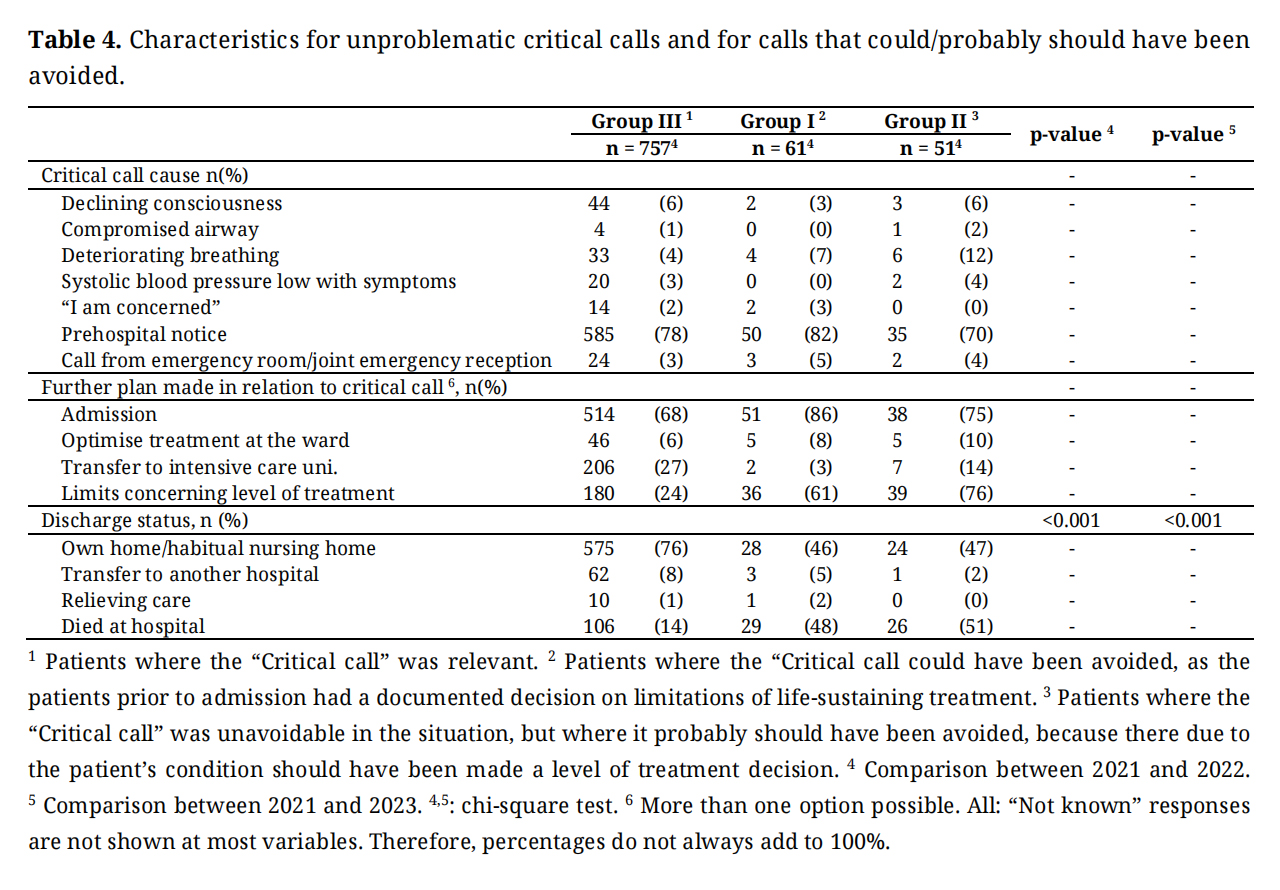 Table 4.
Characteristics for unproblematic critical calls and for calls that could/probably should have been avoided.
Table 4.
Characteristics for unproblematic critical calls and for calls that could/probably should have been avoided.
In the following section, two short cases from the audits are presented and represent the primary and secondary outcomes.
Group I: A critical care admission could have been avoided.
The patient was a 91-year-old nursing home resident with dementia. The patient had been unconscious for more than 10 h. The patient was admitted to the hospital as a critical care admission via the Danish emergency telephone number. Upon admission, the patient was found to be in the process of dying, so no further action was taken. The patient died on the same day in the hospital. ‘Do not resuscitate’ was registered in the patient’s medical nursing home record prior to admission.
Group II: A critical call admission probably should have been avoided.
The patient was an 85-year-old man with multiple recent contacts with the health care system because of aortic aneurisms, chronic obstructive pulmonary disease (COPD), type II diabetes, and psoriasis arthritis. The patient was admitted with abdominal pain and a deteriorating level of consciousness. Prior to admission, no decisions regarding the level of treatment had been made; this was only discussed after admission. The patient died later the same day.
When compared with the 2021 baseline, patients admitted in 2022 and 2023 had fewer comorbidities and fewer hospital admissions in the previous year, were more often independent at home, and had lower Clinical Frailty Scale scores. Groups I and II patients were more likely to include older patients who required more assistance, had higher Clinical Frailty Scale scores, and resided in nursing homes than group III patients for whom the critical call admission was deemed entirely relevant.
The number of critical call admissions that probably should have been avoided decreased from 10% to 3% from the baseline to the second follow-up, suggesting that in-house palliation and other palliative care initiatives had contributed to an increased focus on EOL issues so that there were fewer patients nearing EOL where no-one had taken responsibility for assessing the level of treatment. This is in line with a systematic review by Nayfeh et al. showing that end-of-life decision-making interventions and tools increased documentation of EOL care plans [16].
However, over the course of the three-year period, there were consistently 7%–8% of critical call admissions that could have been avoided. This suggests that documenting ‘no resuscitation’ and ‘no intensive care’ in patients’ files is insufficient. There is an additional need for a plan regarding what to do instead of a critical call hospital admission when patients approaching EOL become acutely critically ill. For terminally ill patients, this includes medical orders for relevant medications (e.g., for pain, nausea, and anxiety) and decisions on what to do when the predictable deterioration occurs [17]. The plan needs to be available to all health care professionals involved in a patient’s treatment and care [18].
A critical call requires many resources and has as its main purpose the creation of a sufficient flow forward in the treatment of critically ill patients. This can be a stressful environment for patient as well as health care professionals and creating such a plan is therefore not the most appropriate way to receive a patient approaching EOL. The main purpose of the in-house palliative initiative examined this study was not to save resources but to create awareness among the health care staff treating patients with palliative needs and, most importantly, train them to observe respect for the autonomy of patients receiving EOL care and treatment, as well as for their relatives.
Our findings align with those of other studies in this field. A systematic review indicated that advanced care planning was often found to decrease life-sustaining treatment, and, by increasing the use of hospice and palliative care, hospital admissions of increasingly comorbid and fragile patients could be prevented [19]. In addition, it was found that advanced care planning positively affected the quality of EOL by avoiding unwanted and undesirable life-sustaining treatments and emergency hospitalisations [19]. Another review found that advance care planning can improve the end of life of elderly people living in the community [20]. A 2009–2011 Canadian study compared 3109 patients who received palliative specialist care at home with 3109 patients who received usual care. The study found that community-based specialist palliative care teams were effective in reducing acute care use and hospital death at EOL [21]. Likewise, a review of eight selected studies reported a reduction in admission rates to acute hospital settings for cases in which specialist community palliative care teams cared for patients requiring EOL care versus those who received standard care only [22].
The wishes and preferences of frail patients approaching EOL with regard to their remaining time should be made clear to prevent undesirable and potentially harmful actions in terms of emergency hospital admissions and resuscitative measures. Clarity across health care sectors, both out of and in hospitals, is needed. A 2017–2020 study aimed to facilitate shared decisions between patients and clinicians in relation to emergency treatments using the Recommended Summary Plan for Emergency Care and Treatment (ReSPECT) conversation, which takes into account patient preferences for care and clinical recommendations [23]. The study found that these conversations may be complex and often involve clinical, emotional, and organisational barriers, so a nuanced and multifaceted approach is necessary to support good ReSPECT processes [23]. There is a need for alignment and easy access to palliative planning so that the multidisciplinary effort benefits the patient, their relatives, and the health care professionals involved. Different approaches are used to facilitate advanced care planning, such as shared decision-making [24] and choosing wisely [25,26]. These approaches attempt to assist and educate health care personnel in guiding patients with difficult ethical decisions and concerns.
The strengths of this study include comparable data over three years with a coherent population and the involvement of the same core group of health care professionals analysing the material. Thorough audits were conducted by experienced health care personnel (nurse as well as physician), with individual assessments of each patient case.
However, the study also has several limitations. First, critical call practice changed between 2022 and 2023, which may have induced biases in the comparison between years. However, as all critical call patient files in 2023 were also reviewed, the risk was considered minimal. Second, although the data assessors were experienced clinicians, the assessments were based on subjective evaluations of patients’ files, and consequently, details could have been missed or misunderstood. Third, given that EOL care and palliative needs generally have received increased focus, there is a risk that our results are influenced by a positive trend, where other palliative care interventions, both in hospital and in the community, may have contributed to avoided critical call admissions due to deaths. A link between patients who had received inpatient palliative care and subsequent critical calls would have strengthened the study, but these data were not available.
Our study suggests that an increased focus on patients with palliative needs due to an in-house palliative initiative might contribute to a decrease in avoidable critical call emergency admissions for patients nearing the end of life. For seriously ill patients, advance care planning is essential to avoid unwanted treatment near the end of life. This includes not only decisions regarding the level of treatment such as no resuscitation attempts, but also a palliative care plan to ensure optimal care and avoidance of unwanted critical call hospital admissions.
In accordance with Danish regulatory guidelines, permission to access hospital records without patient consent was obtained from hospital management for each audit period. Likewise, each audit was registered with the Danish Data Protection Agency. According to Danish legislation, the study did not require permission from the Regional Committees on Health Research Ethics. All data were entered into a secure SurveyXact database, and the code lists identifying registered patients were stored on a secure SharePoint research site.
Declaration of Helsinki STROBE Reporting GuidelineThis study adhered to the Helsinki Declaration. The Strengthening the Reporting of Observational studies in Epidemiology (STROBE) reporting guideline was followed.
The following supplementary materials are available online, Table S1: Criteria for critical call.
The dataset used and analysed during the current study are available from HIJ on reasonable request.
HIJ and HKN designed the study, PA extracted journal data, HKN reviewed patient cases, HIJ was responsible for data analyses. KTO was responsible for drafting the manuscript. All authors critically revised the manuscript and approved the final version.
The authors declare that they have no competing interests.
The study did not receive specific funding but was carried out as part of the authors’ research positions.
1.
2.
3.
4.
5.
6.
7.
8.
9.
10.
11.
12.
13.
14.
15.
16.
17.
18.
19.
20.
21.
22.
23.
24.
25.
26.
Olesen KT, Angel P, Jensen HI, Nedergaard HK. Can Undesirable Emergency Hospital Admissions Be Prevented by an Increased Focus on Identifying Patients with Palliative Needs? A Retrospective Study of Emergency Admissions. Adv Geriatr Med Res. 2026;8(3):e260026. https://doi.org/10.20900/agmr20260026.

Copyright © Hapres Co., Ltd. Privacy Policy | Terms and Conditions


