Location: Home >> Detail
Adv Geriatr Med Res. 2026;8(4):e260030. https://doi.org/10.20900/agmr20260030
 ,
John Boulet 4 ,
Teresa Moraga 3 ,
Bettina Habib 3
1
2
3
4
*
Background: Nearly one-third of health services represent low-value care, including non-recommended cancer screening. Diagnostic uncertainty and ineffective doctor-patient communication may be important contributors. We aimed to determine if better physician communication ability and clinical skills are associated with a lower likelihood of non-recommended cancer screening. Methods: A retrospective 3 cohort study was conducted comprised of international medical graduates who took the required Education Commission for Foreign Medical Graduates (ECFMG) certification examination between 1998–2004, entered practice in the United States in primary care, and saw Medicare patients in one or more of 3 cancer screening cohorts for an outpatient evaluation visit in 2014–2015. All Medicare patients seen by these physicians and their medical services and prescriptions were retrieved. ECFMG clinical assessment examination scores were used to measure communication ability and clinical skills. Main outcomes included non-recommended cancer screening for prostate cancer in men 70+ (cohort 1), cervical cancer in women 65+ (cohort 2), and colorectal cancer in individuals 75+ (cohort 3). Sensitivity analysis of recommended screening practices for prostate (<70 years) and colorectal cancer (<75 years). Multivariate GEE logistic regression estimated associations and adjusted for physician and patient characteristics, using patient as the unit of analysis. Results: Overall, 7136–7258 physicians and 673,654–1,561,737 patients were included in the 3 cohorts. Non-recommended screening occurred in 0.9%, 1.3%, and 10.0% of patients in the cervical, colorectal, and prostate cancer cohorts, respectively. Every 10% increase in the communication score was associated with a 12% increase in the odds of non-recommended screening for prostate (OR 1.12, 95% CI 1.06–1.19) and cervical cancer (OR 1.12, 95% CI 1.03–1.21) and by 10% for colorectal cancer, although the latter was not significant (OR 1.10, 95% CI 0.97–1.23). Better clinical skills were associated with 13% (OR 1.13, 95% CI 1.04–1.23) to 33% (OR 1.33, 95% CI 1.13–1.57) increased odds of prostate and colorectal cancer screening respectively. Better communication ability and clinical skills were also positively associated with recommended prostate cancer (OR 1.09, 95% CI 1.04–1.15, OR 1.11, 95% CI 1.03–1.19, respectively), and colorectal cancer screening (OR 1.11, 95% CI 1.02–1.20, OR 1.14, 95% CI 1.01–1.28, respectively). Conclusion: Physicians’ communication ability and clinical skills appear to be associated with a greater likelihood of non-recommended and recommended screening for prostate, cervical and colorectal cancer.
The Choosing Wisely campaign was started in 2012 by the American Board of Internal Medicine [1–3]. The campaign aimed to reduce low value health care, defined as health care services that produce no clinical benefit and potentially increase the risk of harm. It has been estimated that up to one-third of health services represent low-value care, an estimated $101 billion annually in the United States [4–6]. Despite extensive involvement by physician specialty societies, health care organizations, and health system leaders, the impact of the 600 published choosing wisely recommendations in reducing low value health care is minimal [1,4].
A number of health system, physician and patient-related factors have been identified as factors influencing the persistence of low value care [1,4,7,8]. These include physician payment structure, the influence of the technology and pharmaceutical industries, biased evidence, malpractice fear, diagnostic uncertainty, medical education, consumer expectation and a culture of more is better. The importance of these factors is thought to vary by the type of low value care, and it has been argued that a much better understanding of the predictors of low value care is needed to design effective interventions. Moreover, to be cost-effective, an analysis of predictors needs to target higher volume low value care [1,9].
In this respect, two physician related factors appear to influence clinical decision-making and may influence the likelihood of low value health care. First, a physician’s ability to communicate effectively with patients is essential in establishing a trusting doctor-patient relationship and in managing patient expectations that are important drivers of low value health care [10–14]. Second, diagnostic and management uncertainty is another factor that influences the ordering of low value tests and treatments. There has been increasing concern about the demise in the teaching of clinical skills and the replacement of clinical acumen with technology-assisted diagnostic test and imaging solutions [15,16]. As a result, there was both a resurgence in the teaching of clinical skills as well as the introduction of standardized evaluation in both medical schools and by regulatory agencies [16,17].
In 1988, the Educational Commission for Foreign Medical Graduates (ECFMG) was the first credentialing body in the world to introduce the standardized clinical assessment, an examination of clinical skills and communication ability, as a requirement for international medical graduates to enter residency training [18]. The examination involved direct observation of trainee performance in ten to eleven simulated patient encounters. A similar examination was introduced by the Medical Council of Canada as a requirement for licensure for all physicians in Canada in 1992 [19], and by the National Board of Medical Examiners for all physicians in the United States in 2004. Prior research has shown that better performance on the communication component of these standardized clinical assessments is associated with a reduction in complaints to medical regulatory authorities by patients [20], lower rates of antibiotic prescribing for upper respiratory infections [21], and lower rates of prescribing lipid reducing drugs for primary prevention in persons over age 75 [22]. Higher scores on the clinical skills component of standardized clinical assessments have been associated with closer adherence to evidence-based guidelines including lower rates of opioid prescribing for back and neck pain [21], lower rates of contraindicated prescribing and higher rates of mammography screening [23,24].
We hypothesized that better performance on the clinical skills and communication components of the ECFMG standardized clinical assessment examination would be associated with lower rates of non-recommended cancer screening: cervical cancer in women aged 65 and older, prostate cancer screening for men aged 70+, and colorectal cancer screening for persons aged 75 years and older.
A retrospective cohort study was conducted to assess the association between clinical skills, communication ability and cancer screening practices. The cohort was comprised of international medical graduates that completed the ECFMG clinical assessment examination, and entered practice in the United States. Cancer screening ordered by these physicians for Medicare patients was assessed in 2014 and 2015.
Study Populations PhysiciansThe study population was comprised of international medical graduates (IMGs) who represent approximately 25% of the physician workforce in the United States [25]. All IMGs were required to pass the ECFMG clinical assessment examination between 1988–2004 to enter residency training in the United States, thereby providing standardized assessment of clinical skills and communication ability. After 2004, the ECFMG examination was replaced by USMLE Step 2 Clinical Skills examination that was required for licensure of all United States physicians. The IMG physician cohort was restricted to physicians practicing in the United States, and to physicians who would be expected to provide primary preventive care of cancer screening: family physicians, general practitioners, internists, and geriatricians. Physician specialty was measured by linking the ECFMG database to the American Medical Association Masterfile in 2014–2015. Lastly, physicians were included if they billed for Medicare patients in 2014–2015 in one or more of three cancer screening cohorts.
PatientsThree cohorts of Medicare patients were assembled to measure non-recommended cancer screening practices in accordance with the age groups and conditions defined in the choosing wisely guidelines [26]. Non-recommended cervical cancer screening practices were assessed in women who were 65 years or older in 2014–2015, and who had no history of any form of cervical dysplasia or cancer, or other cancers of the female reproductive system. Non-recommended prostate cancer screening was assessed in men, 70 years of age or older, who had no personal or family history of prostate cancer. Non-recommended colorectal cancer screening was assessed in patients 75 years of age or older who had no personal or family history of colorectal cancer, adenomatous polyps or inflammatory bowel disease. To be included in a cohort, a patient had to be seen by a study physician for an evaluation and management visit in a community clinic or outpatient setting. In the sensitivity analysis, where we assessed the relationship between communication ability and recommended screening practices, we included men who aged 65 to 70 years for prostate cancer screening and men and women aged 65 to 75 for colorectal cancer screening, who met the same eligibility requirements as patients in the older cohorts.
Clinical Skills and Communication AbilityThe ECFMG Clinical skills assessment (CSA) was comprised to 10 to 11 clinical encounters with standardized patients, presenting health problems that would be important for all physicians to manage [27]. To measure clinical skills, history and physical examination was assessed using standardized case specific checklists completed by standardized patients, and diagnosis and management was assessed based on a post-encounter clinical note evaluated by trained physicians. Communication ability was assessed by standardized patients at each encounter. Two overall scores were created, both of which had to achieve a passing score for certification. The clinical skills score was comprised of the mean history and physical examination scores, and mean diagnosis and management scores across all encounters. The communication score was comprised of mean interpersonal skills, and English proficiency scores across all encounters.
OutcomesMedicare procedure and diagnostic codes were used to define cervical, prostate and colorectal cancer screening (Table S1). For a study physician to be responsible for a non-recommended screening practice, the physician had to have billed an evaluation and management visit of an eligible patient in an outpatient or community clinic setting and to have subsequently billed for a screening procedure for this patient or be the physician referring this patient for screening. If a patient was seen by more than one study physician, only their first visit to a study physician was considered. Cervical cancer screening included screening Papanicolaou smear, screening cervical cytopathology, and/or HPV assay. Prostate cancer screening included prostate specific antigen and/or digital rectal examination for cancer screening. Colorectal cancer screening included fecal occult blood test/immunoassay or cancer screening by colonoscopy or sigmoidoscopy. Both a diagnostic code for the visit and a procedure code indicating routine screening was required for a screening outcome to be documented. The diagnostic and procedure codes used to identify these screening outcomes are listed in Table S1.
Potential ConfoundersWe adjusted for other physician characteristics that have been associated with cancer screening including physician age, sex, specialty (general practice, family medicine, internal medicine, geriatrics), and practice region (northeast, mid-west, south, west) [28–38]. Although the impact of physician citizenship on cancer screening has not been investigated, it is plausible that differences in the prevalence of cancer in different countries may impact the likelihood of cancer screening. We grouped physician citizenship by country and continent (United States, United Kingdom, South America, Pakistan, Oceania/Asia, Middle East, Mexico/Central America, India, Europe, Eastern Europe, Canada, Africa) and adjusted for its impact on cancer screening. Patient characteristics have also been shown to influence the likelihood of cancer screening [28,31,32,39]. We adjusted for patient age, sex, race (White, Black, Asian, Hispanic, North American native, and other or non-documented race), and comorbidity using the weighted Elixhauser index [40].
AnalysisTo estimate the association between clinical skills, communication ability and non-recommended cancer screening, we used logistic regression within a generalized estimating equation framework. Patients were the unit of analysis, study physician was the clustering factor and an exchangeable correlation structure was used to adjust for clustering of patients within physician. Each clinical skills and communication score were modeled separately as continuous variables, adjusting for other physician and patient characteristics. The cervical cancer, prostate cancer and colorectal cancer cohorts were modeled separately. All models were adjusted for potential confounders. As not all physicians were in each cohort, we conducted a sensitivity analysis to determine if similar estimates were produced when we restricted the analysis to physicians in all three cohorts. We also conducted a sensitivity analysis to assess the counterfactual; that better clinical and communication skills would increase recommended screening practices for colorectal and prostate cancer and decrease the likelihood of non-recommended screening. All analyses were done using SAS version 9.4.
Overall, 32,908 physicians completed the ECFMG clinical skills assessment examination between 1998 and 2004, 26,023 were licensed to practice in the United States in 2014–2015, and 9759 were in eligible specialties; general practice, family medicine, internal medicine, geriatrics (Figure 1). Among these physicians, 7136 to 7258 billed for eligible Medicare patients in each cancer screening cohort, of which 7089 (97.5%) were in all three cohorts.
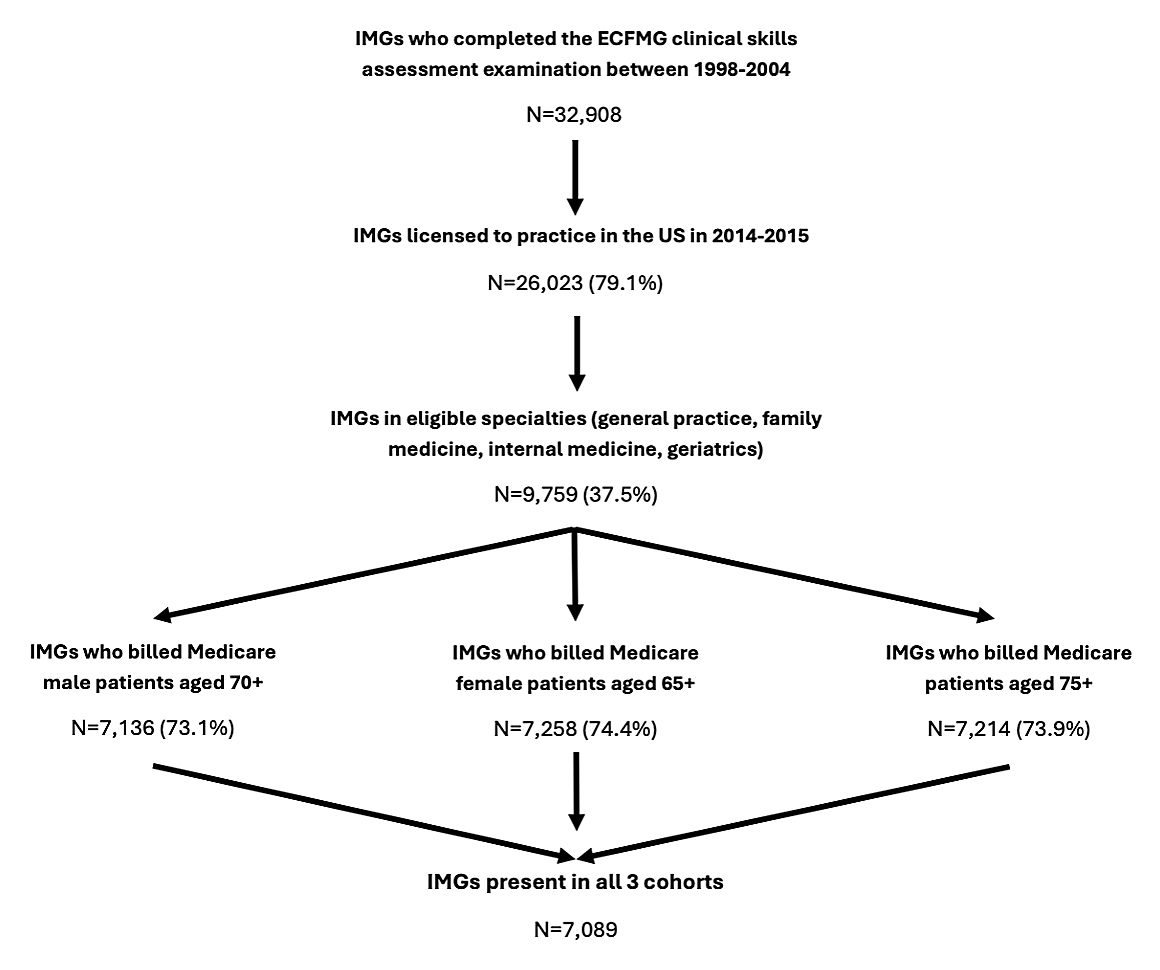 Figure 1. International Medical Graduates Who Completed the Educational Commission for Foreign Medical Graduates (ECFMG) Clinical Assessment Examination and Were Eligible for the Cancer Screening Cohorts.
In all three cohorts, the mean age of physicians in 2014 was 43.48 years, and 43%–44% were female (Table 1). Approximately one-quarter of international medical gradates (IMGs) were from India, 18% were citizens of the United States, followed by 14% who were from Oceania/Asia. The majority of physicians specialized in internal medicine (56%) or family medicine (41%), and practiced in the South (36%) or West (24%) regions. Overall mean clinical skills scores were 64%, of which the diagnosis and management component was the lowest subscore (59%). Overall mean communication scores were higher (77%), of which the interpersonal skills subscore was the lowest (76%).
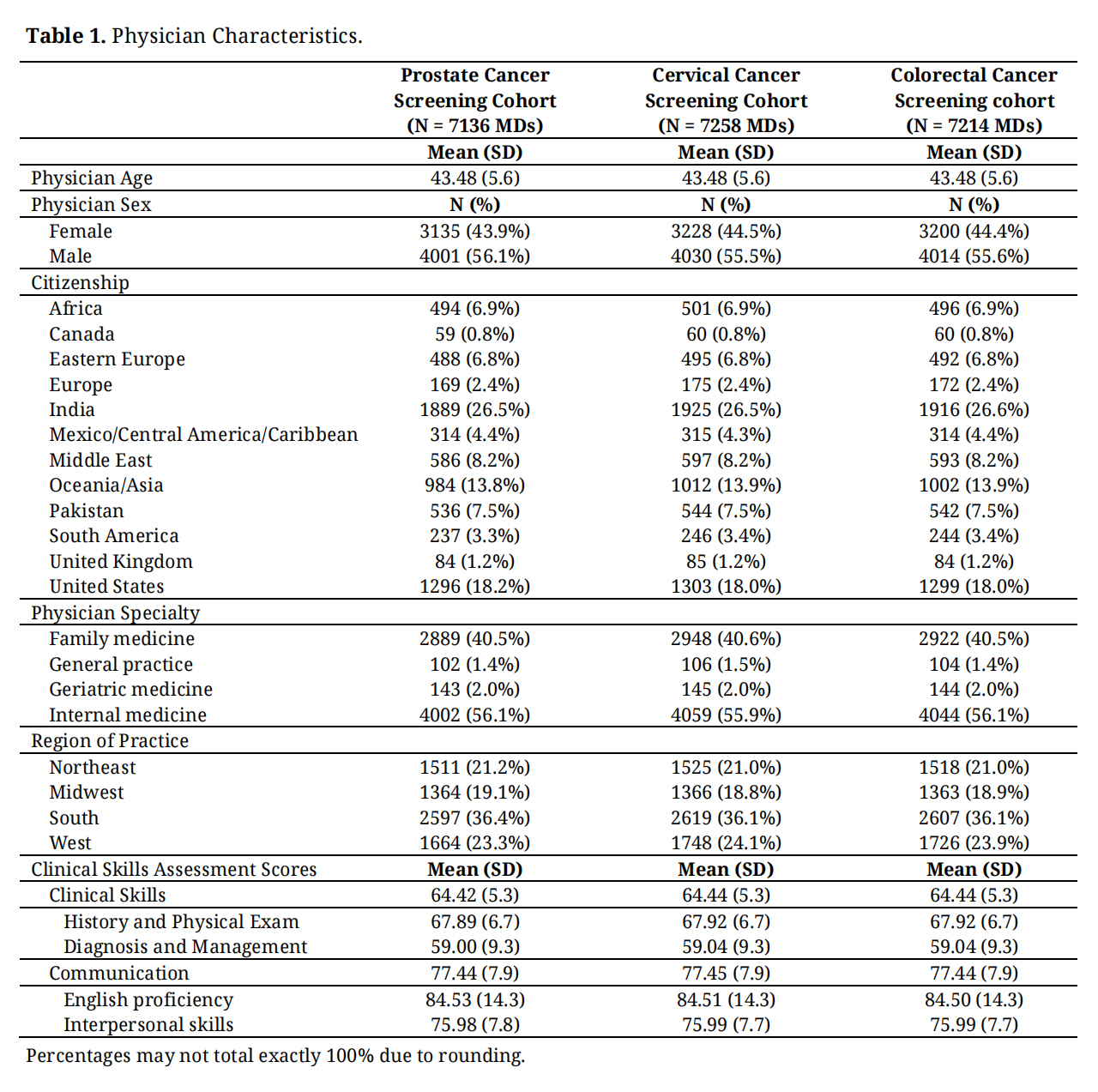 Table 1. Physician Characteristics.
The cancer screening cohorts varied in size from 673,376 for the prostate screening cohort to 1,561,737 for the cervical cancer cohort (Table 2). In the colorectal cancer cohort, 61.5% were women, and the mean age varied from 78.0 to 83.4 years, reflecting age cut-offs for each cohort. The majority of individuals in each cohort were white (over 81%). The mean number of comorbid conditions was highest for individuals in the prostate cancer cohort (5.6 co-morbidities). Cancer screening in the three cohorts was uncommon, being lowest for cervical cancer screening (0.9%), and highest for prostate cancer (10.0%).
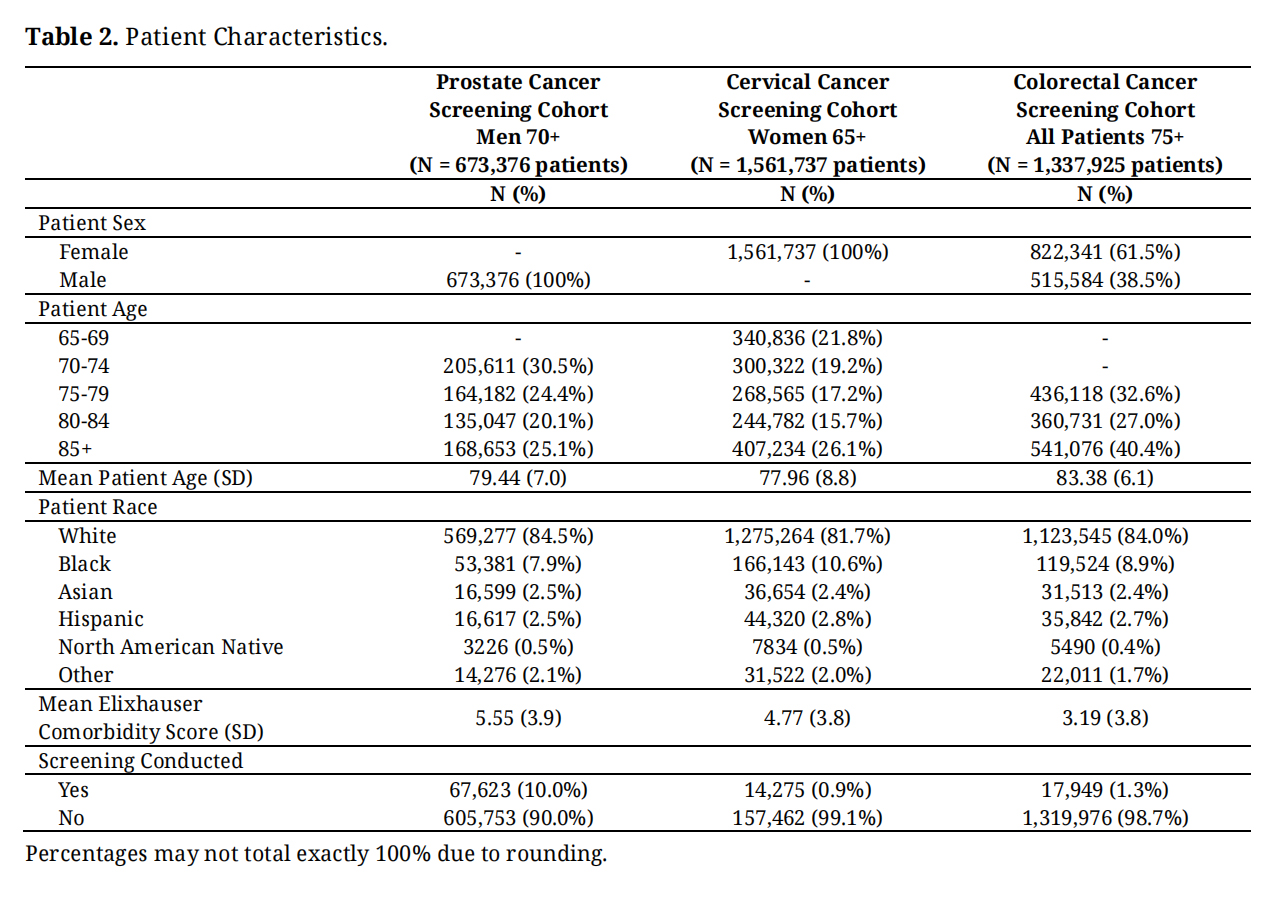 Table 2. Patient Characteristics.
In each cancer screening cohort, there was a trend for higher scores in clinical skills and communication to increase the odds of non-recommended cancer screening (Figure 2). In the prostate cancer screening cohort, every 10% increase in clinical skills score increased the odds of prostate cancer screening by 13% (95% CI 1.04–1.23), and for communication ability by 12% (95% CI 1.06–1.19), of which the diagnosis and management and interpersonal skills sub-scores were the most influential. In the cervical cancer screening cohort, similar trends were evident although it was only communication ability that was statistically significant (OR 1.12 95% CI 1.03–1.21). In the colorectal cancer screening cohort, higher clinical skills scores substantially increased the odds of cancer screening, by 33% per 10% increase in score (95% CI 1.13–1.57) with diagnosis and management ability being the most important contributor. In sensitivity analysis, when the physician cohort was restricted to the 7089 physicians who had patients in all three cohorts, the results were virtually identical. When we investigated the likelihood of conducting recommended prostate and colorectal screening practices for younger patients, we found screening rates were higher (prostate: 16.2%; colorectal cancer: 2.6%) and found similar positive associations with clinical skills and communication ability. Higher scores were positively associated with both recommended and non-recommended screening practices (Figure 2).
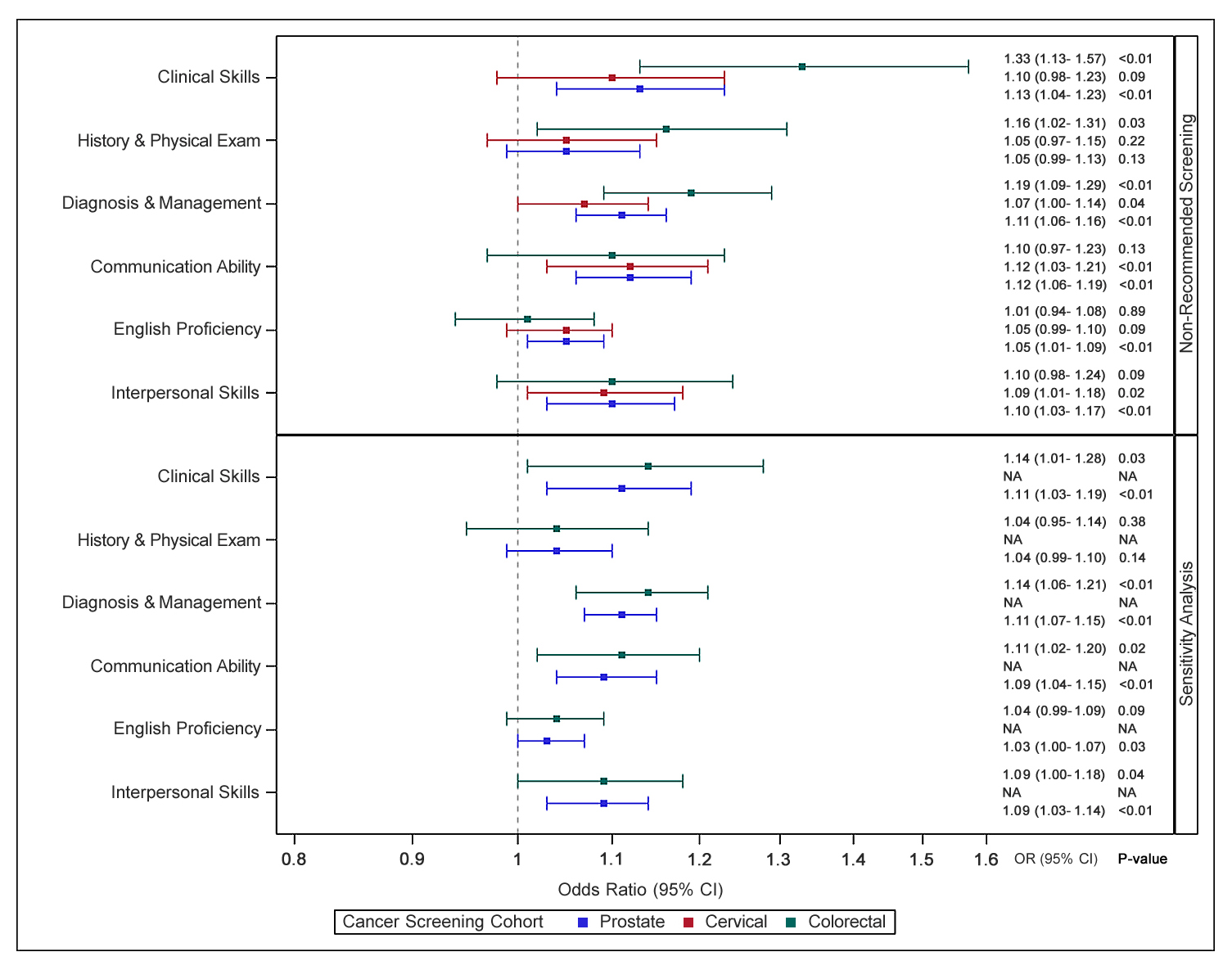 Figure 2.
Association of Physician Clinical Skills Assessment Scores with Non-Recommended and Recommended Cancer Screening. ORs are per 10% increase in score NA = not applicable All models are adjusted for physician and patient characteristics.
Physician age and gender were also significant predictors of the odds of non-recommended screening (Table 3). Older physicians were more likely to order screening, an association that was significant for both prostate and colorectal cancer. Female physicians were more than two times more likely to conduct cervical cancer screening and 34% more likely to conduct colorectal cancer screening. Physician citizenship was associated with the odds of prostate cancer screening with physicians from Africa, India, and Pakistan being less likely to screen men for prostate cancer than physicians who were citizens of the United States. Physician specialty and practice region were also associated with the odds of non-recommended cancer screening. Compared to internists, family physicians and general practitioners were more likely to conduct non-recommended cancer screening in some but not all cohorts. Physicians practicing in the south and west were more likely to conduct prostate and colorectal cancer screening than physicians in the northeast.
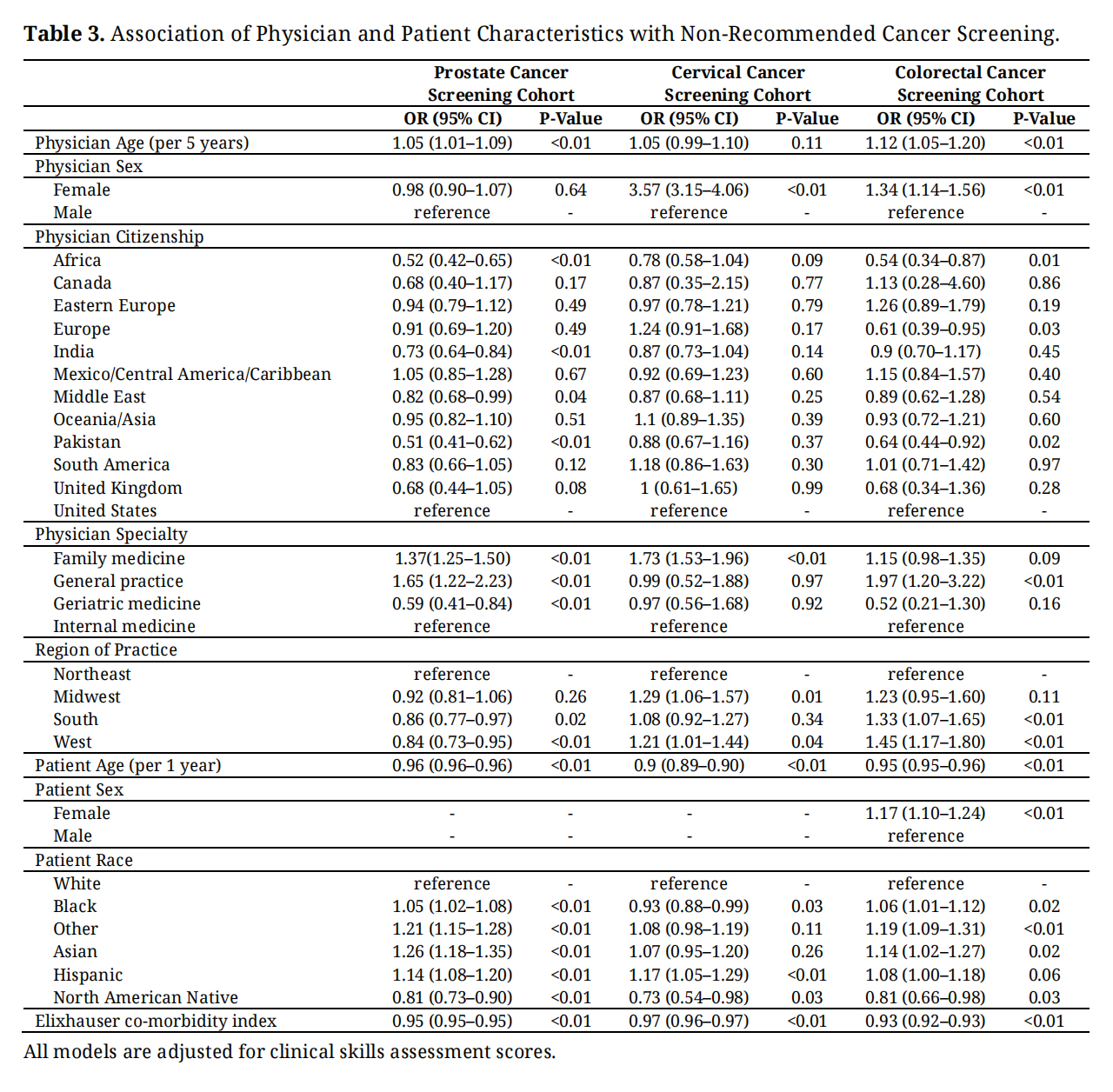 Table 3. Association of Physician and Patient Characteristics with Non-Recommended Cancer Screening.
Across all three screening cohorts, increasing patient age reduced the odds of being screened, by 4% per one year increase in age for prostate cancer screening to 10% for cervical cancer screening (Table 3). Consistent with this trend, an increasing number of co-morbid conditions also reduced the odds of screening. For colorectal cancer screening, female patients were 17% more likely to be screened compared to males. Finally, patient race influenced the odds of screening differently for the three cancer screening cohorts. For cervical cancer screening and prostate cancer screening Hispanic individuals were more likely to be screening compared to whites. For prostate cancer, Asian and black patients were more likely to be screened. Asian and black patients were also more likely to be screened for colorectal cancer. In all screening cohorts, North American natives were less likely to be screened.
This study tested the hypothesis that better clinical and communication skills would be associated with a reduction in the likelihood of non-recommended screening for cervical, prostate and colorectal cancer. We found that non-recommended screening practices was rare for cervical (0.9%) and colorectal cancer screening (1.3%) and more common for prostate cancer (10.0%). The rates of non-recommended screening in this study are lower than those reported elsewhere [41–43] likely due to a difference in the source of information about screening (population surveys), and the restrictions we placed on the patient populations who were included in screening visits and the conservative definition of what constituted a screening visit. Contrary to expectation, better clinical skills and communication ability increased the likelihood of both non-recommended as well as recommended cancer screening. Physician age, sex, specialty, practice region and country of origin were also associated with the likelihood of non-recommended screening in some but not all cohorts.
There are several possible reasons why we found a positive association between better clinical and communications skills and non-recommended cancer screening. First, screening guidelines recognize that there may be some patients for whom non-recommended screening may be warranted by virtue of their medical history or risk factors [44–47]. These exceptions may represent those screened for cervical and colorectal cancer, where rates were very low, and where patient-specific risk factors may have been better recognized by physicians with better clinical skills particularly diagnostic and management skills where the strongest associations were observed. Second, guidelines on recommended and non-recommended screening practices may be inconsistent or contradictory. This may explain the higher rates of prostate cancer screening where, unlike guidelines from the US Preventive Services Task Force, the American Cancer Society guidelines do not recommend a specific upper age cut-off for screening, but rather base it on life expectancy, where screening is not recommended for men with a life expectancy of less than 10 years [48,49]. Third, while cancer screening would be covered in every medical school curricula and primary care residency program, the concept of low value care and non-recommended cancer screening practices may not be. This may be why better clinical and communication skills were positively associated with both recommended and non-recommended cancer screening. Even in today’s medical curricula there is limited or no attention to the issue of low value health care [50,51]. Finally, higher scoring physicians may have a propensity to order a greater number of tests and services, a reflection of a more thorough approach to patient management. Prior research suggests that higher performing physicians may be more selective, for example, having higher rates of mammography screening for recommended relative to non-recommended groups [52], as well as prescribing more disease specific relative to symptom relief medication [23].
Similar to prior research, we found that female physicians were more likely than male physicians to screen women for cervical cancer as well as colorectal cancer but not prostate cancer [30,33,34,53]. We saw a similar trend as others in physicians’ age [29,54]; older physicians were more likely to conduct non-recommended cancer screening. Where prior research suggest that specialists in a given area of practice are more likely to conduct low value cancer screening [28,31,32], we found that among physicians providing primary care, geriatricians and internists were less likely than family physicians and general practitioners to conduct non-recommended cancer screening. There is limited research on physician ethnicity, but other investigations have noted differences in screening practices among physicians from different countries or of different ethnicities [55,56]. In our investigation, the greatest variation in screening practices was for prostate cancer. There was no evidence that higher rates of non-recommended screening by physicians from different countries aligned with geographic variation in the prevalence of prostate cancer. For example, although Southern Africa is among the regions of the world with the highest age-standardized incidence rates of prostate cancer, physicians from Africa compared to physicians from other regions did not appear to be more likely to screen for prostate cancer [57,58].
Even within non-recommended screening practices, older patients were significantly less likely to be screened as were patients with multiple co-morbidities that increase their risk of mortality. Differences in screening by patient race reflect the higher risk of cancers in certain populations, which appear to increase the likelihood that physicians will order screening [59–61].
This study had a number of strengths. The physician cohort comprised all international medical graduates that took the ECFMG certifying examination and entered practice in the United States. It also included all Medicare patients seen by these physicians in 2014 and 2015. The study took place at a time when there was promotion of Choosing Wisely by many physician associations and societies, increasing the likelihood that physicians would be aware of the guidelines [62]. Clinical skills and communication ability was assessed for all physicians in the cohort using standardized, reliable measures.
There are a number of limitations that should be considered. As our study included only IMGs, results may not be generalizable to American trained physicians although both groups have performed similarly on the USMLE Clinical Skills Assessment [63]. Physician practice was measured 10-26 years after the examination. Potential relationships that may have been present earlier in a physician’s practice period may be attenuated by changes in knowledge and skills during residency and continuing education. The persistence of significant associations after decades in practice suggest that either these skills are relatively stable or that high performing physicians will continue to be high performing relative to their peers through continuing education efforts and practice-based learning. It has been noted that there is a strong correlation between scores achieved on certification examinations and those achieved on recertification, which would support this hypothesis. Prior research has found that disciplinary actions of physicians by state medical boards are far more likely to occur among physicians who had evidence of unprofessional behavior in medical school [64]. Moreover, it has been noted that poor communication and clinical skill scores in the first year of residency are predictive of communication related complaints to licensing authorities even after 5 to 7 years in practice [20], and higher rates of inappropriate prescribing [23,24].
Residual confounding may be present as we were unable to measure patient preferences for screening or aspects of the practice setting which have been associated with both recommended and non-recommended test ordering [29,65,66]. However, even when physicians are in the same type of setting (hospital) caring for the same types of patients (acute myocardial infarction), scores on the ECFMG certifying examination were associated with both the quality of care and the risk of mortality, with patients of lower scoring physicians having a higher risk of mortality [67]. Finally, the USMLE Step 2 Clinical skills examination, the successor to the ECFMG clinical assessment is no longer in use, however it is expected that medical schools will continue to measure these essential skills for clinical practice using the same robust measurement methods as were used in this study [63].
Physicians’ communication ability and clinical skills appear to be positively associated with a greater likelihood of non-recommended as well as recommended screening for prostate, cervical and colorectal cancer. Future research should investigate how education about low value care is incorporated into medical training, a real time assessment of physicians’ communication skills and rationale for cancer screening practices, and other physician and practice characteristics that influence low value medical care.
This study was approved by the McGill University Institutional Review Board (IRB), study number A10-E69-16B. The need for informed consent was waived by the McGill University Institutional Review Board because it was a retrospective study using de-identified administrative health data. All methods were carried out in accordance with relevant guidelines and regulations.
Declaration of Helsinki STROBE Reporting GuidelineThis study adhered to the Helsinki Declaration. The Strengthening the Reporting of Observational studies in Epidemiology (STROBE) reporting guideline was followed.
The following supplementary materials are available online, Table S1: Diagnostic and procedure codes used to define screening outcomes.
The data analyzed in this study are not publicly available. Those wishing to obtain the data used in this study should contact John Boulet (bouletjr@gmail.com), the data custodian for the Educational Commission for Foreign Medical Graduates as well as the Centre for Medicare & Medicaid Services DUA team (DataUseAgreement@cms.hhs.gov re: project number DUA RSCH-2017-51585) to obtain approval for access.
All authors contributed substantially to study design, analysis, and interpretation of the data. RT and JB obtained funding and access to the data. TM analyzed the data. RT, TM, and BH interpreted the results of the analysis. RT drafted the manuscript. All authors provided feedback on and approved the final manuscript.
The authors declare that they have no conflicts of interest.
This study was funded by the Foundation for Advancement of International Medical Education and Research (FAIMER) (grant number not applicable), and the Canadian Institutes for Health Research (grant number IOP-112675).
1.
2.
3.
4.
5.
6.
7.
8.
9.
10.
11.
12.
13.
14.
15.
16.
17.
18.
19.
20.
21.
22.
23.
24.
25.
26.
27.
28.
29.
30.
31.
32.
33.
34.
35.
36.
37.
38.
39.
40.
41.
42.
43.
44.
45.
46.
47.
48.
49.
50.
51.
52.
53.
54.
55.
56.
57.
58.
59.
60.
61.
62.
63.
64.
65.
66.
67.
Tamblyn R, Boulet J, Moraga T, Habib B. Does Physician Clinical Competence or Communication Ability Play a Role in Low Value Cancer Screening? Adv Geriatr Med Res. 2026;8(4):e260030. https://doi.org/10.20900/agmr20260030.

Copyright © Hapres Co., Ltd. Privacy Policy | Terms and Conditions


