Location: Home >> Detail
Adv Geriatr Med Res. 2026;8(4):e260032. https://doi.org/10.20900/agmr20260032
 ,
Andy Liu 2 ,
Michael Devinney 3 ,
My Liu 4,*
1
2
3
4
*
Cognitive changes after surgery, including postoperative delirium and postoperative neurocognitive dysfunction, are common in older adults. These observations have raised concerns that anesthetic exposure may interact with biological pathways associated with Alzheimer’s disease (AD). This review summarizes in vitro, preclinical, and clinical studies examining the relationship between anesthetic exposure, amyloid-beta, tau-related measures, and postoperative cognitive outcomes. Experimental studies suggest that selected volatile anesthetics can influence amyloid-beta aggregation, tau phosphorylation, phosphatase activity, and neuronal signaling. However, these effects vary according to the anesthetic agent, exposure conditions, temperature, animal model, and underlying susceptibility. Human studies have yielded conflicting results. Some report short-term changes in cerebrospinal fluid or blood biomarkers, whereas others find no sustained changes in AD-related biomarkers or no association between postoperative biomarker trajectories and cognitive decline. Interpretation is further complicated because amyloid-beta and phosphorylated tau are not specific to AD and may also reflect other neurodegenerative diseases, neuronal injury, inflammation, altered clearance, or perioperative physiological stress. Current evidence does not establish that anesthesia accelerates AD progression in humans. Nevertheless, pre-existing neurodegenerative vulnerability may increase the risk of postoperative delirium or cognitive decline. Larger longitudinal studies using multimodal biomarkers, nonsurgical controls, standardized cognitive outcomes, and long-term follow-up are needed to determine whether perioperative exposures influence AD-specific pathology or primarily produce transient and nonspecific markers of brain stress.
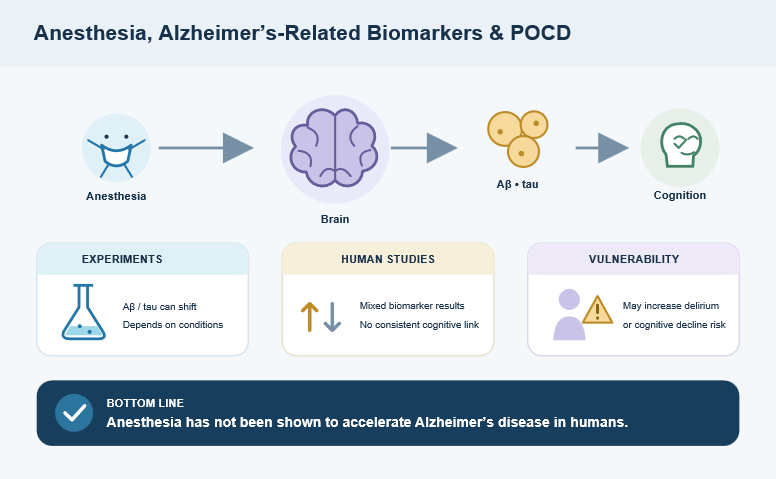
AD, Alzheimer’s disease; Aβ, Amyloid-beta; CABG, Coronary artery bypass grafting; CSF, Cerebrospinal fluid; NFT, Neurofibrillary tangles; POCD, Postoperative cognitive dysfunction; PP2A, Protein phosphatase 2A; ptau-181, Phosphorylated tau at threonine-181; ptau-217, Phosphorylated tau at threonine-217
In 2020, it was estimated that 5.8 million Americans over the age of 65 had AD. Due to the growing aging population, this number is expected to at least double by 2050 [1]. Consequently, a higher percentage of AD patients will be undergoing surgery and require anesthesia. This means anesthesiologists will be increasingly responsible for managing patients with AD. Two defining features of AD are: extra-neuronal amyloid beta plaques [2] and intraneuronal neurofibrillary tangles (NFTs) made of hyperphosphorylated tau protein [3,4]. These pathological changes are believed to impair synaptic plasticity over time, ultimately contributing to neurodegeneration and the progressive cognitive decline observed in AD, with proposed mechanism shown in Figure 1 [5].
Postoperative neurocognitive disorders, including postoperative cognitive dysfunction (POCD), delirium, and prolonged confusion, is recognized as an important complication of surgery and/or anesthesia in older patients. This raises the question are these cognitive changes a manifestation of pre-existing AD pathology, or do anesthetic agents accelerate AD pathogenesis, or is it due to the iatrogenic stress of the surgical procedure itself?
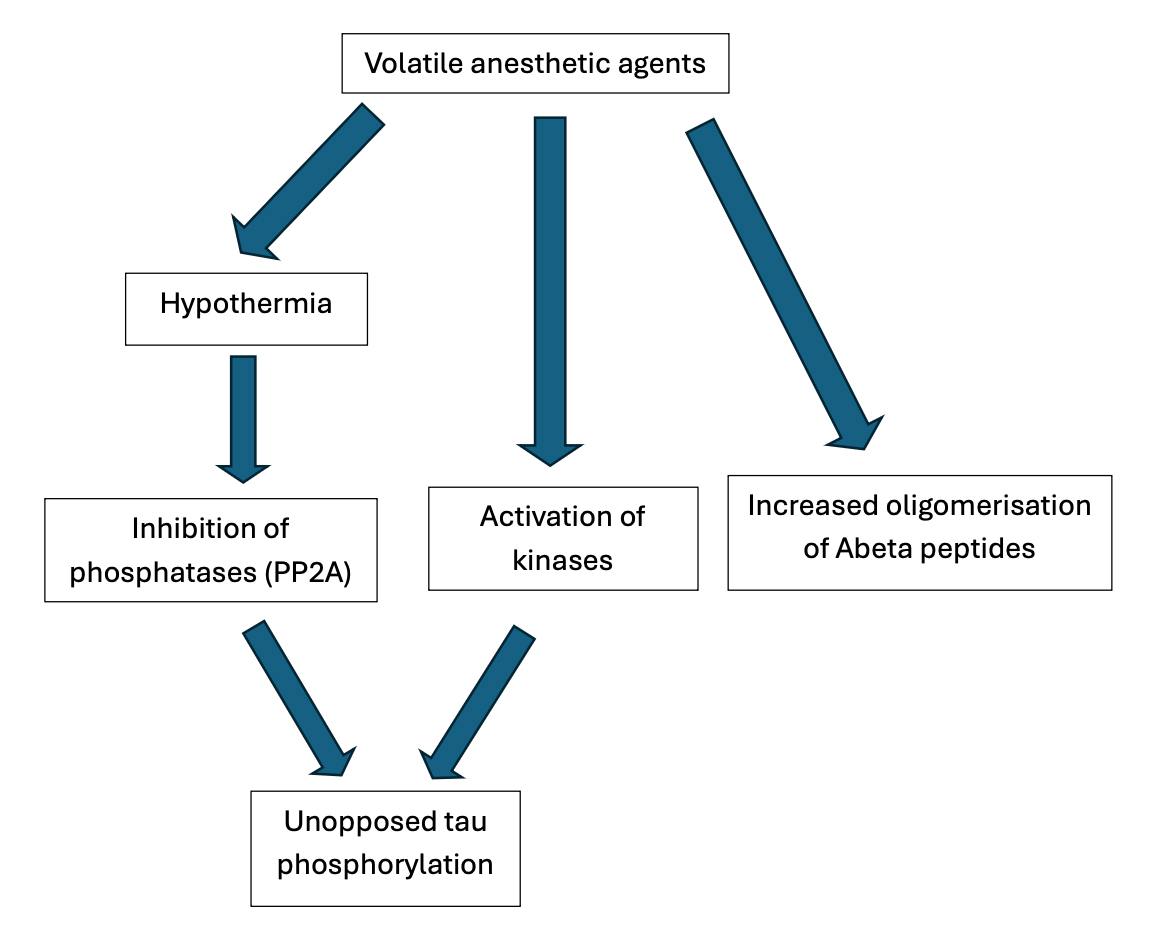 Figure 1. Proposed mechanisms underlying how volatile anesthetics influence Alzheimer’s Disease pathogenesis. (Adapted from Papon et al. (2011) [5].)
Because postoperative cognitive changes may arise through several overlapping mechanisms, including pre-existing neurodegenerative disease, delirium, systemic inflammation, neuronal injury, hypoperfusion, sleep disruption, pain, medications, and perioperative physiological stress, studies examining amyloid-beta and tau alone cannot establish that anesthesia accelerates Alzheimer’s disease. A comprehensive assessment therefore requires integration of disease-specific biomarkers with markers of inflammation, neuronal injury, vascular dysfunction, and longitudinal cognitive outcomes.
In this review, we examine whether anesthetic exposure influences molecular and clinical measures that are associated with Alzheimer’s disease and other neurodegenerative processes. We specifically distinguish between experimental findings involving amyloid-beta or tau and clinical evidence demonstrating AD progression. Because amyloid-beta and phosphorylated tau are not, in isolation, specific indicators of anesthesia-induced AD pathogenesis, these biomarkers are interpreted alongside cognitive outcomes, markers of neuronal injury and inflammation, study design, patient vulnerability, and longitudinal follow-up. This review brings together evidence from in vitro studies, pre-clinical research, and human prospective observational studies to review how anesthetics may influence AD biology. We also review potential biomarkers that could help identify at-risk patients and highlight areas where further research is needed.
In vitro studies have reported that selected volatile anesthetics can alter amyloid-beta aggregation and cytotoxicity under experimental conditions. These findings demonstrate that anesthetic molecules can interact with amyloid-beta peptides in simplified biological systems; however, they do not establish that comparable exposure causes AD in humans. In vitro systems lack the physiological processes that regulate amyloid production, clearance, neuronal network activity, temperature, inflammation, and cerebrovascular function. Accordingly, these studies provide mechanistic hypotheses rather than direct evidence of clinical AD progression.
Volatile anesthetics were shown to reduce soluble Aβ monomers and increase toxic Aβ oligomers [6]. Experimental studies using rat pheochromocytoma cells demonstrated increased amyloid-beta (Aβ) oligomerization rate at high concentrations of halothane and isoflurane that interact with a specific region of the amyloid-beta peptide, accelerating Aβ oligomerization. This provided key insights into external environmental triggers that could speed up the accumulation of classic AD biomarkers [7]. However, at clinically relevant concentrations, neither ethanol nor propofol had any effect on Aβ toxicity [8].
Increased tau phosphorylation after anesthetic exposure has been reported in several animal models [9]. However, tau phosphorylation is a common response to altered temperature, metabolic stress, neuronal activity, anesthesia, and injury, and is not specific to AD. The transient nature of some findings in wild-type animals, together with the persistence of changes in selected tauopathy models, suggests that host vulnerability and perioperative physiology may be important modifiers. These findings support further investigation of tau-related mechanisms but do not demonstrate that anesthesia produces AD.
Pre-Clinical StudiesHuman studies have produced mixed results and are difficult to interpret because surgery and anesthesia occur together and are accompanied by pain, inflammation, hemodynamic changes, hypothermia, sleep disruption, medication exposure, and acute illness. Postoperative changes in cerebrospinal fluid amyloid-beta or tau may therefore reflect altered clearance, neuronal injury, local tissue effects, or perioperative stress rather than progression of AD. In addition, many studies have small sample sizes, limited follow-up, and no multimodal confirmation of underlying AD pathology.
Several studies examine whether anesthetic induced hypothermia is a confounding factor in the aggregation of phosphorylated tau and Aβ oligomers. Mice who were kept in different room temperatures were dissected one hour after induction with isoflurane. In the group that was exposed to prolonged hypothermia there was inhibition of protein phosphatase 2A (PP2A), massive tau hyperphosphorylation, but no changes in amyloid precursor protein metabolism or Aβ peptide accumulation. In the incubated group, the reversal to normothermia completely reversed tau phosphorylation to baseline levels [10].
In contrast, dissected hippocampi of wild-type mice at different time intervals after exposure to propofol under normothermic conditions, also showed decline in both PP2A expression and activity. Samples 30 min post-exposure showed significant increases in tau phosphorylation in the hippocampus and cortex at multiple epitopes. Two hours post-exposure showed tau hyperphosphorylation continued at the AT8 epitope in both the hippocampus and cortex. By 6 h post-exposure, phosphorylated tau levels returned to baseline [11]. This study demonstrates that PP2A inhibition occurs independently of hypothermia. However, both studies are in consensus that in non-transgenic mice, tau phosphorylation levels return to control levels a few hours after exposure.
Trends in insoluble tau quantity days to weeks after exposure to anesthesia were also investigated. Samples of mouse brains, 1 week after exposure showed persistent increased levels of insoluble tau forms [12]. This study concludes that isoflurane-induced hypothermia can trigger persistent tau phosphorylation even after anesthesia has worn off and normothermia is restored. They propose that a single exposure to anesthesia can cause sustained tau-related changes, especially in animals already predisposed to tauopathy. They advise careful monitoring of body temperature during surgery, specifically those at risk of tauopathy, like early-stage AD [12].
Cognitive function testing has also been used alongside quantification to examine whether increases in insoluble proteins has an observable effect on functioning. Morris Water Maze was used to assess cognitive function before and after exposure to isoflurane or halothane in both Tg2576 (APP) transgenic mice and wild-type mice for 5 days. In the transgenic cohort, halothane increased amyloid plaque burden, whilst isoflurane did not. However, for both halothane and isoflurane, no significant deterioration in cognitive function was found in the transgenic mice compared to pre-exposure cognitive function. On the contrary, in the wild-type cohort, isoflurane—despite not increasing plaque load—reduced cognitive function [13]. Similar findings were seen with six-day-old naïve and transgenic (APP/PS1) mice when they were exposed to sevoflurane [14]. The importance of the Lu et al. study is that it sheds light on a frequently used pediatric agent on neonatal animals predisposed to amyloidopathy [14].
Cardiac and Neurosurgical/Otolaryngology SurgeriesIn live human studies, Aβ peptide and tau have been measured before and after surgeries to review the effects on anesthesia on AD biomarkers. 14 patients undergoing CABG had their CSF Aβ peptide and tau concentrations measured before and six months after the procedure. Six months after CABG, the level of Aβ peptide decreased significantly, and the concentration of tau increased significantly. Additionally timed evaluation showed concurrent progressive cognitive decline [15]. This study highlights how post-surgical cognitive decline is linked to biomarker changes resembling those in AD, pointing to shared pathological mechanism underlying both conditions [15].
Similarly, 11 patients undergoing idiopathic nasal leak correction right after lumbar subarachnoid catheter placement had their CSF sampled at the end of the procedure (0 h), 6 h, 24 h, and 48 h after the procedure. Aβ stayed constant, but phosphorylated tau rose gradually until the 48-h time point [16]. The authors mention “they cannot rule out, however, that the changes in tau and S100B are due to local tissue damage caused by the surgeon in the vicinity of the CSF leak repair” [16]. Consistent findings were found in a study assessing CSF samples from 39 patients undergoing neurosurgical/otolaryngology procedures requiring lumbar CSF drain placement before and after the procedure [17]. They also performed genotyping assays and found no association between elevated tau at 10 and 24 h post-procedure and all examined genetic polymorphisms, including ApoE4 [17]. Both studies found that the results did not differ significantly with different anesthetic agents.
Non-Cardiac and Non-Neurological/Otolaryngology SurgeriesNumerous studies have explored risk factors linked to POCD. CSF collected from 136 patients undergoing spinal anesthesia for total hip/knee replacement showed that a lower preoperative Aβ/tau ratio was associated with postoperative reduction in performance in the following tests: Hopkins Verbal Learning Test Retention, Benton Judgment of Line Orientation and Brief Visuospatial Memory Test Total Recall conducted at one week before surgery, and again at one week and three months post-surgery [18]. The same was concluded for pre-operative CSF Aβ1–42 levels and Aβ-42/tau ratios [19,20]. Low CSF Aβ1-42 levels have been noted to be indicative of pre-clinical AD, even before tau biomarkers increase [19]. Additionally, low CSF Aβ42 levels are now diagnostic of AD [20]. The authors suggest that individuals with positive AD biomarkers are more vulnerable to cognitive decline after surgery, even in the absence of clinically detectable symptoms. They suggest the use of the Aβ-42/tau ratio preoperatively as a potential biomarker to screen patients at risk for cognitive deterioration after surgery.
Regarding phosphorylated tau as preoperative biomarker for risk of POCD, CSF samples were collected in 491 patients above the age of 65 prior to undergoing knee replacement. Patients with elevated preoperative levels of ptau-217 and ptau-181 were at increased risk of postoperative delirium [21]. They found that patients with elevated preoperative levels of ptau-217 and ptau-181 were at increased risk of postoperative delirium. They evaluated each biomarker separately and found that each unit increase in ptau-217 was linked to approximately a twofold rise in delirium risk (OR = 2.05, p < 0.001), while ptau-181 was associated with a fourfold increase (OR = 4.12, p < 0.001). In terms of predictive accuracy, ptau-217 showed a high area under the curve (AUC) of 0.969, and ptau-181 an AUC of 0.885, making ptau-217 more reliable [21].
On the contrary, there are also numerous studies that showed no relationship between preoperative AD biomarkers and POCD. For example, Danielson et al. (2021) [22] obtained CSF and blood samples from 27 patients undergoing knee or hip replacement before and after surgery. Neurocognitive performance was evaluated both before and after surgery. Following the procedure, levels of total tau (T-tau) and Aβ1-42 in the cerebrospinal fluid and blood rose. However, there were no significant differences in these biomarkers between patients who experienced poor versus good long-term postoperative cognitive outcomes [22]. Similarly, Berger et al. (2022) sampled CSF before and 24 h and 6-weeks via serial lumbar puncture after surgery in 110 older (age > 60) non-cardiac surgery patients to examine postoperative changes in amyloid beta, tau, and p-tau. They found no changes in these AD biomarkers from before surgery to 6 weeks after surgery, and there was no relationship between any postoperative CSF biomarker with changes in global cognition at 6 weeks after surgery or POCD [23].
More recently, Reese et al. (2024) [24] compared CSF samples in 140 (>60-year-old) patients undergoing surgery and nonsurgical controls at different time points. They found no significant difference in AD biomarkers between surgical patients and nonsurgical patients at all time points postoperatively, suggesting that anesthesia and non-cardiac surgery do not accelerate AD pathology. They also found that surgical patients did not have a higher incidence of cognitive decline compared to controls. On the contrary, controls showed a greater decline in cognition over 1 year compared to surgical counterparts. The authors suggest 3 reasons for the observed difference. First, surgery can enhance cognitive function by addressing the root medical issue. Second, many surgical techniques are now minimally invasive. Third, improvements in perioperative care contribute to better cognitive results. These findings are more consistent with the theory that cognitive decline is more strongly associated with factors like delirium and critical illness rather than the surgical procedure or anesthesia itself [24]. This is an important study because it eliminates lumbar puncture local inflammation as a confounding factor, because both controls and non-controls were subjected to lumbar puncture.
Whether ApoE4 genotype was a risk factor was POCD was tried in a study on 291 patients undergoing major elective noncardiac surgery. No significant difference between POCD incidence in ApoE4 carriers compared to noncarriers on cognitive testing at baseline, 6 weeks, and 1 year after surgery [25].
Systematic ReviewsAs there are conflicting evidence on the predictability of preoperative biomarkers. A systematic review looking at 15 studies on preoperative blood-based and CSF biomarkers and their link to POCD in 2103 adults aged 60 and older showed that POCD occurred in 15.9% of cases, with lower pre-op Aβ levels most consistently linked to higher risk of POCD [26]. Tau and inflammatory markers showed mixed results. Overall, amyloid and tau biomarkers show promise, but larger-scale studies with long-term follow-up are needed to confirm their potential to be used as predictive screening tools [26]. Similarly, a meta-analysis evaluating the relationship between AD biomarkers and postoperative cognitive disorders showed that patients with lower levels of preoperative CSF Aβ42 were more likely to experience postoperative delirium and cognitive impairment [27]. This supports the potential role of Aβ42 as a useful biomarker for identifying individuals at greater risk for these complications [27]. Table 1 summarizes the studies and reviews cited.
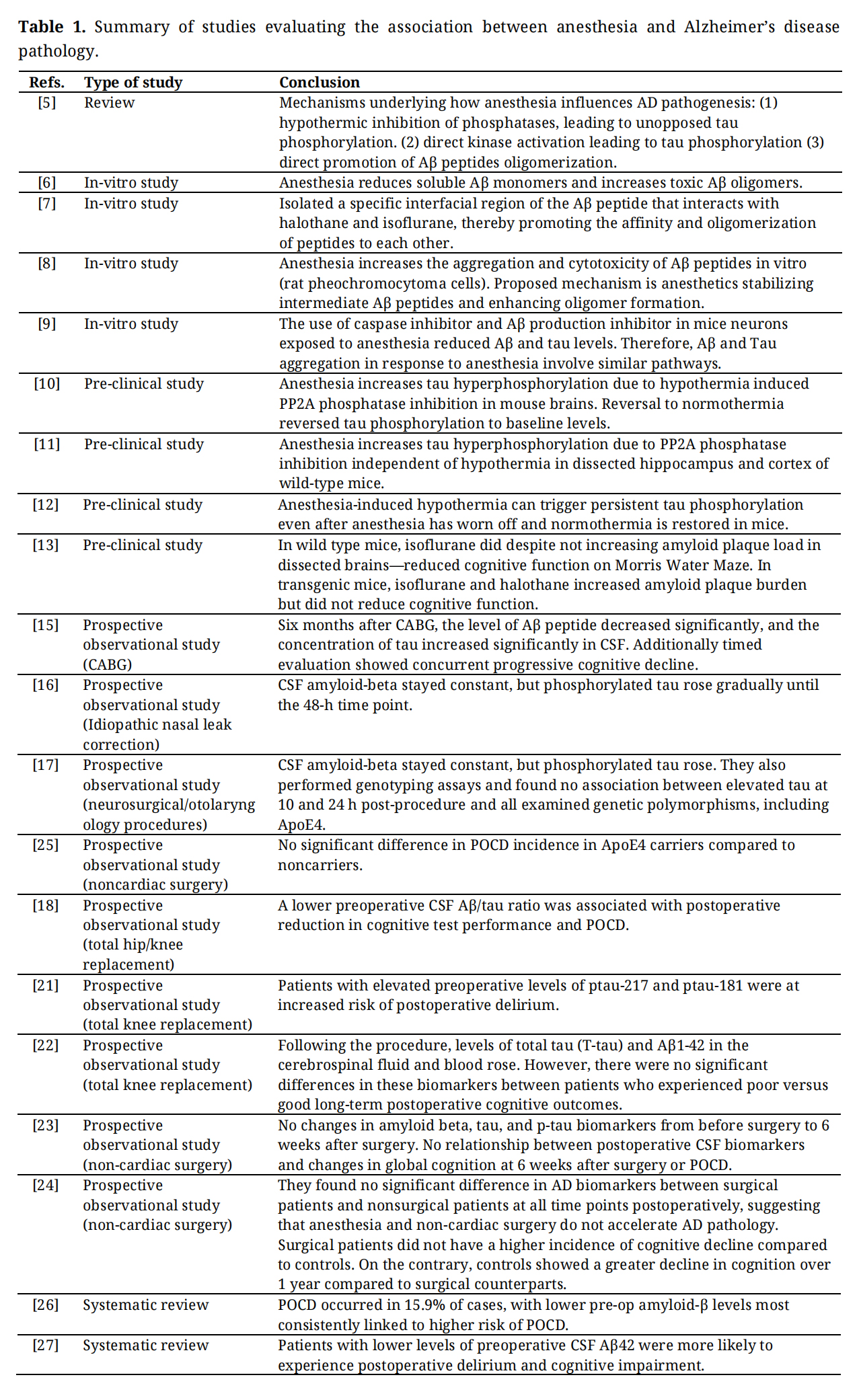 Table 1. Summary of studies evaluating the association between anesthesia and Alzheimer’s disease pathology.
Experimental studies indicate that selected anesthetics can influence amyloid-beta aggregation, tau phosphorylation, phosphatase activity, and neuronal signaling under specific in vitro and animal-model conditions. These effects appear to depend on the anesthetic agent, dose, duration of exposure, temperature, age, and underlying susceptibility to amyloidopathy or tauopathy. However, amyloid-beta and tau changes are not specific to Alzheimer’s disease and may also reflect other neurodegenerative processes, acute neuronal injury, inflammation, or perioperative physiological stress.
Clinical studies remain inconsistent. Some report postoperative changes in cerebrospinal fluid or blood biomarkers, whereas others find no sustained alteration in Alzheimer’s disease-related biomarkers or no association with postoperative cognitive outcomes. Importantly, current clinical evidence does not establish that anesthesia accelerates Alzheimer’s disease progression.
The most consistent clinical implication is that pre-existing neurodegenerative vulnerability may increase the risk of postoperative delirium or cognitive decline. Amyloid-beta and phosphorylated tau biomarkers may eventually contribute to risk stratification, but they should not currently be used in isolation to diagnose perioperative Alzheimer’s disease or to determine that anesthesia has caused AD-related neurodegeneration.
Future studies should use larger prospective cohorts, nonsurgical control groups, multimodal biomarker assessment, standardized definitions of postoperative neurocognitive disorders, and long-term follow-up. Studies should also measure inflammatory, vascular, neuronal injury, and blood–brain barrier markers to distinguish AD-specific processes from more general perioperative brain injury.
Regarding the Informed Consent Statement and ethics approval, neither were applicable for as it did not involve humans or animals.
Declaration of Helsinki STROBE Reporting GuidelineThis study adhered to the Helsinki Declaration. The Strengthening the Reporting of Observational studies in Epidemiology (STROBE) reporting guideline was followed.
No data were generated from the study.
Conceptualization AL and ML; Writing—Original Draft Preparation, MT; Writing—Review & Editing, all authors; Visualization, MT; and Supervision, ML.
The authors declare that they have no conflicts of interest.
The authors have no funding to disclose.
1.
2.
3.
4.
5.
6.
7.
8.
9.
10.
11.
12.
13.
14.
15.
16.
17.
18.
19.
20.
21.
22.
23.
24.
25.
26.
27.
Tomerak M, Liu A, Devinney M, Liu M. Effects of Anesthesia on Alzheimer’s Disease–Related Biomarkers and Postoperative Cognitive Outcomes: A Review. Adv Geriatr Med Res. 2026;8(4):e260032. https://doi.org/10.20900/agmr20260032.

Copyright © Hapres Co., Ltd. Privacy Policy | Terms and Conditions


