Location: Home >> Detail
Adv Geriatr Med Res. 2026;8(4):e260033. https://doi.org/10.20900/agmr20260033
 ,
Kimberly L. Schoonover 1 ,
Karen M. Fischer 2 ,
Lori D. Thompson 3 ,
Maria I. Lapid 3
1
2
3
*
Background: Dementia is a leading cause of death in the United States, with the final year of life often marked by profound disability. The appropriateness of hospice care during this period is undisputed, yet challenges in timely hospice referral persist. This study aims to describe the trajectory of patients enrolled in hospice care with a primary diagnosis of dementia and examine factors that influence hospice graduation. Methods: This was a retrospective study of people aged 65 and older, enrolled in hospice for a primary qualifying diagnosis of dementia between January 1, 2020 to January 1, 2022. Demographic, social determinants of health and clinical data were extracted from the electronic health record. Outcomes of length of time on hospice, time to death and hospice live discharge were recorded. Survival status at one year of live discharge was recorded. Results: Of 117 people enrolled in hospice with dementia, 106 died with 11 live discharges. Median (IQR: interquartile range) time spent in hospice to end of life was 27 days (9, 82). For live discharges, median (IQR) time on hospice was 142 (11, 282) days. Five people survived to 1 year post graduation and all re-enrolled in hospice care. Live discharges were more likely to report concerns about social isolation. Conclusions: Overall, time spent in hospice care with a primary qualifying diagnosis of dementia for people followed to end of life was much shorter than the eligibility benefit of six months. Social isolation was common among live discharges, indicating the need to incorporate social assessments into care planning discussions.
PPS, palliative performance scale; FAST, Functional Assessment Staging Tool; PAINAD, Pain Assessment in Advanced Dementia; ALF, Assisted living facility; SNF, Skilled nursing facility; BMI, body mass index; IQR, interquartile range
Alzheimer’s disease is a leading cause of death in the United States [1]. While there are many unknowns in dementia care, the course of advanced dementia is inevitably marked with severe disability in the last year of life [2,3]. Compared with other life-limiting illnesses, prognostication in dementia can be especially challenging as many people live in the advanced stages for several years and existing prognostication tools have modest benefits at best [4]. In the advanced stages, a palliative approach to care is appropriate [5]. Hospice has been shown to improve care for people living with advanced dementia and their families [1,6]. Although access to hospice care for people living with advanced dementia has improved considerably [7], there is still room for improvement especially among minorities [8,9].
To help clinicians identify when the time is right for hospice, Medicare outlines strict guidelines for hospice eligibility, which includes the determination of a prognosis of six months or less [10]. Predicting a prognosis of six months or less is particularly challenging in advanced dementia. Hence, individuals with dementia as the primary hospice qualifying diagnosis tend to have the longest length of stay on hospice [7], and are also more likely to discharge alive after a long enrollment (>165 days) compared to patients without dementia [11,12]. This trend not only affects the care quality for these patients but also places a strain on the Medicare payment model, which discourages long-term hospice stays and is not best suited to care for people with serious illnesses that do not have a predictable decline, like dementia [13,14].
Given the complexities and challenges associated with end-of-life care for patients living with advanced dementia, improving the timeliness and appropriateness of hospice referrals is important. Prior work has identified several factors associated with increased risk of live discharge from hospice including racial and ethnic disparities, home hospice care and electing full code status [12,15,16]. For example, African American and Hispanics living with dementia are more likely to be disenrolled from hospice compared with non-Hispanic whites and African Americans are less likely to reenroll after a live discharge [16–18]. In order to improve care planning for people living with advanced dementia in our practice and better support patients and their families as they approach end of life, a better understanding of the factors influencing enrollment and live discharge is needed. Here, we outline the hospice care trajectory for our patients living with advanced dementia until death or live discharge, reviewing factors that may influence graduation and describing outcomes after live graduation.
This is a retrospective study of patients enrolled in hospice care with a primary diagnosis of dementia. We included patients who: (1) were aged 65 years and older, ensuring the cohort is representative of a Medicare-eligible population;(2) were enrolled in hospice with a primary hospice qualifying diagnosis of dementia; (3) were enrolled in hospice during the 2-year study period from January 1, 2020, to January 1, 2022 and (4) had research authorization at Mayo Clinic Rochester, Minnesota. The study protocol was approved by the Mayo Clinic Institutional Review Board (ID 24-004338) and the study met the institution’s guidelines for protection of human subjects concerning safety and privacy.
Data CollectionDementia diagnoses were based on previously identified ICD-9 and 10 codes [19]. We included all dementia subtypes within these given the variation in coding for dementia within the medical record. Demographic and clinical data were collected from the electronic health record including age, sex, race, ethnicity, marital status, location of residence, pain score, depression, PPS, FAST at time of hospice intake. Pain score was assessed by the PAINAD scale which focuses on five behaviors (breathing, negative vocalization, facial expression, body language and consolability), each item rated 0–2 for severity, total scoring range 0–10, with 1–3 indicating mild pain, 4–6 moderate pain and 7–10 severe pain [20]. Depression was recorded based on diagnosis codes recorded in the medical record. The PPS is a clinical tool used to communicate overall functional status in people who live with serious illness and has been shown to correlate with survival [21]. This score ranges from 0%–100%, in 10% increments, with higher scores indicating greater independence. We used the Charlson Comorbidity Index to describe comorbid burden using relevant diagnoses over two years before the date of hospice enrollment [22]. This is a weighted sum of pre-specified medical diagnoses extracted from the medical record with additional age category points that provides an estimate of comorbidity burden and mortality. The higher the score, the higher the predicted mortality rate. Due to the availability of hospice records and linkage with the electronic health record, we included data from a single nonprofit hospice agency that provides supportive care to patients and their families living in the community at home, in nursing homes or other supported living environments. Hospice care involves an interdisciplinary team of professionals who address physical symptoms, spiritual and emotional needs for people living with a terminal illness who are estimated to have a prognosis of six months or less. Outcomes of length of time on hospice (days), time to death (days) and hospice live discharge were recorded. Hospice live discharge includes patients who leave hospice care while still alive, either because of a change in condition or prognosis or medical stability. Additionally at any point, a patient/family may opt out of hospice care. Social isolation [23] and financial resource strain [24,25] were extracted from a social determinant of health electronic questionnaire administered to all patients or proxies at our institution yearly at time of a clinic visit or via patient portal. These questions have been outlined in detailed elsewhere [26], but in brief, social isolation is rated by responses to questions on relationship status, number of interactions with people per week, religious service attendance, and club or organization participation. Financial strain is assessed by asking people to rate how difficult it is for them to pay for food, housing, medical care and heating. While patients enrolled in hospice would be unlikely to be attending outpatient visits, the questionnaire would still be rolled out yearly via portal or could have been completed at the time of clinic visit within the year prior to hospice enrollment. For those who discharged alive, we quantified time spent on hospice prior to live discharge (days), survival status at 1 year from live discharge and the number who were re-enrolled in hospice within a year following initial discharge.
Descriptive statistics were used for presentation of our outcomes. For those who discharged alive we examined the associations between demographic or clinical characteristics and likelihood of hospice live discharge using Kruskal-Wallis (continuous variables) and Fisher exact tests (categorical variables). P values less than 0.05 were considered significant. Analyses were performed in SAS version 9.4 (SAS Institute Inc, Cary, NC, USA).
Among 117 patients enrolled in hospice for a primary diagnosis of dementia, median age was 88.5 years. Most were female (67.9%), widowed (52.8%) and predominantly white (95.3%). Most were FAST 7 and had a PPS below 40%. Only 18 patients (17%) were living at home, the remainder were in supported living settings. A full list of characteristics is shown in Table 1.
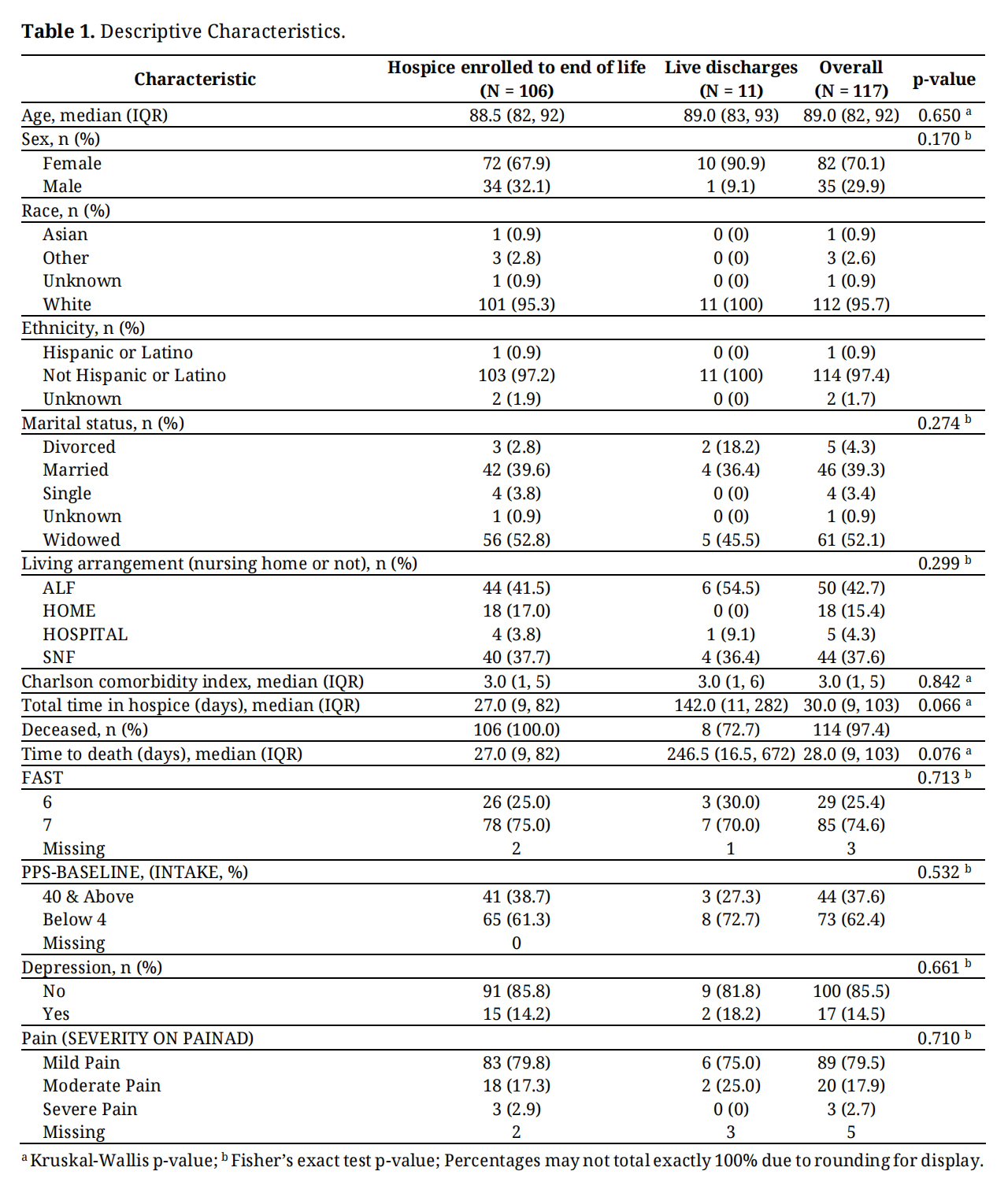 Table 1. Descriptive Characteristics.
The total time in hospice was 27 (9, 82) days (median, IQR) for the 106 patients who were enrolled to end of life. For 11 live discharges, median (IQR) time in hospice was 142 (11, 282) days (Table 1). Five of the 11 (45.5%) live discharges lived to one year (Table 2). These five graduated due to medical stability. Of these, one is still alive and has re-enrolled in hospice care; 4 who had died re-enrolled in hospice for end-of-life care (3 of which were enrolled after one year of initial discharge and one re-enrolled within the year) and are since deceased. For the six others who died within the year, one was disenrolled early per family request, one moved outside the area and was not available to be followed; one disenrolled early due to a medical event to seek acute care and was later re-enrolled within the same hospice agency; 3 others enrolled in hospice agencies before death (Table 2).
Live discharges were more likely to report social isolation concerns (p = 0.02) compared to those enrolled to end of life (Table 3). We found no significant differences between those enrolled to end of life and live discharges in terms of comorbidities scores, depression, pain, PPS scores or financial strain.
We reviewed cause of death information in the medical record where available as recorded by the primary clinician. Primary cause of death was recorded as ‘complication of Alzheimer’s dementia’ or ‘dementia/major neurocognitive disorder’ (n = 49), traumatic injury (n = 3), aspiration pneumonia (n = 2), heart failure (n = 2) and pulmonary embolus (n = 1) case. We did not have cause of death information available for 49 decedents.
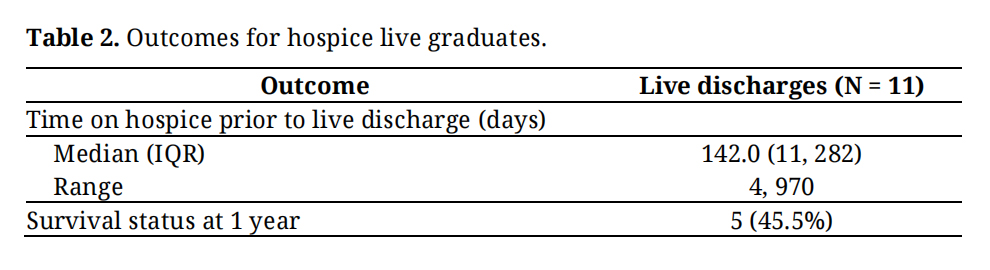 Table 2. Outcomes for hospice live graduates.
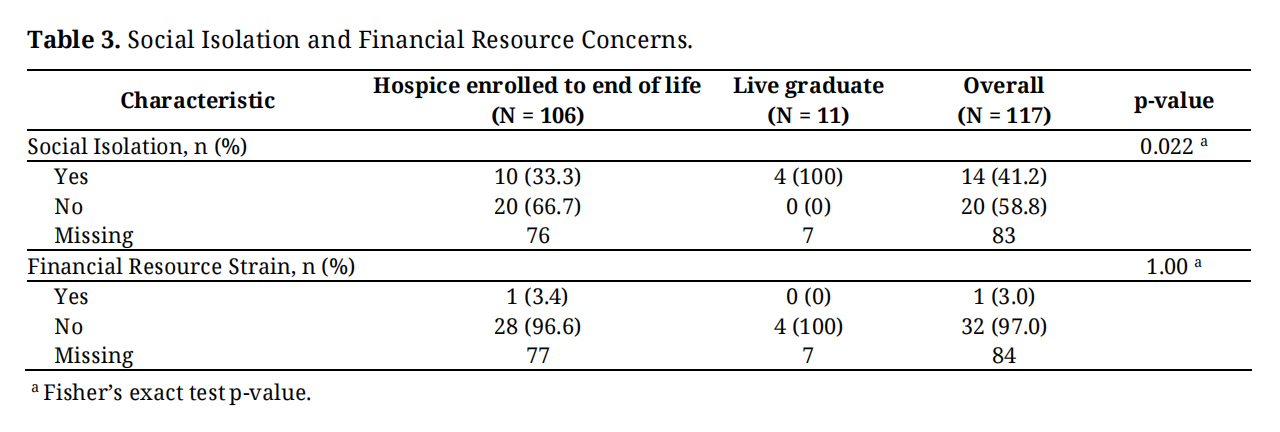 Table 3. Social Isolation and Financial Resource Concerns.
In this study we sought to outline the hospice care trajectory for a cohort of our patients living with advanced dementia until death or live discharge from hospice. We highlight the challenges faced in primary care with identifying hospice eligibility for people living with dementia. Approximately 10% (11/117) of our study population discharged alive from hospice care after a median of 142 days, but only five lived to a year post hospice live discharge. Time in hospice to end of life was short at approximately one month, highlighting that most people living with dementia may not receive the full benefit of hospice care services.
It is notable that most of those who discharged alive died within the year post graduation. For those that survived to one year, all enrolled in hospice care again. Given the physical and cognitive decline that occurs in advanced dementia, it presents a challenge to providers to estimate when the time may be right for hospice referral. Our finding that there were no differences in age, comorbidity burden, FAST stage, functional status, and pain between those who died in hospice and those discharged alive suggests that hospice admission criteria are being applied consistently and appropriately, with clinicians identifying patients at late stages of disease. In this sense, the referral process “works” in that those admitted to hospice clearly met eligibility thresholds. However, the natural variability of the course of dementia makes it difficult to predict who will decline rapidly and who will stabilize. Our findings therefore illustrate that even among patients with advanced dementia and comparable functional profiles, survival varied dramatically. This underscores the inherent limitations of prognostication in dementia [4] rather than shortcomings in clinical judgement. In clinical practice, a period of stability may be reached on hospice care due to improved symptom control and potentially less burdensome interventions [6]. For clinicians, the implication is that prognostic precision should not be the goal. Instead, the focus should be on timely referral and good communication. Communication with care partners should include discussions about prognostic uncertainty. Within this clinicians should acknowledge and discuss with families that while the expectation with hospice enrollment is that hospice care will support them through to end of life [27], there is also the possibility of both short and prolonged trajectories, including live discharge and potential options for re-enrollment in the future.
This variability in survival contrasts with a second pattern we observed: the majority of patients died within three months of enrollment, despite the hospice benefit allowing up to six months of care. These short stays suggest that many patients are referred to hospice late in the course of their illness, often at a point when families are already managing crisis or rapid decline. As a result, patients and caregivers may miss the opportunity to fully benefit from supportive hospice services, such as counseling, respite care, and caregiver support. These findings mirror national patterns, where median hospice length of stay in dementia often falls well below the six-month threshold [28,29].
Clinically, this reflects ongoing challenges in recognizing when patients living with dementia meet hospice criteria, hesitancy to initiate hospice discussions, or delays in referral until after repeated hospitalizations or acute crises. The result is that hospice becomes compressed into end-of-life crisis management rather than its intended role of providing holistic support during the last months of life.
We saw more reports of social isolation in the live discharges. Although our numbers are small, this is thought provoking as it may indicate social concerns as a factor in influencing initial hospice referral. Beyond referral decisions, these findings suggest that social context—not just clinical severity—can influence how dementia care unfolds at the end of life. Social isolation is common among people living with dementia and their care partners [26,30]. It must also be considered that as disease progresses, social isolation may increase for the patient and care partner. Patients with limited caregiver support may be referred earlier, while those with stronger family networks may remain outside hospice until caregiving demands become overwhelming. This underscores the importance of incorporating social assessment into hospice and palliative planning, including evaluation of caregiver resources, isolation, and financial strain.
We recognize there are many additional factors, not explored here, which could influence timing of hospice enrollment/hospice live discharge, including patient or family preference, goals of care, beliefs around hospice and pursuit of other therapies. Given the disease trajectory in advanced dementia and advanced age of our cohort, it is not surprising that most of our population lived in skilled nursing care or assisted living/memory care facilities, consistent with prior studies of place of care at end of life [31]. This setting may shape referral practices due to different care models compared to people living in a private home [32].
Our study has strengths and limitations. First, it is an important study that provides insights into the outcomes of people enrolled in hospice for the primary diagnosis of dementia. It serves to highlight the challenges in prognostication and timing of hospice care, especially in primary care. However, we acknowledge there are limitations. This study included data from a single large nonprofit hospice agency, and so did not include all of the hospice agencies that cover our catchment area due to the accessibility of data and incomplete linkage of electronic medical records. Therefore, we are unable to examine factors such as for profit versus not-for-profit hospice agencies and potential differences that may exist in referrals or length of stay. Also, we included people with a primary hospice qualifying diagnosis of dementia only, not those who may have coexisting dementia but qualified for hospice for other reasons. Hence this study applies only to those who have reached the Medicare guidelines for hospice enrollment that are applicable to dementia. We do not differentiate our analysis by dementia subtypes due to the small numbers and variability in coding for dementia by specific subtype (i.e., more than one diagnostic code listed or ‘senile degeneration/major neurocognitive disorder unspecified’ used). Our study population is small and is predominantly white, so data is not generalizable to all populations. The lack of diversity within the study population highlights some of the existing disparities outlined earlier that need to be addressed, including access to hospice care for minorities and timing of discharge. We hope to be able to address this in the future. In addition, the number of live discharges was small, which limits our ability to detect more subtle differences between groups. We acknowledge there are limitations around the social determinant of health data, with response rates relatively low among our patients living with dementia [26]. Missing data were present for social isolation and financial strain, which may bias those findings but also reflects the challenges of collecting this information in clinical settings, especially among those living with cognitive impairment. Additionally, the social determinant of health questionnaire is administered yearly, so the data is not necessarily proximate to time of death and can be completed by the patient or the healthcare proxy who has access to the medical record. We do not have data on who completes the questionnaire, but in the context of late stages of dementia we would anticipate this is collected by the healthcare proxy, which can in itself lead to bias. It is also possible that the disease itself, and live discharge from hospice can influence social connections and household financial strain, which may not be captured by our social determinant of health questionnaire. As a retrospective study, causal relationships between social factors and hospice outcomes cannot be established. Finally, it is important to note that the study period overlaps with the COVID-19 pandemic restrictions which adversely impacted many of our older adults living with dementia, particularly those living in care homes. Prior studies have described negative effects as a consequence of the pandemic on mental health, physical activity and social isolation [33]. The COVID pandemic also influenced data collection on social connections [34]. Additionally, it is likely that the timing of hospice referral was influenced by several factors during the pandemic including access to providers, tele-health visits and co-existing infection. Hence, several of the data points we sought to examine including hospice referrals, life expectancy and social isolation, may have been impacted by the pandemic.
In conclusion, time spent in hospice care for people enrolled with a primary diagnosis of dementia is relatively short and below the eligibility benefit period. For live discharges, social isolation concerns were common, emphasizing the importance of incorporating social assessments into care planning for our older adults living with dementia.
The study was approved by the Institutional Review Board of Mayo Clinic (protocol code 24-004338 6/10/2024. Regarding the Informed Consent Statement, this study involved no patient contact, medical record review only and we only included patients with research authorization at Mayo Clinic Rochester, Minnesota.
Declaration of Helsinki STROBE Reporting GuidelineThis study adhered to the Helsinki Declaration. The Strengthening the Reporting of Observational studies in Epidemiology (STROBE) reporting guideline was followed.
The dataset from the study is not available to protect patient confidentiality.
Study concept and design: MMB, KLS, MIL; Acquisition of data: MMB, KMF, LDT; Analysis and interpretation of data: MMB, KMF; Drafting of the manuscript: MMB, KLS, MIL, KMF, LDT; Critical revision of the manuscript for important intellectual content: MMB, KLS, MIL.
Maria I. Lapid receives NIH funding for other research work and serves on the PurMinds Neuropharma Scientific Advisory Board with potential royalty interests, none of which are related to the current work. The other authors declare no conflicts of interest.
This publication was made possible by the Mayo Clinic CTSA through grant number UL1TR002377 from the National Center for Advancing Translational Sciences (NCATS), a component of the National Institutes of Health (NIH). The sponsor had no role in the design, methods, data collection, analysis or writing of this paper.
This data was presented in poster format at the American Geriatric Society annual meeting 2026.
1.
2.
3.
4.
5.
6.
7.
8.
9.
10.
11.
12.
13.
14.
15.
16.
17.
18.
19.
20.
21.
22.
23.
24.
25.
26.
27.
28.
29.
30.
31.
32.
33.
34.
Bartley MM, Schoonover KL, Fischer KM, Thompson LD, Lapid MI. Hospice Care for People Living with Dementia: Experiences from a Community Practice. Adv Geriatr Med Res. 2026;8(4):e260033. https://doi.org/10.20900/agmr20260033.

Copyright © Hapres Co., Ltd. Privacy Policy | Terms and Conditions


