Location: Home >> Detail
Adv Geriatr Med Res. 2026;8(4):e260035. https://doi.org/10.20900/agmr20260035
 ,
Mohamed I. Seedahmed 1,2,3 ,
Mazen O. Al-Qadi 1,3,*
1
2
3
*
Sarcoidosis is a multisystem granulomatous disease with a heterogeneous clinical course that ranges from spontaneous resolution to chronic, stable disease or progressive organ damage. Traditionally considered a disease of younger and middle-aged adults, sarcoidosis is increasingly recognized in older adults, either as late-onset disease or as chronic sarcoidosis persisting into later life. This has major clinical implications because older patients frequently have comorbidities, reduced physiologic reserve, frailty, polypharmacy, and increased susceptibility to treatment-related toxicity. Late-onset sarcoidosis appears to differ from younger-onset disease in several clinically relevant ways, including stronger female predominance, fewer classic presentations, more frequent extrapulmonary involvement, and lower remission rates. Treatment decisions in older adults require careful assessment of organ involvement, disease activity, risk of progression, and the anticipated benefit of immunosuppression relative to potential harm. Glucocorticoids remain effective for rapid disease control but carry substantial risks in older patients, including hyperglycemia, osteoporosis, infection, myopathy, neuropsychiatric effects, and functional decline. Earlier use of steroid-sparing therapy, careful medication reconciliation, infection-risk mitigation, and longitudinal monitoring for both disease progression and treatment toxicity are essential. Future studies should specifically include adults aged 65 years and older and evaluate outcomes beyond lung function and imaging, including infections, falls, hospitalization, treatment discontinuation, quality of life, functional status, and maintenance of independence.
Sarcoidosis is a multisystem granulomatous disease with a heterogeneous clinical course ranging from spontaneous resolution to chronic, stable, or progressive organ damage [1]. Although sarcoidosis has traditionally been considered a disease of younger and middle-aged adults, epidemiological studies have demonstrated an increasing prevalence of sarcoidosis among older adults [2]. This is highly relevant because sarcoidosis in older adults is not simply the same disease occurring later in life. Rather, it should be viewed in the context of comorbidities, concomitant medications, age-related limitations in physiologic reserve, and different patient priorities.
Older adults with sarcoidosis comprise at least two clinically distinct populations. The first includes patients with late-onset sarcoidosis. The second includes patients with longstanding disease who have survived into older age. These groups should not be considered interchangeable. Patients with longstanding sarcoidosis may have decades of cumulative inflammatory injury (e.g., advanced fibrotic disease). In contrast, patients with late-onset disease present with newly recognized granulomatous inflammation in the setting of age-related comorbidity. Consequently, management priorities may differ.
In this review, we use late-onset sarcoidosis (LOS) to describe the disease when diagnosed in patients aged ≥65 years. This definition comes from small observational and retrospective studies. However, the definition of late-onset disease has varied across studies, with studies using various age cutoffs of >70, >75, >40 and >50 years [3–5]. Although LOS is uncommon, it remains an important phenotype that tends to have more extrathoracic disease with a more clinically stable or non-progressive course [5].
The clinical implications of sarcoidosis in older adults are substantial. In younger patients, the focus is on defining organ involvement, determining disease activity, and deciding whether immunosuppression is needed to prevent organ damage. The same principles remain essential in older adults, but they are often more nuanced. Older patients commonly have coexisting medical conditions that directly affect management, such as cardiopulmonary disease, chronic kidney disease, diabetes, osteoporosis, and neurocognitive dysfunction. In addition, frailty impairs immune function and increases susceptibility to infection [6]. Importantly, these comorbidities may mimic sarcoidosis manifestations, worsen the clinical impact of the disease, and limit the tolerability of standard therapies. Consequently, symptoms such as dyspnea, fatigue, or weight loss should not simply be attributed to granulomatous inflammation. Instead, careful evaluation should be conducted first to assess uncontrolled chronic disease, such as heart failure with preserved ejection fraction or anemia; exclude new pathologies, particularly malignancy; and evaluate medication adverse effects, deconditioning, or the cumulative effects of aging. This overlap makes it challenging to distinguish active sarcoidosis from inactive residual disease and non-sarcoidosis comorbidity. This distinction affects the risk-benefit calculation of immunomodulatory therapies.
In this review, we discuss the epidemiology, clinical manifestations, diagnostic challenges, and management of sarcoidosis in older adults, with a focus on balancing toxicity and comorbidity. We address assessment of disease activity, individualized pharmacotherapy, and prevention of treatment-related harm.
In this narrative, non-systematic review, we searched PubMed via National Center for Biotechnology Information (NCBI)/National Library of Medicine (NLM) platform. We excluded any articles prior to the year 1990. The search strategy incorporated a combination of Medical Subject Headings (MeSH) terms and title/abstract keywords including “sarcoidosis” “elderly adults” and “sarcoidosis treatment.” The search was limited to English language and human-only subjects.
The prevalence of sarcoidosis varies widely by geographic location and population studied. In the general population, estimated prevalence ranges from 4.7 to 160 per 100,000 persons, with the highest prevalence reported in northern Europe [7]. Using the Swedish National Patient Register between 2003 and 2012, the prevalence of sarcoidosis was estimated at 160 per 100,000 [8]. Data from the UK demonstrated a similar prevalence of 167 per 100,000 in 2003; notably, the prevalence has recently increased to 230 per 100,000 in 2023 [9].
A lower prevalence is reported in the United States, with overall estimates of approximately 35 to 60 per 100,000 persons [10]. Importantly, sarcoidosis is disproportionately common in Black Americans, particularly Black women, with an estimated prevalence of 179 per 100,000 in Black women. In the Black Women’s Health Study, the prevalence was reported to be 1160 per 100,000, highlighting the significant disease burden in this population [11].
Despite growing recognition of sarcoidosis in older adults, no population-based study has reported prevalence rates specifically for individuals aged ≥65 years. In this population, available data come from age-stratified analyses within general cohorts that reported the proportion of patients diagnosed later in life. It is estimated that approximately 7%–23% of sarcoidosis cases are diagnosed in patients ≥65 years [5,12].
Given that sarcoidosis is a chronic disease, this is an important limitation because prevalence reflects not only incident disease but also survival with established disease. Therefore, even if the incidence of new sarcoidosis in older adults is modest, the burden remains substantial as more patients survivelonger with chronic pulmonary, cardiac, ocular, neurologic, or multisystem disease. In populations with a high disease burden (e.g., Black Americans), this becomes particularly relevant because sarcoidosis-related morbidity and mortality are disproportionately high. In addition, sarcoidosis-related morbidity and mortality have increased over the prior two decades, particularly among patients aged 55–74 years [13].
Late-onset or elderly-onset sarcoidosis, commonly defined as sarcoidosis diagnosed at age ≥65 years, accounts for a significant proportion of cases across cohorts. In a single-center study in Spain of 668 patients, 7% of patients were diagnosed at age ≥65 years [5]. A higher prevalence of 20% was reported in a Tunisian study [14]. Furthermore, French studies have demonstrated that sarcoidosis can present even later in life. Varron et al. identified 30 elderly-onset cases in a case-control study, while Bert et al. evaluated patients diagnosed at age ≥75 years and identified 34 cases between 2006 and 2018 [3,4]. In Scandinavian studies, the incidence follows a bimodal pattern, with a first peak at 25–29 years and a second peak at 65–69 years [15]. Notably, the incidence rate at the second peak is similar to that observed at the first peak. Similar bimodal patterns have been described in European and Japanese cohorts, where a second incidence peak occurs in patients older than 50 years, particularly among women. In Japan, the second peak appears to exceed the earlier peak [16]. Although these cohorts are relatively small, their findings challenge the traditional view that sarcoidosis is predominantly a disease of young adults.
Epidemiologic studies demonstrate that sarcoidosis occurs at clinically meaningful rates in later life, although the incidence of late-onset sarcoidosis, defined as diagnosis at age ≥65 years, has not been established. In a population-based study from Olmsted County, Minnesota, the overall age- and sex-adjusted incidence was 10 per 100,000 persons per year, whereas age-specific incidence was 6.1–14 per 100,000 among adults aged 18–59 years, 8.2 per 100,000 at ages 60–69 years, 5.6 per 100,000 at ages 70–79 years, and 2.9 per 100,000 at age ≥80 years. Importantly, the reported incidence was in decade-based age groups rather than using a ≥65-year threshold. Therefore, a specific incidence rate for late-onset sarcoidosis cannot be estimated from these data.
These studies demonstrate that sarcoidosis diagnosed in later life is not rare and should not be dismissed as an exceptional presentation. Broader estimates also suggest that a sizeable proportion of sarcoidosis occurs outside the traditional young-adult window, although many studies use age thresholds of >40 or >50 years rather than the more stringent ≥65-year definition.
Moreover, the demographic profile of LOS appears distinct, with a strong female predominance. In a study by Varron et al. (2012), the female-to-male ratio was 5:1 in LOS compared with 1:1 in younger patients [4]. Another study demonstrated that 81.25% of LOS patients were women [14]. The biologic basis of this distribution remains elusive but may reflect hormonal influences on the immune response, differences in diagnostic testing, or a combination of these factors.
Late-onset disease differs from younger-onset sarcoidosis in several important ways. The presenting symptoms are usually insidious and nonspecific. In a retrospective study of 30 patients with sarcoidosis diagnosed after age 70 years, constitutional symptoms such as fatigue, weight loss, and anorexia were present in 53% of patients; these symptoms are often attributed to advanced age, infection, or occult malignancy, which results in delayed diagnosis [17,18]. Furthermore, hypercalcemia and isolated extrapulmonary disease are more common in the elderly [19]. Another distinct feature of LOS is the absence of Löfgren syndrome, with only 8.5% of 47 patients in one study presenting with this unique phenotype [5]. Constitutional symptoms in older adults can be particularly challenging to interpret. Symptoms such as fatigue and weakness are highly nonspecific and may reflect sarcoidosis activity, but they may also result from comorbid disease, malignancy, infection, medication adverse effects, frailty, or age-related functional decline. Similarly, the higher burden of comorbidities in older patients can obscure the diagnosis, delay recognition of sarcoidosis, influence therapeutic decisions, and complicate assessment of treatment response. The key distinctions between younger-onset and LOS are summarized in Figure 1.
A recent study of 163 newly diagnosed sarcoidosis patients, of whom 23.3% were elderly, provided some insights into LOS. First, LOS patients had more musculoskeletal manifestations (50% vs. 12.8%), nodal disease (89.5% vs. 72.6%), and a usual interstitial pneumonia (UIP) pattern on chest imaging (10.5% vs. 0.8%). Clinical remission was less frequent in the elderly (55.3% vs. 76.8%), whereas chronic-progressive disease was similar in both groups [12]. The UIP pattern may be more prevalent in elderly-onset sarcoidosis; however, additional studies are needed to determine the extent to which UIP observed in pulmonary sarcoidosis represents concomitant IPF versus sarcoidosis-specific disease. Additional demographic, clinical, radiographic, and outcome features distinguishing late-onset from younger-onset sarcoidosis are summarized in Table 1.
Whether cases classified as late-onset sarcoidosis represent truly new diagnoses or unrecognized disease diagnosed several years later remains unclear. Delayed recognition can be related to nonspecific symptoms, coexisting comorbidities, and less typical presentations in older adults and can potentially contribute to more advanced fibrotic lung disease at diagnosis. However, reported differences in pulmonary fibrosis cannot be explained solely by diagnostic delay based on current evidence.
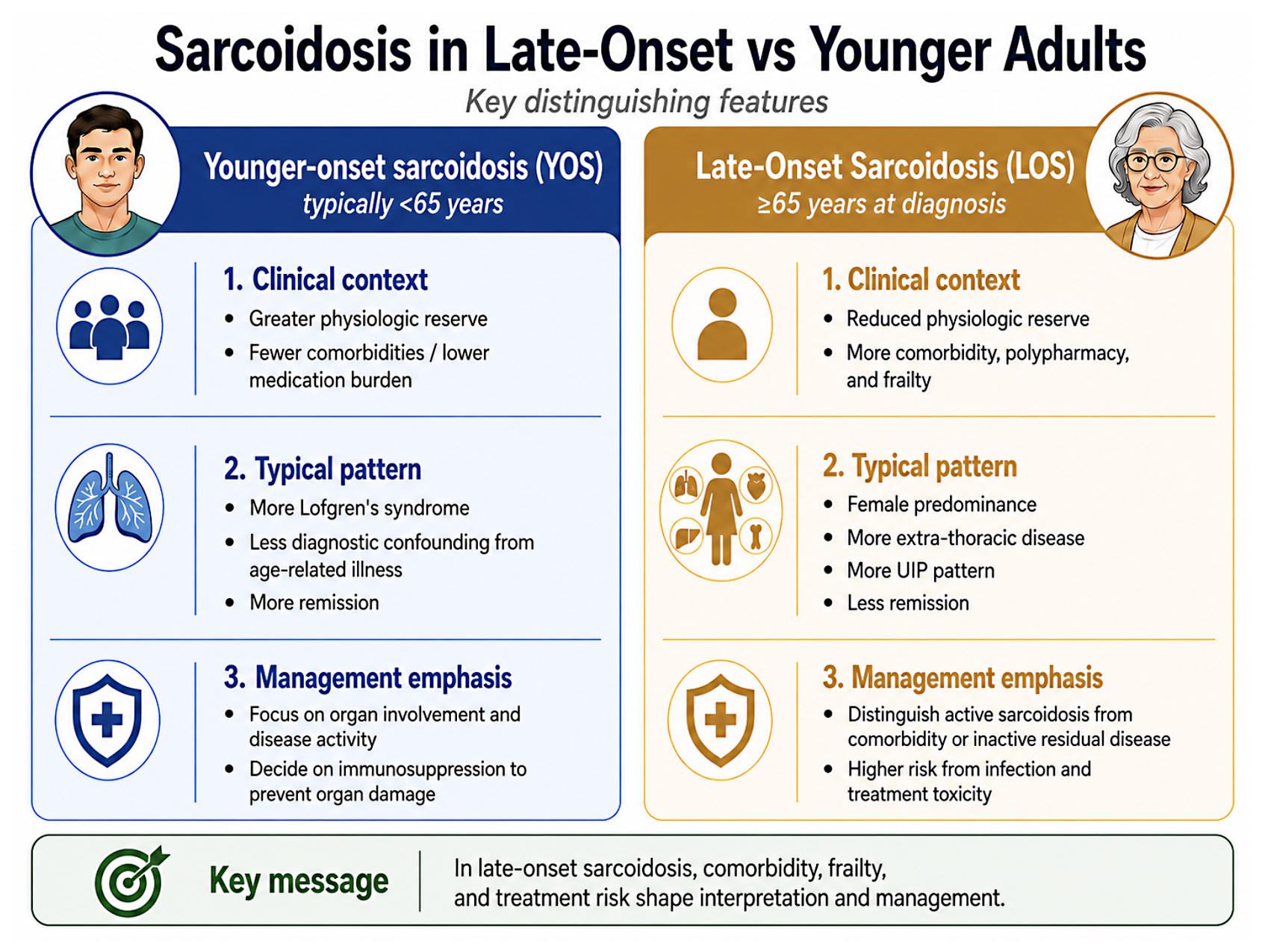 Figure 1. Key distinguishing features of younger-onset sarcoidosis (YOS) and late-onset sarcoidosis (LOS).
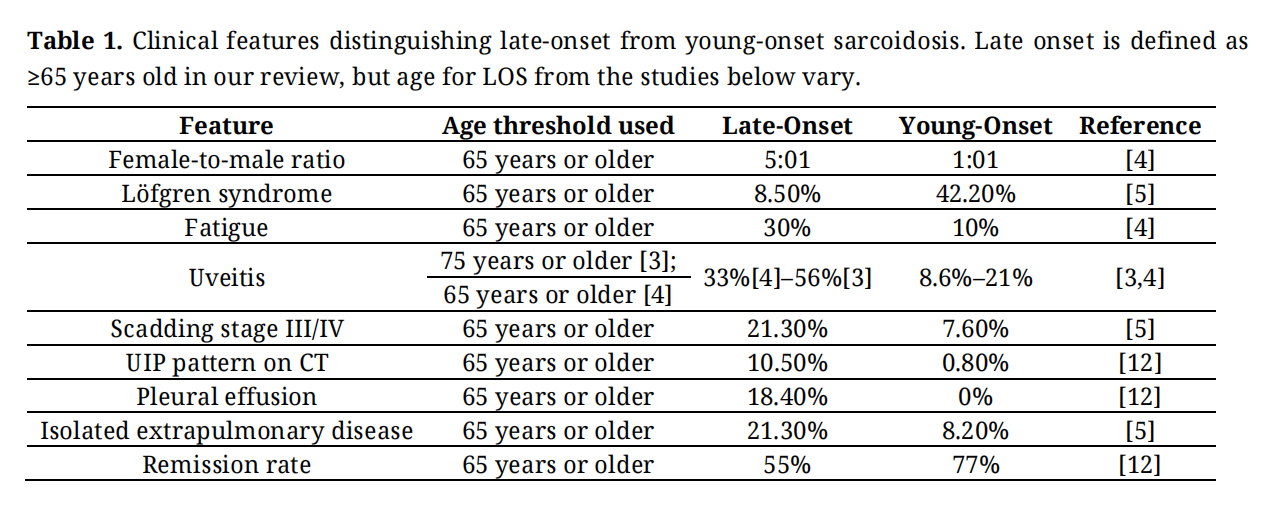 Table 1. Clinical features distinguishing late-onset from young-onset sarcoidosis. Late onset is defined as ≥65 years old in our review, but age for LOS from the studies below vary.
Thoracic disease remains common in elderly patients, but frequently presents with advanced fibrosis (i.e., Scadding stage III and IV). Pleural effusion, which is rare in pulmonary sarcoidosis, tends to occur more frequently in LOS [5,12]. Neurologic involvement in LOS may present with psychiatric symptoms or rapidly progressive cognitive decline that can be difficult to differentiate from vascular dementia or Alzheimer’s disease. Such manifestations may more readily prompt consideration of neurosarcoidosis in younger patients. Therefore, unexplained or atypical neuropsychiatric symptoms in an older patient with suspected or established sarcoidosis should prompt careful evaluation with brain MRI and/or cerebrospinal fluid analysis to exclude CNS involvement. Ocular manifestations are among the strongest differentiators of LOS. Multiple studies have reported uveitis in 33%–56% of elderly patients vs. 8.6%–21% of younger patients [3,4]. Importantly, uveitis in the elderly is associated with fewer classic diagnostic features, making recognition more challenging.
Studies specific to cardiac involvement in LOS are limited. However, not surprisingly, congestive heart failure and coronary artery disease are more common in the elderly, though these may reflect comorbidities rather than cardiac sarcoidosis. It is worth noting that cardiac manifestations such as atrioventricular block are usually less alarming in older patients experiencing these symptoms and are frequently attributed to degenerative changes in the conduction system and/or ischemic heart disease.
Case reports and small case series have shown that older adults are also more likely to present with atypical manifestations such as luminal gastrointestinal and peritoneal involvement. Cutaneous manifestations other than erythema nodosum are more common in LOS [17].
The population of older individuals with sarcoidosis will likely continue to grow due to population aging and patients living longer with chronic conditions. This will have significant implications for patients with the disease. First, the diagnosis is often made in the setting of nonspecific symptoms, competing comorbidities, and a broader differential diagnosis. Additionally, typical manifestations of sarcoidosis, such as Löfgren syndrome or erythema nodosum, are often absent [8]. Similarly, asymptomatic thoracic adenopathy, a common feature of sarcoidosis in younger patients, is observed less frequently. With sarcoidosis being a multisystem disease, isolated organ involvement reduces the likelihood that sarcoidosis is considered early in the diagnostic evaluation. Comorbidity burden in older patients creates another challenge because symptoms such as dyspnea may be attributed to heart failure, COPD, or aging.
These factors explain the delayed diagnosis because of low clinical suspicion and overlap with conditions more common in older adults. Another important consideration is that identification of granulomatous inflammation in an older patient should prompt careful exclusion of malignancy (i.e., sarcoid-like reactions). Older adults have a higher baseline risk of cancer and may present with granulomatous disease that can be clinically, radiographically, and histologically hard to distinguish from sarcoidosis. In a recent systematic review and individual participant data meta-analysis of 199 reported cases of malignancy-associated sarcoid-like reactions, granulomatous inflammation was identified at sites distant from the primary tumor in approximately 60% of cases [20]. These findings highlight a critical diagnostic challenge in older adults; granulomatous inflammation should not be assumed to represent systemic sarcoidosis without careful exclusion of malignancy. These diagnostic challenges are compounded by lower rates of pathological confirmation in LOS, likely related to frailty, comorbidities, procedural risk, and fewer accessible biopsy targets.
When tissue confirmation is pursued, accessible involved sites should be prioritized to minimize the procedural risks in this vulnerable population. Skin biopsy may be particularly useful when specific granulomatous lesions are present [4,21]. Moreover, minor salivary gland biopsy has shown high diagnostic utility in older cohorts, with a reported positivity rate of 70.6% in patients older than 70 years [18]. Therefore, the clinician must balance the need for earlier recognition and treatment of active, organ-threatening inflammation against the need to exclude mimics—particularly malignancy and infection—before committing an older patient to long-term immunosuppression.
Treatment of sarcoidosis is not required in all cases of sarcoidosis. Patients are treated for sarcoidosis to reduce morbidity and mortality risk and improve quality of life. This means that in daily practice, the need for therapy is based on careful assessment of the organs involved, symptom burden, risk of irreversible damage, and tolerance to immunomodulatory therapies. Management of sarcoidosis usually involves corticosteroids, steroid-sparing agents such as methotrexate, azathioprine, mycophenolate mofetil, and/or anti–tumor necrosis factor-alpha (TNF) agents. Older adults remain underrepresented in studies evaluating immunomodulatory therapy for sarcoidosis, and most studies have not specifically examined patients aged ≥65 years. Although older adults, including patients in their late 70s, were included, study populations have generally clustered in the mid-40s to mid-50s, and even large meta-analyses and real-world cohorts have not routinely reported outcomes separately for older adults [22–25]. Therefore, evidence regarding the efficacy and safety of immunosuppressive agents in elderly patients is largely extrapolated from younger populations, and the extent to which advanced age affects treatment tolerance, infection risk, or therapeutic response remains uncertain.
Glucocorticoids remain the most common initial treatment for symptomatic sarcoidosis, particularly with pulmonary, cutaneous, cardiac, and neurologic involvement. Steroids have a quick onset of action, making their use effective in quickly relieving symptoms, but their use is limited by cumulative exposure. Some of the well-known side effects of these agents include diabetes, osteoporosis, mood changes, insomnia, immunosuppression, weight fluctuations, cataracts, glaucoma, and adrenal suppression. When treatment is indicated, the ERS guidelines suggest prednisone 20 mg daily as an initial regimen for patients with sarcoidosis regardless of age with the goal of using the lowest effective dose for the shortest duration and tapering once disease control is achieved [26]. Many experts now favor early transition to steroid-sparing agents rather than indefinite steroid exposure due to the side effect profile [23,24].
Steroid-sparing agents have become more popular among patients with chronic or relapsing disease to lower total cumulative steroid doses. Common steroid-sparing agents include methotrexate, azathioprine, leflunomide, hydroxychloroquine, and biologic therapies. Methotrexate is a potent second-line agent given weekly with folic acid supplementation and requires close monitoring for cytopenias, hepatotoxicity, and renal function. In a population-based study of 4618 older patients with CKD, the risk of serious adverse events, including myelosuppression, sepsis, or hepatotoxicity, was higher among those receiving methotrexate [27]. The recent PREDMETH trial provides important support for earlier consideration of methotrexate as a steroid-sparing strategy in sarcoidosis. In this randomized trial of 138 patients with pulmonary sarcoidosis, methotrexate was noninferior to prednisone as initial therapy, with similar improvement in FVC at 24 weeks. This trial had a larger portion of male patients (77%) with a mean age reported as 46.6 years. Patient-reported outcomes, including quality of life and fatigue measures, were also comparable between treatment groups. However, the adverse-effect profiles differed: prednisone was associated with more persistent weight gain and metabolic complications, whereas methotrexate was associated more often with transient gastrointestinal symptoms and liver enzyme abnormalities [28]. Older adults in whom cumulative glucocorticoid exposure may have greater clinical consequences, including hyperglycemia, hypertension, osteoporosis, myopathy, infection, and functional decline. The WASOG 2026 position paper recommends that oral corticosteroids should no longer be considered first-line therapy in all patients with sarcoidosis requiring treatment, and when used, should be limited to 3–4 months as bridging therapy with replacement by steroid-sparing agents [29]. This recommendation is particularly relevant in elderly patients, where corticosteroid toxicity is significantly amplified.
Azathioprine can be used in patients in whom methotrexate is not tolerated. Thiopurine S-methyltransferase (TPMT) testing is recommended before initiation, as poor metabolizers are at higher risk of drug toxicity [30]. The most common side effects include bone marrow suppression, liver toxicity, pancreatitis, and infection risk. Leflunomide can also be used in pulmonary and cardiac sarcoidosis [31]. It carries risks of hepatotoxicity, neuropathy, hypertension, and teratogenicity. Mycophenolate mofetil is also used in clinical practice, particularly when methotrexate or azathioprine is poorly tolerated, although the evidence supporting its use in sarcoidosis remains less robust than that for other immunosuppressive therapies. Lastly, hydroxychloroquine is most helpful in cutaneous disease, hypercalcemia, and some mild systemic manifestations rather than major organ-threatening disease. It is generally better tolerated than cytotoxic agents, but retinal toxicity and QT prolongation require close monitoring. It is not the preferred choice for severe pulmonary or cardiac disease.
For patients who have persistent active disease despite conventional steroid-sparing therapy, TNF inhibitors such as infliximab or adalimumab are used as third-line therapy. These agents are most often considered for refractory pulmonary, neurologic, ocular, or skin disease, particularly when other immunosuppressants fail. Monitoring for liver dysfunction and infections is important for patients on these drugs. Biologics should not be first-line agents for most patients and should only be utilized in patients where minimizing steroid use is especially important such as in the elderly. Specifically, biologics are indicated in patients with persistent inflammation despite conventional therapy, patients with progressive pulmonary fibrosis not responsive to other therapies, or those with major organ involvement particularly cardiac and neurologic disease. The safety of biologic therapy is particularly relevant in older adults. In a systematic review and meta-analysis evaluating biologic therapies in older patients with inflammatory diseases, older biologic users had a higher pooled prevalence of infection compared with younger biologic users (13% vs. 6%; OR 2.28, 95% CI 1.57–3.31) [32]. This supports cautious use of biologic therapy in older patients with sarcoidosis, with careful patient selection, risk benefit analysis, screening for latent infection, vaccination review, and close monitoring during treatment. However, biologic therapy should not be avoided solely because of advanced age. TNF inhibitors have an important role in severe or refractory sarcoidosis when conventional steroid-sparing therapy is inadequate or poorly tolerated. Although geriatric-specific data remain limited, TNF inhibitors have been used successfully in older adults with sarcoidosis. In a series of 12 patients with refractory multisystem sarcoidosis, aged 45–70 years, clinical improvement was reported in all patients with infliximab [33]. Similarly, a multicenter study of 33 patients with sarcoidosis included individuals as old as 80 years and reported success in 79% of pulmonary sarcoidosis cases and 100% of central nervous system sarcoidosis cases [34]. Neither study reported outcomes specifically for patients aged ≥65 years. Therefore, the potential benefit of preventing serious organ dysfunction should be weighed against infection risk.
It is important to note that high-quality treatment evidence specifically derived from adults aged ≥65 years with sarcoidosis is limited. Current treatment guidelines, position statements, and randomized trials are based on the general adult sarcoidosis literature and were not developed specifically for patients aged ≥65 years. These sources do not provide geriatric-specific treatment recommendations, outcomes data, or age-stratified efficacy analyses.
A useful treatment framework is to ask three questions: is treatment needed, is a glucocorticoid needed now, and should a steroid-sparing agent be started early. If disease is mild or asymptomatic, observation may be appropriate. If treatment is needed, steroids may be used briefly to gain control, but clinicians should plan early tapering and consider adding a steroid-sparing agent when prolonged treatment is likely.
The immunomodulatory agent should be individualized by organ involvement, comorbidities, and prior intolerance. While these agents are effective among sarcoidosis patients overall in achieving disease remission, they become more challenging as patients age, as comorbidities accumulate and alter the risk-benefit profile of therapy. Among the elderly population, which faces challenges of already diminishing immunity, sleep disturbances, bone loss, and aging, among others, these side effects become more relevant. The diagnosis of LOS may require nuanced clinical evaluation and individualized risk–benefit decision-making; however, prompt control of sarcoidosis should remain paramount to limit the risk of progressive multiorgan involvement.
Due to the side effect profile, the management strategy for sarcoidosis in elderly patients should focus on disease burden, cumulative organ involvement and progression, treatment toxicity, and comorbidity burden. Because many older patients have already lived with sarcoidosis for many years, management should emphasize longitudinal reassessment, steroid minimization, and prevention of treatment-related harm. This responsibility should be a shared between the sarcoidosis specialist and the primary care physician.
Management of established sarcoidosis in older adults requires deliberate monitoring for both disease progression and treatment toxicity. At every visit, physicians should review symptoms, lung function, blood pressure, glucose levels, eye health, infection history, neurologic changes, and functional status to ensure that new symptoms are not missed.
Monitoring of sarcoidosis activity includes biomarkers of sarcoidosis activity (i.e., soluble IL-2 receptor, lysozyme, CRP, serum ACE), markers of end organ dysfunction, vitamin D levels, electrocardiogram to assess for cardiac involvement, and eye exam. Importantly, monitoring of disease activity and treatment response should focus primarily on symptoms, functional status, organ function, and imaging relevant to the organs involved. For example, in pulmonary sarcoidosis, assessment of respiratory symptoms, pulmonary function testing, and chest imaging are generally more informative than serum biomarkers alone. Monitoring should also include appropriate organ-specific tests, such as liver enzymes, or cardiac imaging when indicated. Serum biomarkers such as ACE, soluble IL-2 receptor, CRP, or lysozyme may provide supportive information in selected patients but have limited sensitivity and specificity and should not be used in isolation to determine disease activity or treatment response. CT scans are often obtained to assess parenchymal disease, but are of limited value in determining disease activity, especially in advanced fibrotic pulmonary sarcoidosis. While assessing lung disease, other incidental findings may lead to unnecessary stress and procedures in these susceptible and high-risk patients. For patients on corticosteroids, it is imperative to monitor bone health with DEXA scans, and decisions can be made jointly with endocrinology consultants if needed to decide if therapy is indicated. Another challenge with elderly patients is access to care when they are unable to drive themselves. Monitoring involves routine blood testing, which may require additional coordination to get to hospitals or blood draw centers. With this comes additional exposure to public areas and an increased risk of infections in an immunosuppressed host.
Older adults often have conditions that alter the risk-benefit balance of sarcoidosis treatment. Comorbidities such as diabetes, osteoporosis, frailty, ischemic heart disease, and arrhythmias, among others, influence whether immunosuppression is safe and whether changes in reported symptoms truly reflect sarcoidosis activity or are due to other disease states. Polypharmacy is a major cause of morbidity and mortality among the elderly. Commonly prescribed medications may interact with immunomodulatory therapy and increase treatment-related toxicity, making medication reconciliation especially important in older adults with sarcoidosis. This is particularly relevant for methotrexate: concomitant NSAID use may increase toxicity risk, especially in patients with chronic kidney disease. Similarly, trimethoprim-sulfamethoxazole, which is used for Pneumocystis jirovecii prophylaxis, has antifolate activity and may increase the risk of cytopenias when combined with methotrexate; however, the risk appears most relevant at therapeutic, not prophylactic, doses and in patients with renal impairment [35]. Allopurinol, a commonly used gout medication in older adults, can markedly increase azathioprine toxicity and should be avoided or used only with substantial azathioprine dose reduction and close monitoring.
Significant gaps persist in the understanding of optimal management strategies for sarcoidosis in older adults. Although recent studies have described distinctions between late-onset disease and cases in younger populations, they provide limited guidance for clinical decision-making. Clinicians frequently have to determine whether symptoms are attributable to active sarcoidosis or comorbid conditions, whether organ changes are reversible or permanent, and whether immunosuppressive therapy will yield meaningful benefit without undue harm [21,36]. Advancing the field requires research that moves beyond age-based comparisons to focus on identifying treatment-relevant phenotypes, including markers of active disease, predictors of progression, and indicators of treatment toxicity [28]. Future studies should purposefully include patients aged 65 years and older and evaluate strategies that minimize steroid exposure, introduce steroid-sparing agents earlier, and assess biologic therapies within the context of prevalent geriatric comorbidities. Outcome measures should extend beyond traditional endpoints such as lung function and imaging to encompass hospitalization rates, infection incidence, falls, bone health, functional status, treatment discontinuation, quality of life, and maintenance of independence [37]. Addressing these evidence gaps will facilitate a transition from reliance on extrapolated data to truly individualized, patient-centered management for older adults with sarcoidosis.
The literature describing sarcoidosis in older adults remains limited and should be interpreted cautiously. Most studies of LOS are retrospective, include relatively small numbers of older patients, and originate from single centers. The definitions of late-onset disease vary substantially among studies, and methods used to ascertain organ involvement and clinical outcomes are not uniform. Moreover, many studies do not distinguish newly diagnosed LOS from longstanding sarcoidosis persisting into later life. Consequently, the clinical characteristics summarized in this review should be considered observed associations rather than evidence of a distinct age-related disease biology, as selection, referral, and diagnostic biases may contribute to these observations. Large, prospective, multicenter studies using standardized age definitions and phenotyping approaches are required to better characterize LOS.
Treatment of sarcoidosis among older patients requires a delicate balance between keeping the disease under control and minimizing harm. For patients who have an established diagnosis of sarcoid, the management involves identifying ongoing inflammation, minimizing corticosteroid exposure by using steroid-sparing therapy if needed, and monitoring closely for both organ progression and treatment toxicity. In this age group, individualized treatment is essential because the safest and most effective plan is often the one that controls sarcoidosis while preserving function and avoiding preventable harm. A management plan should integrate sarcoidosis treatment with geriatric principles of fall prevention, bone protection, maximizing sleep, and functional assessments for each individual patient.
Not applicable.
Declaration of Helsinki STROBE Reporting GuidelineNot applicable.
No data were generated from the study.
JV contributed to the literature review, organization of manuscript content, and drafting of the initial manuscript. MIS contributed to manuscript conceptualization, and interpretation of the literature. MOA conceived the review, supervised manuscript development, contributed to drafting the manuscript and critical revision, and provided senior editorial oversight. All authors reviewed and approved the final manuscript and agree to be accountable for the accuracy and integrity of the work.
The authors declare that there is no conflict of interest.
Jasmine Vakhshoorzadeh: None; Mohamed I. Seedahmed: supported in part by Diversity Supplement Award from the National Heart, Lung, and Blood Institute of the National Institutes of Health (3R01HL157533-02S1) and a grant from the Oscar Auerbach Visiting Scholar Program, VA Airborne Hazards and Burn Pits Center of Excellence; Mazen O. Al-Qadi: None. The contents of the manuscript do not necessarily represent the official views of the NIH.
1.
2.
3.
4.
5.
6.
7.
8.
9.
10.
11.
12.
13.
14.
15.
16.
17.
18.
19.
20.
21.
22.
23.
24.
25.
26.
27.
28.
29.
30.
31.
32.
33.
34.
35.
36.
37.
Vakhshoorzadeh J, Seedahmed MI, Al-Qadi MO. Management of Sarcoidosis in Older Adults: Balancing Disease Activity, Toxicity, and Comorbidity. Adv Geriatr Med Res. 2026;8(4):e260035. https://doi.org/10.20900/agmr20260035.

Copyright © Hapres Co., Ltd. Privacy Policy | Terms and Conditions


