Location: Home >> Detail
Adv Geriatr Med Res. 2026;8(4):e260029. https://doi.org/10.20900/agmr20260029
 ,
Hanneke J. A. Smaling 1,2,*
,
Hanneke J. A. Smaling 1,2,*
1
2
*
Background: The Namaste Care Family program is a psychosocial intervention to improve the quality of life for nursing home residents with advanced dementia. So far, most studies have focused on the short-term implementation of the program. This study aimed to evaluate the long-term sustainability of the program and to explore how COVID-19-related restrictions influenced its continued implementation and adaptation. Methods: A qualitative interview study was conducted among eight healthcare professionals from six nursing homes that had previously implemented the program as part of a Dutch cluster‑randomized controlled trial. Data were analyzed using thematic analysis. Results: Two nursing homes continued the program with adaptations, one paused the program, and three discontinued it. The analysis yielded two themes: 1) ‘Factors influencing the long-term implementation of the Namaste Care Family program’, comprising the subthemes ‘Attitude’, ‘Organizational conditions’, and ‘Staff knowledge’; and 2) ‘Impact of COVID-19 on the Namaste Care Family program’, comprising the subthemes ‘Personal Protective Equipment affected communication and sense of closeness’, ‘Restricted family and volunteer involvement increased the burden on staff’, ‘Adjustments to format and frequency’, and ‘Unexpected positive effects’. Conclusions: Long‑term sustainability of the Namaste Care Family program depends on organizational conditions, staff attitude, and the embedding of knowledge (shared understanding of core principles, added value). Clear articulation of essential program elements and sustained investment in staff training and organizational support remain crucial. Psychosocial interventions can be partially sustained during periods of disruption through flexible adaptation, although implementation may involve continuation of key program elements rather than full delivery as originally intended.
As dementia progresses, individuals experience increasing losses across cognitive, communicative, and functional domains. These losses place them at risk of isolation and reduced quality of life (QoL) [1,2]. Even before the COVID‑19 pandemic, residents in long‑term care facilities spent up to 87% of their time without meaningful engagement. This lack of engagement has been associated with unmet needs, behavioral and psychological symptoms of dementia (BPSD), increased use of antipsychotics, and suboptimal QoL [3–6]. Psychosocial interventions can enhance QoL [7,8].
Namaste Care is a daily psychosocial intervention designed to improve QoL among nursing home residents with advanced dementia [9]. Namaste Care is grounded in person‑centered and palliative care principles and emphasizes a calm, homelike environment. It facilitates individualized interactions through sensory stimulation, meaningful activities, and comfort measures. Two-hour Namaste sessions are ideally delivered twice daily in a dedicated space. The Dutch adaptation of Namaste Care, referred to as the Namaste Care Family program, explicitly emphasizes family caregiver involvement and end-of-life care components [10]. Namaste Care has been associated with improvements in QoL [11–13] and interaction [14–16], as well as reductions in BPSD [13,15,17] and sentinel events, including pneumonia [18]. Professional and family caregivers generally report positive experiences with the program [12,14,16,19]. In addition, Namaste Care may support family caregivers by enabling meaningful engagement and connection with their relative through individualized sensory‑based activities [20].
Despite these reported benefits of Namaste Care, a recent review of its implementation in nursing homes identified several implementation‑related challenges [21]. Session frequency and duration, personalized care environments, staff engagement, training needs, and family involvement were identified as critical factors influencing successful implementation. Although short‑ and mid‑term evaluations have provided valuable insight into the feasibility and perceived benefits of Namaste Care, evidence regarding its long‑term implementation and sustainability in routine nursing home practice remains limited. As the benefits of psychosocial interventions depend on their continued use in daily practice, it is critical to know whether interventions become embedded in routine care beyond the initial implementation period. To date, little is known about whether and how Namaste Care is sustained beyond the structured support of trial settings. Long-term sustainability is therefore an important indicator of the real-world value and impact of the Namaste Care Family program.
To address this knowledge gap, a long-term process evaluation of the Namaste Care Family program was conducted to examine its implementation and sustainability in routine nursing home practice. The emergence of the COVID‑19 pandemic during the preparation of this evaluation created a major contextual disruption to nursing home care. This unprecedented situation presented an opportunity to examine the effects of prolonged social restrictions on long-term implementation and sustainability of the program. During the COVID-19 pandemic, visitors were banned from nursing homes, residents were isolated, and physical distancing and hygiene measures were imposed to reduce infection transmission [22,23]. Social and group activities were canceled or adjusted in response to these measures [23]. The restrictive measures and reduced access to meaningful activities negatively affected the residents’ QoL [24]. These conditions directly challenged several core principles of the program, including touch and family caregiver involvement. While early pandemic literature reported substantial consequences for residents’ QoL, little was known about how psychosocial interventions were adapted or sustained. The aim of this study was to examine the long-term implementation and sustainability of the Namaste Care Family program in nursing homes. Because data collection took place during the COVID-19 pandemic, particular attention was paid to the influence of pandemic-related restrictions on program delivery and sustainability.
This qualitative study was embedded within a Dutch Namaste study, a cluster‑randomized controlled trial (c‑RCT) evaluating the implementation and effectiveness of the Namaste Care Family program. In the c‑RCT, ten nursing homes implemented the Namaste Care Family program, while nine provided care as usual. The control group was offered the intervention after data collection of the c-RCT was completed. Detailed information on the study design [25] and outcomes [18] is reported elsewhere.
The present study employed a qualitative descriptive design to explore the long‑term implementation the Namaste Care Family program during the COVID‑19 pandemic. This approach was chosen to provide a practice‑oriented account of experiences, processes, perceived barriers and facilitators, and contextual influences on program sustainability. This approach is commonly used in nursing and health services research to capture experiences and processes in real-world settings [26]. Reporting followed the COREQ guideline [27]. Data collection for the present study took place between March and May 2021, approximately 3 to 7 years after the original Dutch Namaste study (2014–2018; see Figure 1). This timeframe enabled the exploration of long-term implementation experiences.
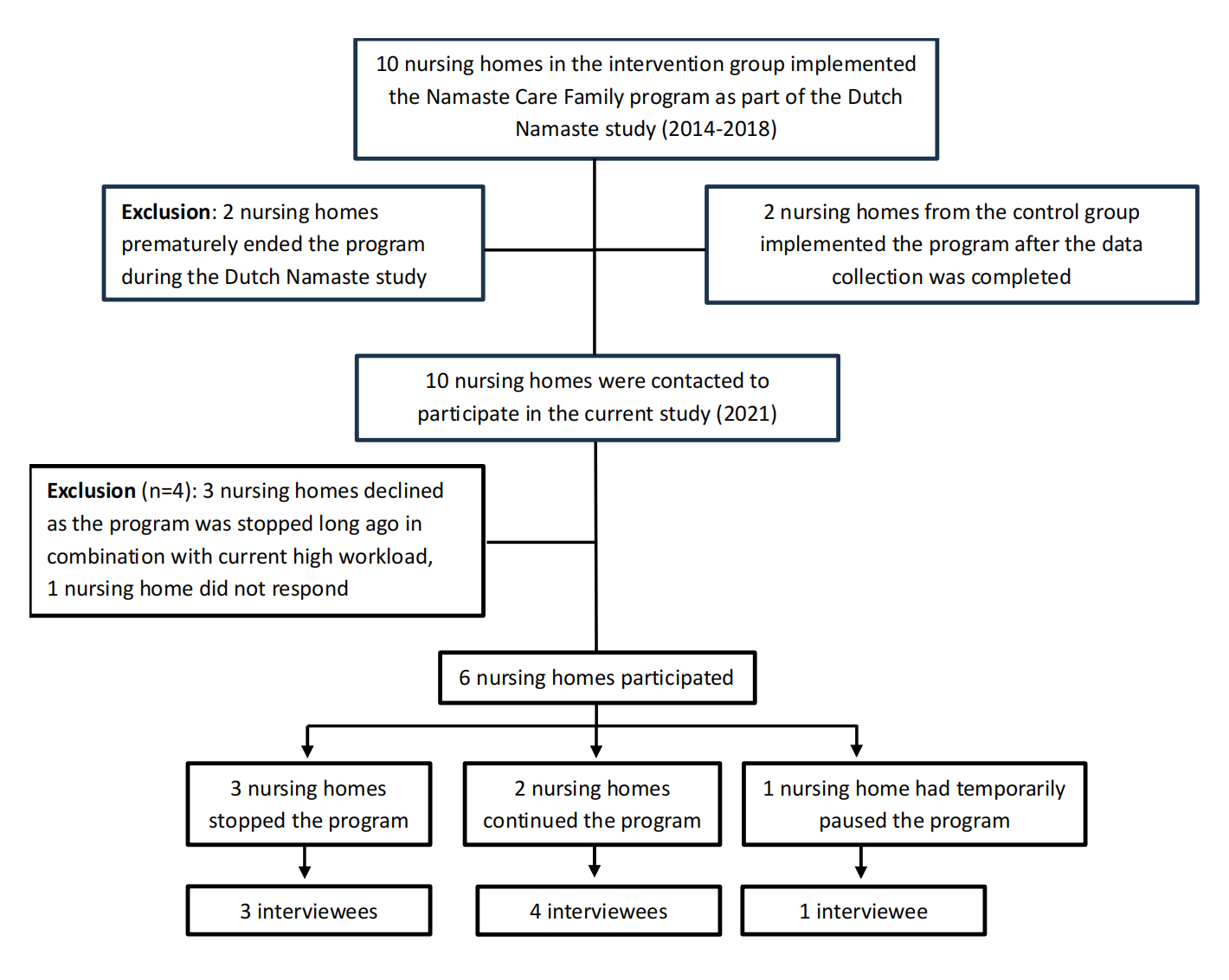 Figure 1. Flowchart of nursing home and participant recruitment and selection.
Healthcare professionals, family caregivers, and volunteers who implemented the program as part of the Dutch Namaste study [18] or who currently had an active role in the program (e.g., coordinating or delivering sessions) could participate. Family caregivers and volunteers could not be included because they were no longer actively involved in the program during the pandemic, were difficult to trace several years after implementation in homes where the program had ceased, and their accounts would have been subject to substantial recall bias. Consequently, the final sample consisted exclusively of healthcare professionals. The nursing homes were approached via email by the research team. The email included a brief explanation of the study’s aims and procedures, as well as an invitation to participate. If no response was received within one week, a follow‑up telephone call was made. Next, potential participants were recruited through contact persons at the nursing homes. Potential participants could express their interest directly to the researchers or through the contact persons. The recruitment and selection process of nursing homes and participants is presented in Figure 1. Given the relatively narrow study aim, the specificity of the sample, and the rich accounts obtained during the interviews, our sample of eight participants was considered to provide sufficient information power for addressing the research question [28]. Although participants represented different professional roles and nursing homes with varying implementation trajectories, all had experience with the Namaste Care Family program and were well positioned to reflect on its long-term sustainability.
Data CollectionThe interview guide [29] from the short-term process evaluation of the Dutch Namaste study was used as the foundation for the current study. To address the specific aims of this long-term follow-up evaluation, the focus of the questions was changed to focus on sustainability of the program, organizational developments since the original study, and the impact of the COVID-19 restrictions on program delivery.
The interview guide can be found in Guide S1. Two female researchers (JE, project coordinator and palliative care expert; AH, medical student) conducted the interviews online. Neither researcher had a prior connection to the participants or the Namaste study. One interview was conducted via telephone. The interviews were audio‑recorded and transcribed verbatim. Participants were offered the opportunity to review the transcript of their interview. No adjustments were requested.
AnalysisFirst, two researchers (AH and HS, a female psychologist involved in the previous Namaste study) read three transcripts independently to familiarize themselves with the data. Second, they independently coded these transcripts using open coding. During a consensus meeting, codes were compared and discussed, which resulted in an initial coding framework. A third researcher (JE) reviewed this framework. Third, the initial three transcripts and the remaining transcripts were then (re-) coded using the coding framework. Next, pairs of researchers (AH, HS, JE, and female epidemiologist MH) independently coded the remaining transcripts, followed by consensus meetings. When consensus could not be reached, a third researcher was consulted.
Data were analyzed using thematic analysis following the six phases as described by Braun and Clarke: familiarization with the data, generation of initial codes, searching for themes, reviewing themes, defining and naming themes, and producing the report [30]. The analysis was conducted by AH, and discussed several times with HS to refine the codes and themes. The analysis was not guided by a predefined implementation framework.
Most of the coding and analysis was conducted by researchers who had not been involved in the c-RCT, which provided opportunities to challenge assumptions arising from involvement in the original trial. The involvement of one researcher from the c-RCT team complemented this by contributing contextual insight and supporting a nuanced interpretation of participants’ accounts. Regular discussions about coding decisions and interim analyses were held to reduce potential biases and identify blind spots, thereby strengthening the credibility of the findings. A narrative description was used to report on the continued offering of the program by nursing homes, and the effect of the COVID-19 pandemic on program delivery.
Analytical ObservationDuring data analysis, we observed a conceptual overlap between the Namaste Care Family program, well‑being, person‑centered care, and meaningful activities. Participants used these concepts interchangeably. This lack of conceptual clarity was most pronounced in nursing homes that had discontinued the program. Occasionally it varied between interviewees within the same organization, reflecting divergent interpretations of the intervention’s core components. Notably, descriptions of current activity provision across nursing homes resembled the program delivery in homes that had formally continued the program, suggesting that some of intervention components were maintained despite the loss of formal fidelity.
Six of the ten nursing homes from the c-RCT participated (see Figure 1). All eight interviewees were female. The participants were team coordinators (n = 2), a nurse (n = 1), activities coordinators (n = 4) and a Namaste coordinator (n = 1). The interviewees’ mean age was 44.1 years (SD 11.3, range 28–56). On average, they had 22.4 months (SD 17.3, range 4–47) experience with the program. The interviews lasted an average of 52.9 min (SD 6.9, range 41–60).
Long-term Implementation OutcomesOf the six nursing homes who participated in the c-RCT, two continued the program with adaptations, one temporarily paused the program to arrange prerequisites, and three discontinued it. Of the two nursing homes still offering the program, one had expanded it to their day care center and was planning implementation at a second nursing home location. They viewed the Namaste Care Family program as a broader approach to care, with everyday activities serving as opportunities for meaningful connection. Multiple brief interactions throughout the day were conducted in a “Namaste way”, supplemented by a weekly formal Namaste session. The other nursing home described an implementation strategy aimed at all residents on the psychogeriatric wards rather than just those with advanced dementia. Although participants recognized the benefits of this broader approach, they also noted that it led to a diluted application of the program. This resulted in a reduced focus on residents in the advanced stages of dementia.
One nursing home paused the program due to unmet preconditions, caused in particular by the restrictive measures related to COVID-19. They prioritized strengthening contextual prerequisites by embedding a person‑centered care approach as a foundation for sustainable re‑implementation.
In the three nursing homes that discontinued the program, termination was described as gradual, with the program “fizzling out” after the study ended. They had stopped before the COVID-19 pandemic. Key determinants of discontinuation included high staff turnover, sustained work pressure, limited adherence to the structured format, and a perceived lack of distinctiveness of the program compared with existing care practices. Despite the formal discontinuation, all participants reported enduring mechanisms of impact. They described a heightened awareness of resident well‑being and person‑centered care that continued to shape daily practice. They also reframed the program as a set of guiding principles rather than a fixed structure, selectively drawing on acquired techniques and knowledge.
The thematic analysis yielded two themes: 1) ‘Factors influencing the long-term implementation of the Namaste Care Family program’, comprising the subthemes ‘Attitude’, ‘Organizational conditions’, and ‘Staff knowledge’; and 2) ‘Impact of COVID-19 on the Namaste Care Family program’, comprising the subthemes ‘Personal Protective Equipment (PPE) affected communication and sense of closeness’, ‘Restricted family and volunteer involvement increased the burden on staff’, ‘Adjustments to format and frequency’, and ‘Unexpected positive effects’.
Factors Influencing the Long-Term Implementation of the Namaste Care Family ProgramFactors influencing the long-term implementation of the Namaste Care Family program are presented in Table 1.
The subtheme ‘Attitude’ concerns factors based in personal perspectives, beliefs, and mindsets. Several factors were mentioned by participants across multiple nursing homes. In nursing homes that continued the program, participants emphasized observing positive effects of the program on residents as a main factor for successful long-term implementation. In homes where enthusiastic key implementers had left, participants reported a rapid decline in the program.
The subtheme ‘Organizational conditions’ is comprised of factors that involve directional and regulative aspects of implementation and program execution. Within this theme, participants from different nursing homes described several similar facilitating factors. Organizational conditions appeared decisive for long-term implementation. Barriers were intensified by the COVID‑19 pandemic.
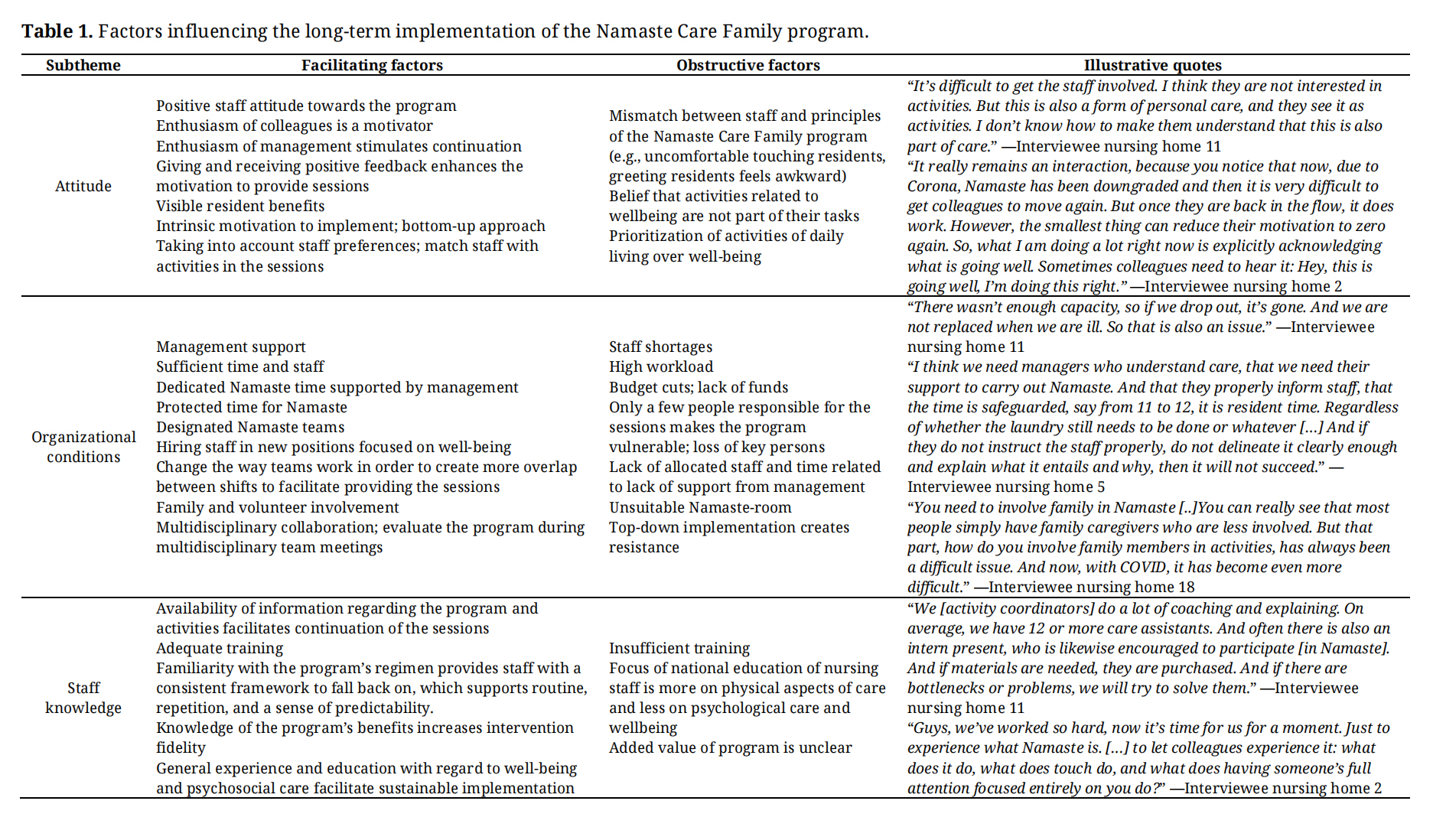 Table 1. Factors influencing the long-term implementation of the Namaste Care Family program.
The subtheme ‘Staff knowledge’ consists of factors that refer to familiarity with the added value and principles of the Namaste Care Family program. Participants from the homes that continued or paused the program emphasized that it is crucial that people who execute the program understand how to provide the program’s elements and why these elements matter. A clear understanding of the program structure and underlying principles supported fidelity.
Impact of COVID-19 on the Namaste Care Family ProgramInterviewees indicated that the Namaste Care Family program was substantially affected by the COVID-19 pandemic and the accompanying restrictive measures. Although the program was continued when possible, adjustments were unavoidable.
“In the beginning, we as staff also had to figure it out. What can we do? Can we touch them? How does this work? Keep our distance... So, it had a huge impact on Namaste”. —Interviewee nursing home 11.
PPE Affected Communication and Sense of ClosenessAccording to the interviewees, the use of PPE impacted the delivery of the program. Face-masks hindered communication. Full-body PPE created a physical barrier between staff and residents, negatively impacting the sessions. It made staff uncomfortable, feeling hot and fatigued, which decreased their ability and motivation to deliver the program.
“Massaging someone with gloves on, or connecting with someone in general while wearing gloves, it feels so unnatural.” —Interviewee nursing home 2.
Restricted Family and Volunteer Involvement Increased the Burden on StaffVisitor bans prevented family caregiver involvement. Staff and residents missed the presence and support of family caregivers and volunteers. Even though volunteers were allowed to return after several months, many still stayed away out of fear that they might contract the virus themselves. Staff missed the additional help, which added to the increased work pressure they experienced. Rather than offering the broader range of activities originally envisaged within the program, staff focused on simpler sensory and comfort-oriented activities that could be provided with the available staff:
“Now, the sessions were usually just coloring, cutting food together, really basic things. Because we were fighting to get people to actually eat and drink.” —Interviewee nursing home 11
Adjustments to Format and FrequencyTo adhere to distancing and safety protocols, nursing homes adapted the delivery of the Namaste Care Family program in various ways. Adaptations included shifts from group to individual sessions, reduced session duration, flexible and opportunistic scheduling, and offered simplified “COVID-safe” activities. Examples included sessions now lasting 20–60 min for groups of four to nine residents, typically supported by one or two staff members. While these accounts did not permit a systematic comparison of session characteristics across sites, they do provide context for understanding how the program was adapted in practice. In one home, staff from less busy and closed wards offered the program to the residents. They found physical touch to have such a positive effect on the residents that it was prioritized as ‘necessary care’, meaning that despite the safety measures, hand massages were continued. However, increased workload, staffing shortages, and intensified complexity of the work due to PPE were burdensome, and resulted in prioritization of activities of daily living over well-being-related activities.
Unexpected Positive EffectsAlthough the program had to be adjusted to ensure its continuation, the interviewees perceived the program’s positive impact as comparable to pre-pandemic levels. They also mentioned some positive effects of the restrictive measures on the Namaste Care Family program: the absence of visitors in communal living rooms resulted in a calmer atmosphere on the unit, which benefitted the quality of the sessions. Additionally, individual sessions were viewed as an opportunity to provide person-centered care in a way that was difficult to achieve when attention had to be divided among several residents.
“What used to be organized on a very large scale has now all been adapted to the living-room level. Some people really like that because it provides a calmer and a less stimulating environment.” —Interviewee nursing home 11.
This study evaluated the long-term sustainability of the Namaste Care Family program and explored how the COVID-19 pandemic influenced its continued implementation and adaptation. Embedding the principles of the program within routine nursing home care supported its long-term sustainability and facilitated adaptation during this period of disruption. Although pandemic restrictions constrained application of core elements of the program, staff in some homes were able to maintain meaningful activities through adaptive, person‑centered practices, indicating partial continuation rather than full implementation as originally intended. The long‑term continuation of the program was shaped by staff attitude, staff knowledge, and organizational conditions.
The factors identified as impacting the long-term implementation of the Namaste Care Family program align with previous studies that identified organizational support and resources, perceived added value, staff knowledge, family involvement, and culture as key determinants of successful Namaste implementation [21,31]. A clear understanding of the program’s purpose, effects, and added value may foster more positive attitudes toward the program and generate broader staff support [32,33]. Management support, stable staffing, and ongoing reinforcement of core principles enabled staff to maintain focus on residents’ well‑being. Sustained implementation of the Namaste Care Family program thus appears to require continuous education, internal champions, and integration into care routines rather than reliance on initial training or external project support.
Nursing homes that maintained the program described it as a guiding care philosophy rather than a discrete activity. This allowed its principles to become embedded in routine care. This finding aligns with implementation theories that emphasize the importance of normalization, shared ownership, and alignment with organizational values for sustained use of complex interventions in long‑term care [34–36]. Normalization Process Theory [36] helps explain why the Namaste Care Family program was more likely to be maintained when it was embedded in routine nursing practice rather than treated as a discrete intervention. Homes appeared more likely to achieve long‑term continuation when staff developed a shared understanding of the program’s purpose (coherence), invested in collective responsibility (cognitive participation), integrated key principles into daily care (collective action), and reflected on its added value (reflexive monitoring). Furthermore, the importance of attitude, knowledge and organizational conditions corresponds with key constructs of the Consolidated Framework for Implementation Research [34], which suggests that long‑term implementation may depend less on preserving a fixed format and more on achieving shared ownership and organizational embedding within care teams.
The flexibility required for sustainable implementation can be seen as a double‑edged sword. While adaptations were necessary and beneficial for sustainability, particularly under challenging circumstances [21], they also raise crucial questions: How much flexibility is compatible with intervention fidelity? When is Namaste still Namaste? In several nursing homes, interviewees described continuing to apply elements of the program despite no longer formally delivering the program. This suggests that some principles of the intervention may have become embedded in routine person-centered care, blurring the distinction between program discontinuation and sustained practice change. The interchangeable use of the terms Namaste Care Family, person‑centered care, well-being, and meaningful activities further supports this idea. A flexible “spectrum model” that defines a minimum set of essential elements and an acceptable dose may be useful.
The COVID‑19 pandemic did not appear to fundamentally alter the factors that influence long-term implementation; rather, it exposed existing strengths and vulnerabilities. Preventing loneliness in residents and offering meaningful activities may be especially important during a pandemic to prevent BPSD and preserve QoL [24,37]. Our study highlights that psychosocial interventions aimed at supporting QoL in residents with advanced dementia can be offered in times of social isolation. Although delivering the Namaste Care Family program became more challenging during the pandemic, the importance of psychosocial interventions only appeared to increase. The notion that a more rudimentary version of the program is still considered beneficial to residents supports this interpretation. Adopting a pragmatic and flexible approach to program delivery may help ensure that meaningful activities and connections can still be provided [23]. In these circumstances, every meaningful connection is valuable to residents and staff.
Despite infection control measures, touch remained a vital element of the program and an important route to meaningful connection. Staff creatively balanced safety requirements with resident needs, offering an important lesson for future pandemics. Furthermore, family involvement strategies should include contingency plans for restricted visitation. The resilience of the Namaste Care Family program during crisis seemed closely linked to the degree to which it had been normalized in routine care. Pandemic‑related adaptations therefore emphasize the need for implementation strategies that anticipate disruption and support flexible delivery while safeguarding the intervention’s core intentions.
Strengths and LimitationsThis study has several strengths. First, it provides rare long‑term insight into the sustainability of a psychosocial intervention for nursing home residents with dementia. Second, the qualitative design allowed for an in‑depth exploration of contextual factors, adaptations, and mechanisms underlying continuation and discontinuation of the Namaste Care Family program during a public health crisis. Third, data were collected across multiple nursing homes with different implementation trajectories, which provided variation in experiences and organizational contexts. Fourth, the involvement of multiple researchers in the analysis strengthened the rigor and trustworthiness of the findings through discussion and verification of interpretations.
Several limitations should be considered. First, the study relied exclusively on the perspectives of healthcare professionals. Family caregivers and volunteers were not included because they were no longer actively involved in the program during the pandemic and were difficult to trace several years after implementation. Second, although it reflects the gender distribution within the nursing home workforce, the relatively small all-female sample may limit transferability. Finally, retrospective accounts of implementation may have been subject to recall bias, especially given the prolonged and disruptive nature of the pandemic.
The long‑term implementation of the Namaste Care Family program was supported by embedding its principles within routine nursing home care. Nursing homes that embedded the program as standard practice, supported by leadership commitment, adequate staffing, and ongoing knowledge reinforcement, were more likely to sustain program delivery over time. Investing in implementation support, training, and organizational alignment is essential to sustaining meaningful, person‑centered care for residents with advanced dementia.
While external disruptions such as the COVID‑19 pandemic challenged delivery, they mainly exposed pre‑existing facilitators and barriers to the sustainability of Namaste Care [21]. The pandemic therefore served primarily as a stress test of long-term implementation rather than as a distinct determinant of program sustainability. Although COVID‑19-related constraints restricted certain core elements of the program, participants described how certain key elements were maintained through local adaptation. However, this continuity may reflect adaptation and partial continuation of the program rather than its full implementation as originally intended.
Written informed consent was obtained from all participants. Participants received a 15-euro gift card for their participation. The study protocol was reviewed by the Medical Ethics Review Committee of the VU University Medical Center (protocol number: 2016.399) and was declared exempt from the Medical Research Involving Human Subjects Act. The Dutch Namaste study was registered with the CCMO Research with human participants (old ID 5692/new ID 5570).
Declaration of Helsinki COREQ Reporting GuidelineThis study adhered to the Helsinki Declaration. The Consolidated criteria for reporting qualitative research (COREQ) reporting guideline was followed.
The following supplementary materials are available online, Guide S1: Interview guide.
The dataset of the study is available from the authors upon reasonable request.
Conceptualization, ALHvdH, HJAS; Methodology, ALHvdH, HJAS; Data collection, ALHvdH; Validation, ALHvdH, HJAS; Formal Analysis, ALHvdH; Data Curation, ALHvdH; Writing—Original Draft Preparation, ALHvdH; Writing—Review & Editing, HJAS; Supervision, HJAS; Project Administration, ALHvdH; Funding Acquisition, HJAS.
HJAS is the associate director of Namaste Care International (an unpaid position).
This research was funded by ZonMw (grant number: 7330503021).
We would like to thank Josine Engels (deceased) (JE) and Miriam Haaksma (MH) for their help with the data collection. M365 Copilot (GPT-5-based) was used for language editing and to improve readability. The AI tool did not contribute to the study design, data analysis, or interpretation of results. The authors critically reviewed all content and take full responsibility for the manuscript.
1.
2.
3.
4.
5.
6.
7.
8.
9.
10.
11.
12.
13.
14.
15.
16.
17.
18.
19.
20.
21.
22.
23.
24.
25.
26.
27.
28.
29.
30.
31.
32.
33.
34.
35.
36.
37.
Homan van der Heide AL, Smaling HJA. Long-Term Sustainability of the Namaste Care Family Program in Nursing Homes: A Qualitative Process Evaluation during the COVID-19 Pandemic. Adv Geriatr Med Res. 2026;8(4):e260029. https://doi.org/10.20900/agmr20260029.

Copyright © Hapres Co., Ltd. Privacy Policy | Terms and Conditions


