Location: Home >> Detail
Adv Geriatr Med Res. 2026;8(4):e260031. https://doi.org/10.20900/agmr20260031
 ,
David Albrecht 1,2 ,
Pascal R. Furrer 1 ,
Alexandre Ansorge 1 ,
Marc P. Schmid 1 ,
Nathalie Kühne 2 ,
Denise Baumgartner 2,3 ,
Mazda Farshad 1 ,
Ilker Uçkay 2,3,*
1
2
3
*
Background: With an ever-increasing population of elderly orthopedic patients experiencing co-morbidities and immune suppression, the proportion of postoperatively acquired surgical site infections (SSIs) may increase compared to prior decades, where the majority of SSIs were acquired intraoperatively. A comprehensive overview would aid in allocating resources under these conditions. Methods: We examined a prospective database containing data from four prospective randomized clinical interventional trials and surveillance registers. We concentrated on cases of acute SSIs with complete documentation from the 2019–2024 period, during which the number and proportion of clinically frail patients treated at our tertiary center increased significantly. In this assessment, surgeons and Infectious Physicians specialized in orthopedic infections evaluated each SSI episode clinically by searching medical and nursing notes for postoperative events that could possibly be associated with postoperative surgical site infection. Results: Among 370 SSI cases, we estimated that 241 infections (65%) were acquired intraoperatively and 129 (35%) postoperatively. The three most frequent reasons for postoperative SSIs were skin breakdowns, surgical complications (hematoma; dehiscence), and ischemic necrosis. These (new) risk associations differed significantly from the SSI risk reported in the literature on middle-aged orthopedic patients. Conclusions: According to our prospective evaluation, one-third of acute orthopedic SSIs in the last six years might be associated with a postoperative complication. We need to implement additional preventive measures in the postoperative period.
SSI, Surgical site infection; HAI, Healthcare-associated infection; PJI, Prosthetic joint infection; UTI, Urinary tract infection; PNEU, Healthcare-associated bacterial pneumonia; HCWs, Healthcare workers; GP, General practitioner; IDs, Infectious diseases; ASA, American Society of Anesthesiologists
According to the literature, the incidence of SSIs in elective orthopedic surgery is approximately 1%–3% for adult patients with few or no co-morbidities [1]. There are many measures taken to prevent SSIs; however, only some are based on strong evidence [1]. These few measures apply to “standard” middle-aged patients and primarily target SSIs that are acquired intraoperatively. In contrast, elderly patients with multiple chronic co-morbidities yield additional risks for other HAIs, including UTIs and PNEU [2,3], alongside a potentially higher risk of more antibiotic-resistant infections and postoperative wound breakdowns.
Moreover, additional points of entry for bacteria are of academic and clinical interest. Infection-control resources may be allocated to the postoperative period more frequently, especially when multimodal “bundled” interventions targeting the perioperative period have already been fully implemented. To cite examples of a “new” risk association, post-anesthesiologic urinary catheters are independently associated not only with postsurgical UTI [4], but equally with lumbar SSIs. In daily clinical practice, secondary SSIs are also caused by wound dehiscence, ischemia [5], material failure, steroid administration, blood transfusions, hematoma, lack of patient compliance (e.g., regarding off-loading and wound care), bacterial pneumonia, or even systemic viral infections such as nosocomial SARS-CoV-2. Almost every substantial postoperative complication indirectly raises the risk for SSI [1,6].
In this study, we investigated the possible origins and postoperative epidemiology of orthopedic SSIs and diversified our approach beyond focusing on the operating theater. We assess state of postoperatively acquired SSIs according to prospective research databases maintained by our tertiary center from 2019 to 2024.
Balgrist University Hospital is a tertiary orthopedic center in Zurich, Switzerland. Between 1 January 2019 to 31 December 2024, five major events occurred that were potentially related to the occurrence of SSIs. These were the COVID-19 lockdown in spring of 2020, a hand hygiene campaign run in 2023–2024, a trial on preoperative decolonization (February 2023–November 2024), a trial on broad-spectrum antibiotic prophylaxis (October 2022–November 2024) [7], and a computer-based intervention to reduce postoperative urinary catheter use conducted in 2023. Besides the unitary catheter removal in the first operative day and general hand hygiene campaigning, all interventions targeted intraoperative procedures. The antibiotic prophylaxis was cefuroxime 1.5 g administered parenterally (double dose in obesity) [8]. Notably, we do not use negative-pressure devices for prevention [9] and conducted no trials on antiseptic dressings [10] or antibiotic-containing hardware.
Study Definitions, Criteria, and Identification of Surgical Site InfectionsAn orthopedic surgeon (PSL) and an ID physician (IU) reviewed all SSIs. In these trials, the search for the SSI origins by the dedicated ID physician (IU) was part of the study protocols. The dedicated ID physician, with twenty years of experience in orthopedic infections and associated research, controlled the finale composite database. According to the study protocols, all study participants in the aforementioned trials and, hence, in this current study, have been treated by the same dedicated ID physician, but by different surgeons. We identified SSIs according to clinical, radiological, and microbiological criteria [3,4,7,8,11–13], which were cross-checked by members of the Infection Control Team (NBH, DB, TS) and by research nurses belonging to the Unit for Clinical and Applied Research (UCAR), performing these randomized trials [7]. We excluded SSIs caused by unusual pathogens such as mycobacteria, viruses, or fungi, community-acquired infections in the surgical site after two years following the operating site, and SSI not participating in our prospective trials (Figure 1). The definition of antibiotic (multi)-resistance aligned with the need for contact isolation according to SwissNOSO recommendations [14].
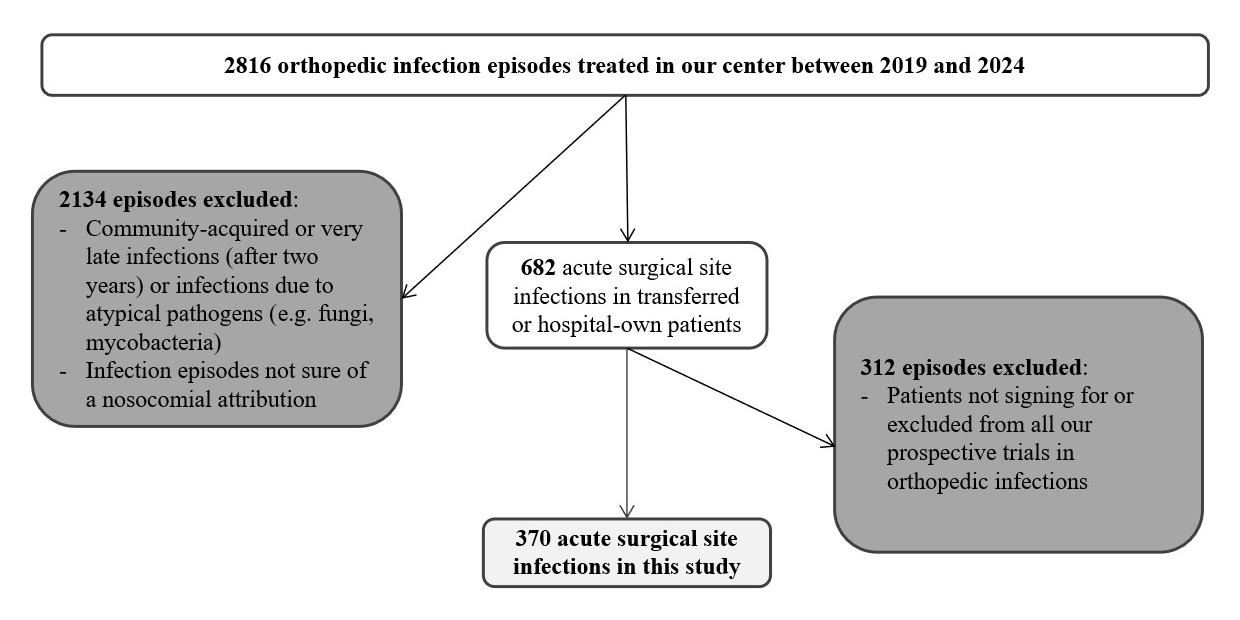 Figure 1. Study flow chart.
As no guidelines, recommendations, laboratory tests, or established expert opinion exist in scientific literature for the assessment of postoperative SSIs, our expert interpretation of the patient’s individual history and the associated microbiology was key for the origin of SSI. We divided certainty into two degrees: “sure” and “probably”. If we failed to find a convincing postoperative origin, we classified the SSI as intraoperatively acquired by default. For example, in the case of arthroplasty, when urosepsis occurred one month after implantation (e.g., because of urinary catheterization), we considered the origin to be urinary and hematogenous if the pathogens were Gram-negative or intraoperatively acquired if they were coagulase-negative staphylococci. Likewise, steroid injections in an operated spine with consecutive local infection counted as postoperative SSI, even if surgery was recent. An infection due to patient malcompliance (e.g., sabotage of off-loading) was considered of postoperative origin. For the special group of diabetic foot surgery, we focused on the last intervention that could also be standard postoperative wound debridement on the wards. Of note, orthopedic foot surgery has two distinct entities that are separately investigated in scientific literature (uninfected elective or trauma surgery in the foot in patient with or without concomitant diabetes mellitus) [15]). Among the SSI pathogens, we defined skin commensals as a group of Gram-positive, antibiotic-resistant pathogens that are typically associated with low-grade infections such as coagulase-negative staphylococci, micrococci, corynebacteria or cutibacteria [16]).
Statistical AnalysesThe primary objective of this study was to determine the possible origins associated with the various SSIs. The Pearson-χ2-test was used to compare possible intra- and postoperative SSI origins. A secondary objective was the assessment of clinical and microbiological parameters associated with a postoperative SSI origin in the entire orthopedic study population by using an unmatched multivariate logistic regression model. In this model, we avoid including variables with expected interaction by interaction terms and Mantel-Haenszel estimates. We also avoid including modifiable variables important to only one type of orthopedic intervention, constant variables that are chronically inherent to the patients’ co-morbidities (which are already obvious in the literature), or variables which lose their pertinence after surgery. Overall, the ultimate number of variables is limited to the ratio of 1 variable to 5 to 8 outcome events [17], to arthroplasty infection as the common hallmark of most orthopedic procedures, to anatomical sites and key pathogen groups. We used STATA™ software (Version. 18, College Station, TX, USA) and considered p-values ≤ 0.05 (two-tailed) significant.
Among 2816 infections reported during the study period from 2019 to 2024, we considered 370 acute (deep) SSIs (Figure 1). They were all deep SSI according to the protocols of the prospective-randomized trials. The median ASA-Score was 3 points (interquartile range, 2–3 points). Among all SSIs, 38 involved orthopedic foot surgery and 90 diabetic foot surgery, along with 40 hip, 54 knee, and 45 spine-related surgeries. The rest involved other interventions, including hand, shoulder, or combined surgeries, e.g., cases of SSIs of the iliac crest harvesting site. Half of the SSIs (174/370; 47%) were implant-related, of which 77 were PJIs. The median time delay between index surgery and the first surgical debridement was 29 days (interquartile range: 15–56 days). This delay was not significantly different between the groups of skin commensals versus “pyogenic” bacteria (median 39 days vs. 28 days, p = 0.17).
PathogensWe retrieved 136 microbiological SSI constellations, with 96 (26%) polymicrobial SSIs and 78 (21%) primarily due to Gram-negative bacteria. Among the 246 (66%) predominant Gram-positive SSIs, we notified 123 infections with Staphylococcus aureus and 103 cases associated with skin commensals. Overall, 28 SSIs (8%) were bacteremic, 134 (36%) were resistant to prior prophylaxis (cefuroxime), and 13 (4%) were multidrug-resistant. Figure 2 summarizes the ten most frequent pathogens.
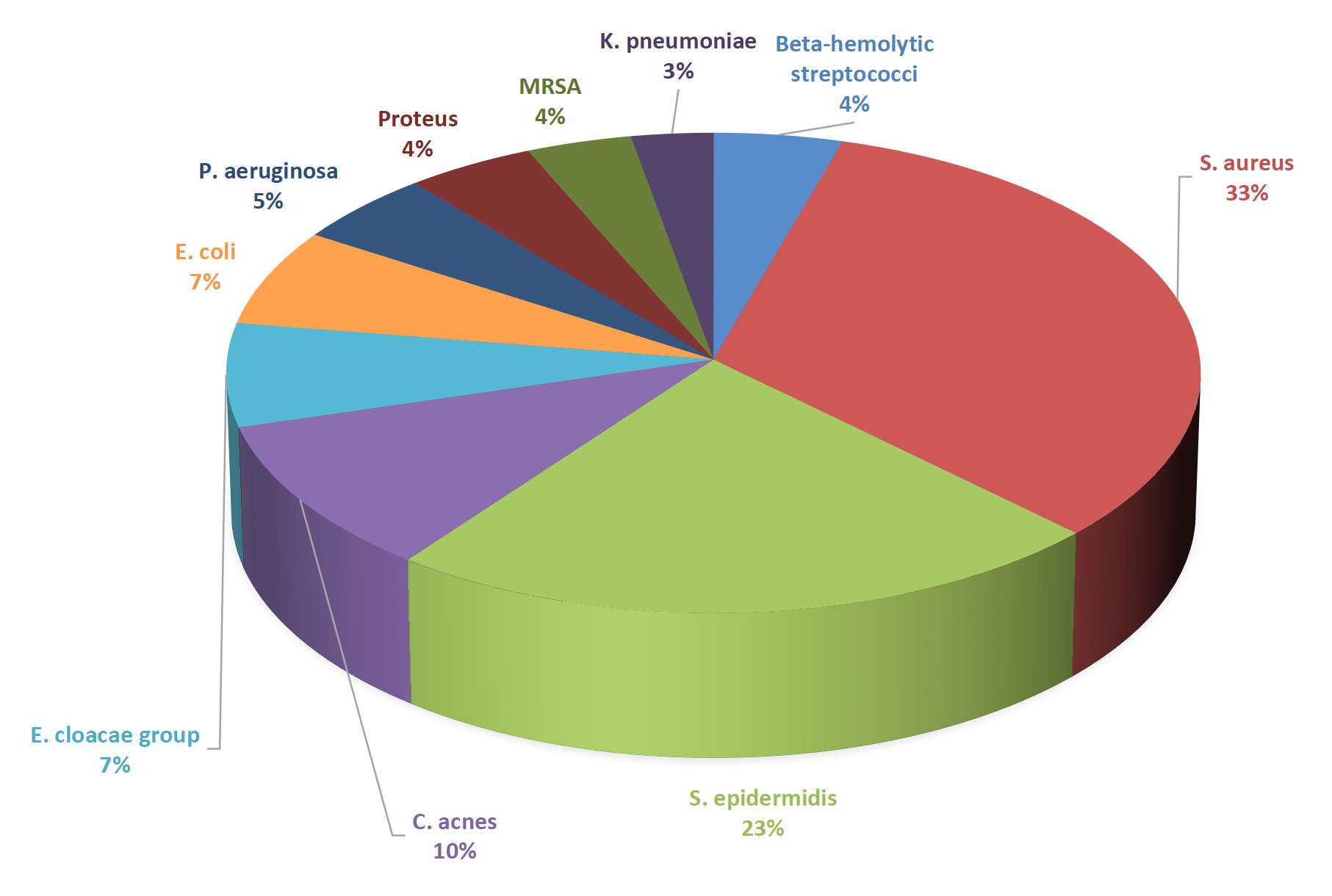 Figure 2. Predominant pathogens in orthopedic surgical site infections.
We were certain of the SSI origin in 212 cases (57%) and less certain in 43%. Overall, we classified 241 SSI episodes (241/370; 65%) as intraoperatively acquired and 129 (35%) as postoperatively acquired. We were more certain of intraoperative SSIs (171/241 (71%) vs. 41/129 (32%); p < 0.001). Anatomically, we noted that most postoperative SSIs occurred in lower body parts (below hip level) that represented 15% of all surgical interventions. There was a gradient from the shoulder to the diabetic foot, with the shoulder demonstrating the highest proportion of intraoperative SSIs (13/14; 93%), and the foot the lowest (29%). However, and importantly, this gradient was not due to the mere anatomical localization, but on wound complications associated with the corresponding surgery and its complications and these sites. In particular, for the (ischemic) diabetic foot, the proportion of postoperative SSIs was four times higher than that of SSIs with presumed intraoperative origins (81% vs. 19%, respectively). By excluding all foot SSIs, the overall proportion of estimated intraoperative SSIs rose to 83% (204/242 cases). Table 1 summarizes the plausible origins, while Table 2 compares them, and Table 3 reveals the results of the multivariate adjustment.
The most important clinical variables are reported in Table S1. The three most frequent origins of postoperative SSIs were postoperative wound debridement, new ulcers, and/or wound (flap) necrosis (Table 1). The comparison between these two origin groups revealed a significant predominance of foot and polymicrobial infections among postoperative SSI origins, whereas intraoperative SSIs resulted from skin commensals (Tables 2 and 3).
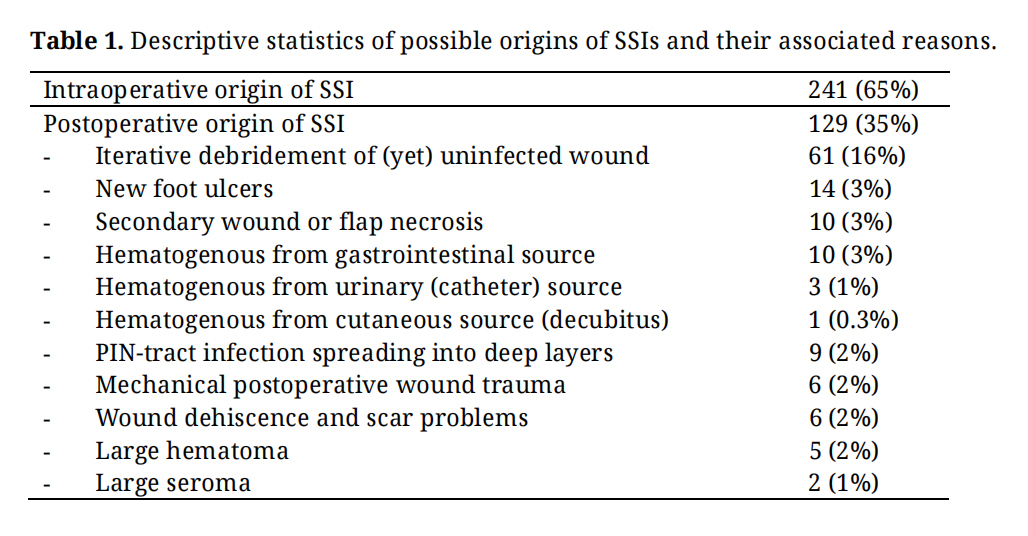 Table 1. Descriptive statistics of possible origins of SSIs and their associated reasons.
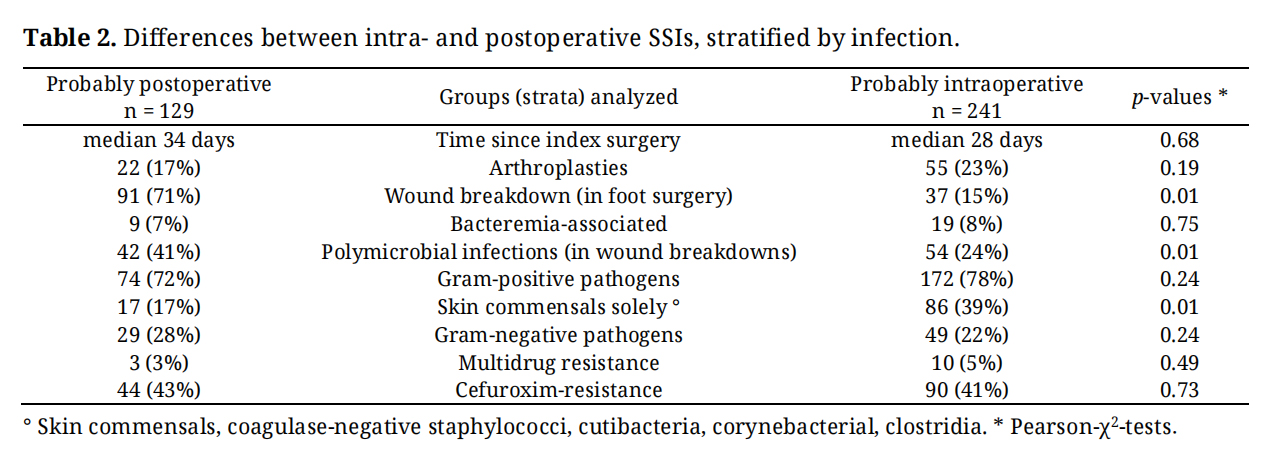 Table 2. Differences between intra- and postoperative SSIs, stratified by infection.
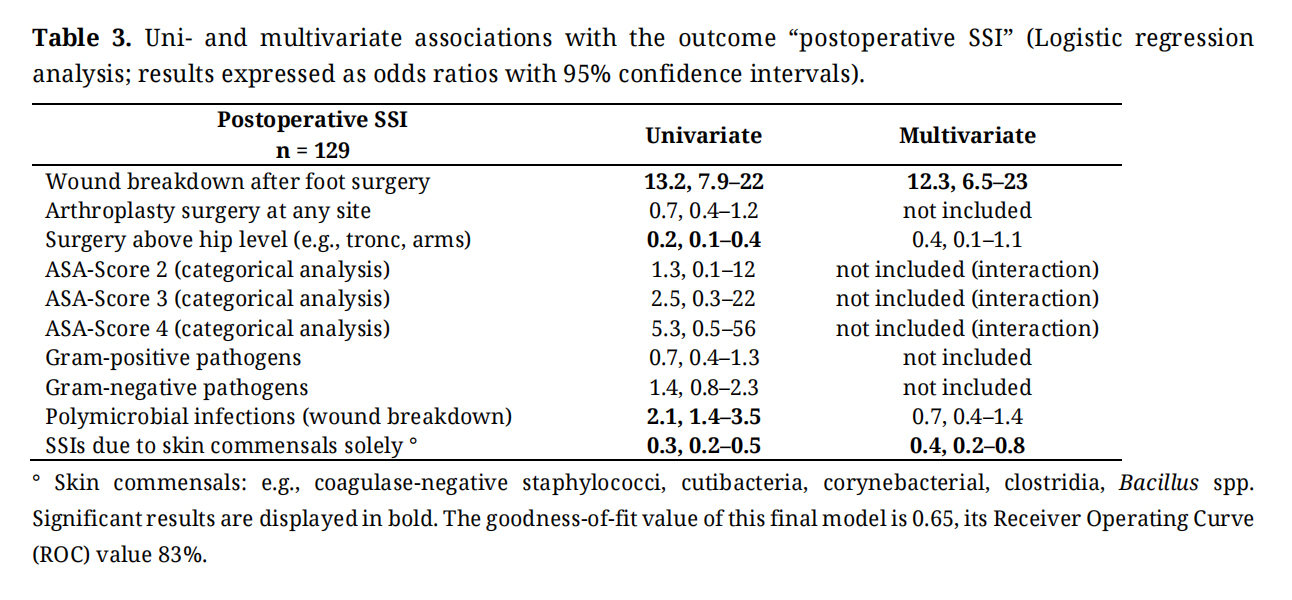 Table 3.
Uni- and multivariate associations with the outcome “postoperative SSI” (Logistic regression analysis; results expressed as odds ratios with 95% confidence intervals).
In our single-center university hospital for elective adult orthopedic surgery, we estimate that one-third of all formal acute SSIs were possibly acquired (originated) after surgical intervention. The infection control literature concentrates on intraoperative risks and interventions. Even recent publications and trials have tended to address target pre- and intraoperative assessments and associated risks. Indeed, investigations regarding antibiotic prophylaxis [7], the self-reported compliance of surgeons (only pre- and intraoperatively) [18], the increasing number of surgical skill labs, or preoperative decolonization [19,20] all focus on the peri- or preoperative period. Similarly, prospective trials on decolonization do not extend beyond the postoperative phase, although postoperative wound problems are frequent [21]. Bundled interventions often target the intervention and neglect the postoperative period in the ward [22]. Regarding this postoperative period, guidelines [11–13] and expert opinions are often limited to improving hand hygiene and enhancing “asepsis” during dressing changes [10]. International guidelines state “There is a lack of high-quality studies comparing various strategies of postoperative wound management… an area for further research” [12].
The postoperative problem is probably due to two major groups of complications: wound breakdowns (ischemia [6], trauma, hematoma, dehiscence, seroma [21]) and possibly the patient’s malcompliance in its various forms (e.g., unrest against medical order [23–25], active smoking [26–28], or malcompliance with malnutrition [29–34]). Wound breakdown is frequent. According to our one-year long prospective observation in Geneva, only 40% of freshly operated orthopedic wounds healed without complications [21]. In that study, among 1073 adult middle-aged orthopedic patients, 630 (59%) did experience relevant wound complications, leading to a significantly longer hospital stay. The most frequent wound complications were dehiscent discharge (41%) and hematoma (35%) [21].
Our study has both strengths and limitations. One of its strengths is the prospective work-up of each attributed SSI case by considering the patient's history and by limiting our investigation to patients participating in prospective-randomized trials in domo. There is no literature, no laboratory or radiological tests, no definition, no algorithms, no artificial intelligence algorithm, and no guidelines helping research groups to define a “postoperatively acquired SSI). In that sense, our work is an absolute “new frontier”. We estimate the SSI origin on clinical grounds of cases that we prospectively treated by ourselves. The main limitations are as follows: i) There is subjectivity regarding the evolution of the infection origins and no analysis of causality. For example, postoperative complications (dehiscence, hematoma, necrosis) may be consequences rather than causes of infection, so reverse causality cannot be excluded. ii) Mild superficial and late (low-grade) SSIs, which were not always debrided, not taking part in the prospective trials, and often unrelated to the index surgery, might have gone unnoticed. iii) This is a pilot study. We did not report interventions targeting the prevention of postoperatively acquired SSIs. Our concomitant prospective randomized trials concentrate on the procedures in the operating theatre or the pre-operative period. iv) Lastly, our study only concerned orthopedic surgery. In other surgical disciplines, e.g., abdominal laparoscopy, SSIs and their origins could be different.
When prospectively investigating the origins (intraoperative vs. postoperative) of 370 acute orthopedic SSIs over a six-year period in our Swiss tertiary center, we conclude that approximately one-third were possibly postoperatively acquired, particularly after (diabetic) foot surgery. This proportion warrants attention. Methods of preventing postoperative SSIs are diverse and include clinical teams not involved in the initial treatment of the patient. Revising the indication for index surgery, better wound care, better nutrition, and improved compliance from patients and HCWs regarding all aspects of HAIs are most likely to be beneficiary for the prevention of postoperatively acquired SSIs. In our opinion, these measures are likely most effective when performed with the (occasional) presence of internists, or better, geriatric specialists on acute surgical ward [2] and not limited to rehabilitation centers.
This project (Wissenschaftsnummer 1070) was conducted using a composite database containing information from the following active prospective randomized trials at Balgrist University Hospital: BASEC 2022-00800, 2019-00778, 2021-00137, 2023–00095, and 2019-00646. Additionally, participating patients signed an Institutional General Informed Consent validated by the Ethical Committee of Zurich Canton. Patients consented to the publication of this side study by participating in prospective randomized trials, signing a General Informed Consent Form, and providing their medical data.
Declaration of Helsinki STROBE Reporting GuidelineThis study adhered to the Helsinki Declaration. The Strengthening the Reporting of Observational studies in Epidemiology (STROBE) reporting guidelines were followed.
The following supplementary materials are available online, Table S1: Origin of SSI infection and a glance with the certainty level of interpretation.
We may provide anonymized key data upon reasonable scientific request to the corresponding author. Table S1 is a summary of the study database.
Conceptualization: NK, PSL, and IU. Methodology: PSL, NK, TG, LSB, and IU. Validation: PSL, AA and IU. Data collection: PSL, DB, DA, PRF, MS, NK, AA, and IU. Data analysis: PSL, LSB, DB and IU; Analysis verification: DA, AA, DB. MS, and IU. Writing: original draft preparation, PSL and IU. Writing-review and editing: IU and MF. Supervision: NK, TG, IU, and MF. All authors have agreed to the published version of the manuscript. This research is part of a Doctoral Thesis (PSL) supervised by IU and MF.
The authors declare no competing interests.
This research received no external funding.
We thank all our colleagues at the Institute for Medical Microbiology (IMM) at the University of Zurich and the Unit of Clinical and Applied Research of Balgrist University Hospital. We are indebted to Jasna Plesko Martinelli and Nadja Bragatto-Hess from our Infection Control Unit for their invaluable help during the surveillance period.
1.
2.
3.
4.
5.
6.
7.
8.
9.
10.
11.
12.
13.
14.
15.
16.
17.
18.
19.
20.
21.
22.
23.
24.
25.
26.
27.
28.
29.
30.
31.
32.
33.
34.
Luer P, Albrecht D, Furrer PR, Ansorge A, Schmid M, Kühne N, et al. Potential Origins of Acute Surgical Site Infections after Orthopedic Surgery: A Prospective Evaluation in Switzerland. Adv Geriatr Med Res. 2026;8(4):e260031. https://doi.org/10.20900/agmr20260031.

Copyright © Hapres Co., Ltd. Privacy Policy | Terms and Conditions


